 Mochi Labs
Fan Mail 2.0: What a Newsletter Does for an Independent Musician That a Feed Never Will
How and why musicians are building Substack newsletters and email lists in 2026, and what a subscriber actually gives you that a social media feed never will.
Your algorithm doesn't owe you anything. A platform update can cut your reach in half overnight, and the only thing you notice is that the numbers suddenly stop adding up: a release that should have landed barely cracks a few hundred views, while last month's clip pulled ten times that for no reason you can point to. You've probably felt this already. So here's a question worth sitting with before you read another word: of the people who follow you right now, how many would actually find out if you released a song tomorrow? If you're not sure, you don't have fans yet. You have an audience the feed is willing to show you, on days it feels like it.
Why Musicians Are Building Substack Newsletters and Email Lists in 2026
A noticeable number of musicians, independent and signed alike, have started building newsletters alongside their social accounts this year. Some land on Substack, some on a plain email list through a simpler tool, and the platform matters less than the decision underneath it: move part of the fan relationship somewhere a platform update can't quietly throttle it.
The Feed Decides, You Don't
A social algorithm was never built around the artist-fan relationship. It decides which of your followers see a given post based on dozens of signals that have nothing to do with how much that follower actually likes your music, how long they've followed you, or whether they bought a ticket to your last show. Pew Research has a plain, non-technical breakdown of how this actually works day to day, and it's worth reading once if you've never seen the mechanics laid out plainly: Algorithms in Action. A follow is a one-time action. It doesn't promise ongoing visibility, no matter how the platform's own language frames it.
A List Is Yours to Keep
An email list runs on a different mechanic entirely. If someone hands you their email address, your message lands in their inbox. It doesn't pass through a ranking system that decides whether today is a good day to show it. That's the backbone of what's generally called the direct-to-fan model: cutting out the layer that sits between you and the person who already wants to hear from you, rather than renting their attention back from a platform one post at a time. The Direct-to-fan overview is a useful primer if you want the business logic spelled out without the hype.
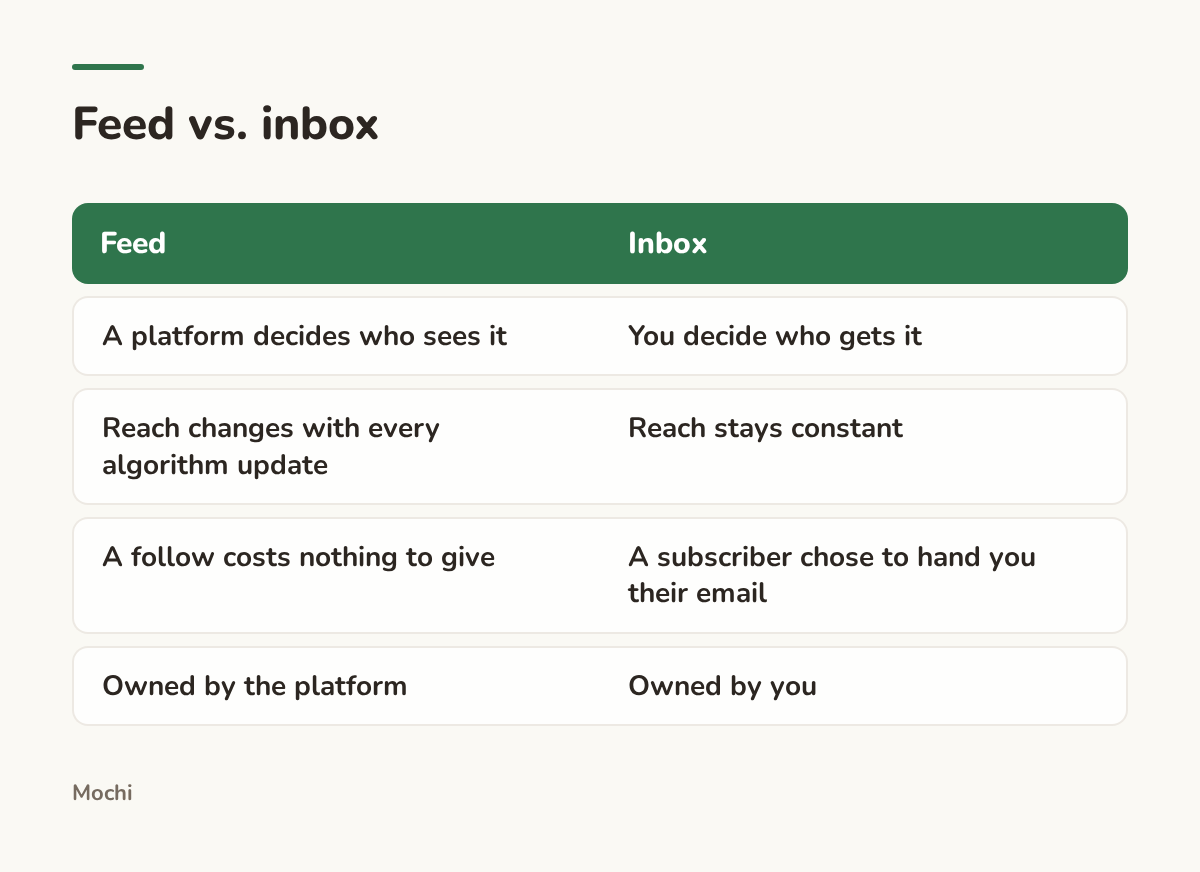
Two different relationships, wearing the same word "audience."
Step 1: Start the List Before You Think You're Ready
The single biggest mistake is waiting for a "big enough" moment to start collecting emails: a label deal, a viral clip, a finished album. Start now, with whatever you have. A newsletter with twelve subscribers who open every email is worth more than an Instagram following of twelve thousand who see one post in forty.
Pick one place to send people: a Substack, a simple list tool, whatever you can set up in an afternoon without needing to learn a new platform from scratch. Put the signup link in your bio on every platform you post to, and say what it's for in one honest sentence, not a vague "join my newsletter!" A songwriter might write: "Unreleased demos and the real story behind each one, straight to your inbox, before anyone else hears it." A touring musician might write: "Tour dates and presale codes land here first, before they go on the socials."
That one-sentence pitch is the whole job of the signup page. It should tell someone exactly what they get and how often, so the person who signs up is actually the kind of fan who wants that thing, not someone clicking out of habit.
Step 2: Turn Casual Followers Into Subscribers
A feed post and an email signup are different asks, and most musicians never bridge the two. You post, people watch, some double-tap, and the moment passes. Nobody is ever handed a reason to go one step further and give you their email.
Picture a singer-songwriter who posts a thirty-second clip of an unreleased song every few weeks and gets the same comment underneath almost every time: "where can I hear the whole thing." Instead of answering it the same way each time, or ignoring it, she sets up a simple rule: anyone who comments a specific word gets a direct message back with a link to hear the full demo early, in exchange for an email address. The comment becomes the ask. The DM becomes the handoff. What used to be a dead-end compliment turns into a subscriber who already told you, in public, that they wanted more.
How This Works in Mochi
This is one of the few places a tool genuinely does the work for you instead of asking you to remember it. In Mochi's inbox, you can set a trigger word so that any comment containing it, say "DEMO" or "TIMELINE," automatically triggers a direct message back in your own voice, carrying whatever you want to hand over: a demo link, a signup page, a discount code. The card in the inbox keeps a running count of what it's sent, so you can see the comment turning into a subscriber without having to watch the thread yourself.
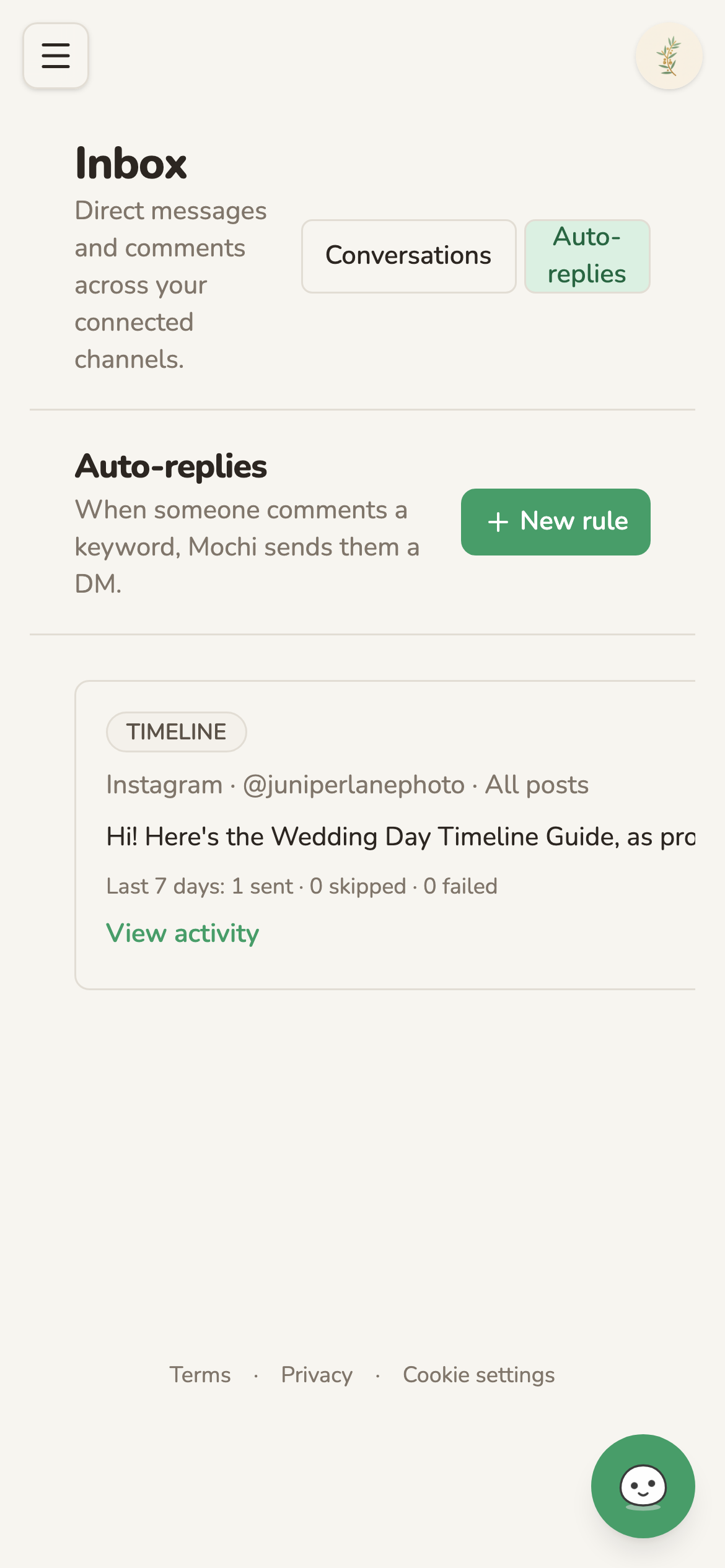
A comment containing a trigger word gets a DM with the link, logged automatically.
Step 3: Write a First Email That Actually Sounds Like You
The welcome email is the one message almost every subscriber opens, because they just signed up and your name is still fresh in their inbox. Most musicians waste it on a form-letter "thanks for subscribing" that reads like it was written by nobody in particular.
Take a bedroom producer who finally sends a real welcome note instead of the default one their email tool wrote for them:
"Hey, thanks for being here. I started making beats in my college dorm because the campus wifi was too slow to stream anything else, so I just made my own. This list is where the actual process lives: half-finished loops, the tracks that didn't make the cut, and the ones that will, before they go anywhere else. Reply to this email and tell me what kind of stuff you want more of. I read every reply myself."
Notice what that email does that a form letter can't: it tells a specific true story in two sentences, says plainly what the subscriber is signing up for, and asks a direct question that invites a reply. A subject line does similar work in miniature. "New single out now" tells a subscriber nothing they couldn't guess from your last ten posts. "I almost scrapped this song three times, here's why I didn't" gives them a reason to open an email instead of skimming past it in a crowded inbox.
Step 4: Build a Sending Rhythm You Can Actually Keep
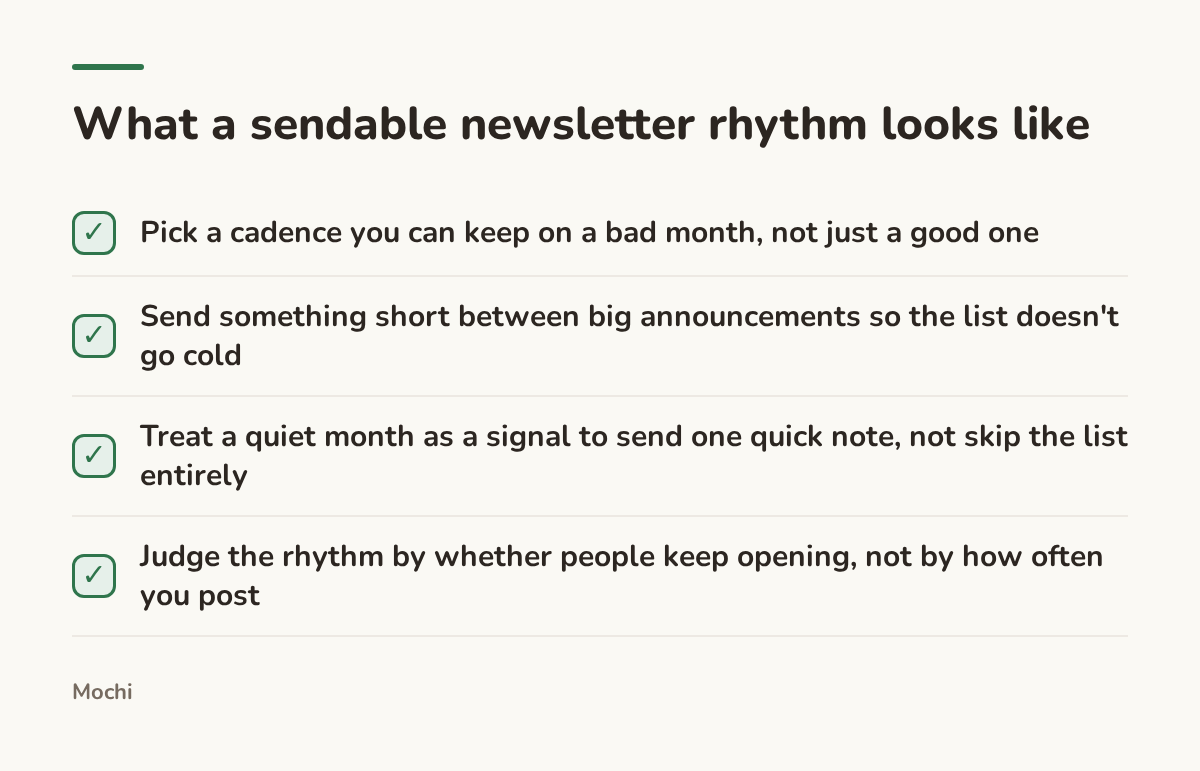
A newsletter that goes out once with huge excitement and then goes quiet for four months does more damage than no newsletter at all, because it teaches subscribers to stop opening. The right rhythm isn't a fixed number borrowed from someone else's advice column. It's whatever cadence survives contact with your actual schedule: a short note before a show, a longer one after a release, a quick one when you're in the studio and want to share a rough clip.
Jazzfuel's piece on why a mailing list matters for a working musician makes the case plainly: a list only pays off if it's still active the day you actually need it, whether that's a crowdfunding push, a tour announcement, or a record release. A list that's gone quiet for a year doesn't open at the same rate as one that's been showing up consistently, even if you send less often than you'd like.
Step 5: Know What Belongs in the Feed and What Belongs in the Inbox
Not every piece of content belongs in both places, and treating the newsletter like a copy-paste of your feed is a quiet way to make people unsubscribe. The feed is where a stranger finds you for the first time. The inbox is where someone who already decided they like you gets something a stranger doesn't.
Academic work on how musicians actually manage their social audiences backs this up: the relationship with a fan who follows you and the relationship with a fan who actively chooses to hear more from you are genuinely different kinds of attention, not the same thing at different volumes (Seeing Social Media Audiences as Musicians Do digs into this directly). A framework for how that relationship deepens from a passive follower into something closer to a subscriber is laid out in The Development of the Artist-Fan Engagement Model, if you want the research version of what this article is describing in plain terms.
In practice, that split might look like a touring musician posting the tour poster to every platform, the same way everyone else announces a tour, but sending the subscriber list the actual routing logic first: which city has the smallest room and will sell out fastest, which date still has a few tickets left, which stop has a surprise guest nobody's announced yet. Or a producer posting a finished track to the feed while the newsletter gets the unfinished version from three weeks earlier, with a note about what almost got left out. The feed shows the work. The inbox shows the work happening.
Starting Small Still Counts
None of this requires a big launch or a perfect list of a thousand names on day one. It requires a signup link that exists, a welcome email that sounds like an actual person, and a rhythm you can hold onto past the first few sends. The ICMP guide to building an artist mailing list is worth a read if you want a slower, more detailed walkthrough of the groundwork once you're ready to go past the basics here.
A feed will always decide, on its own schedule, who gets to see you today. A list answers to you. So which one would you rather be building when the algorithm changes again, because it will?
Part of a series
The Creator's Playbook
Evergreen craft for working creators: brand, content planning, and publishing, written by the team that builds Mochi.