 Mochi Labs
Hootsuite for Creators: What $99 a Seat Buys You Against Mochi's $29
A plain look at Hootsuite for creators: what the $99-per-seat Standard plan includes, and what a single-brand tool like Mochi covers for $29 a month.
A dozen logins. A shared dashboard. A seat for everyone who touches the account. That's the business Hootsuite is built for, and it shows up in the first number on its pricing page. Most of us running one account between shoots, sets, or gigs are not that business. The question worth asking before any of the numbers below is whether you're paying for a team that doesn't exist yet.
Hootsuite for Creators: What $99 a Seat Actually Buys
Hootsuite's plans are plain enough to lay out in a sentence each. Standard starts at $99 per user a month and covers 10 social accounts. Professional moves to $199 per user a month for unlimited accounts, with AI smart replies and 90-day trend forecasting folded in. Advanced climbs to $399 per user a month. Enterprise has no price listed at all, just a form to request a call, and that's also where its social listening tool, Lumen, lives. As of October 11, 2026, that's the sticker, worth dating here because software pricing moves without much notice. A 14-day trial exists, no card required, but it caps the whole organization at 10 to 20 posts a day, which tells you who the trial is actually built to test: a team's shared workflow, not one person's Friday posting habit.
Independent research on how solo creators actually run their businesses backs up the mismatch: most are a single person handling the work and the marketing of it, not a department with a seat budget. If that's you, the next three sections are about what you'd be paying for and not using.
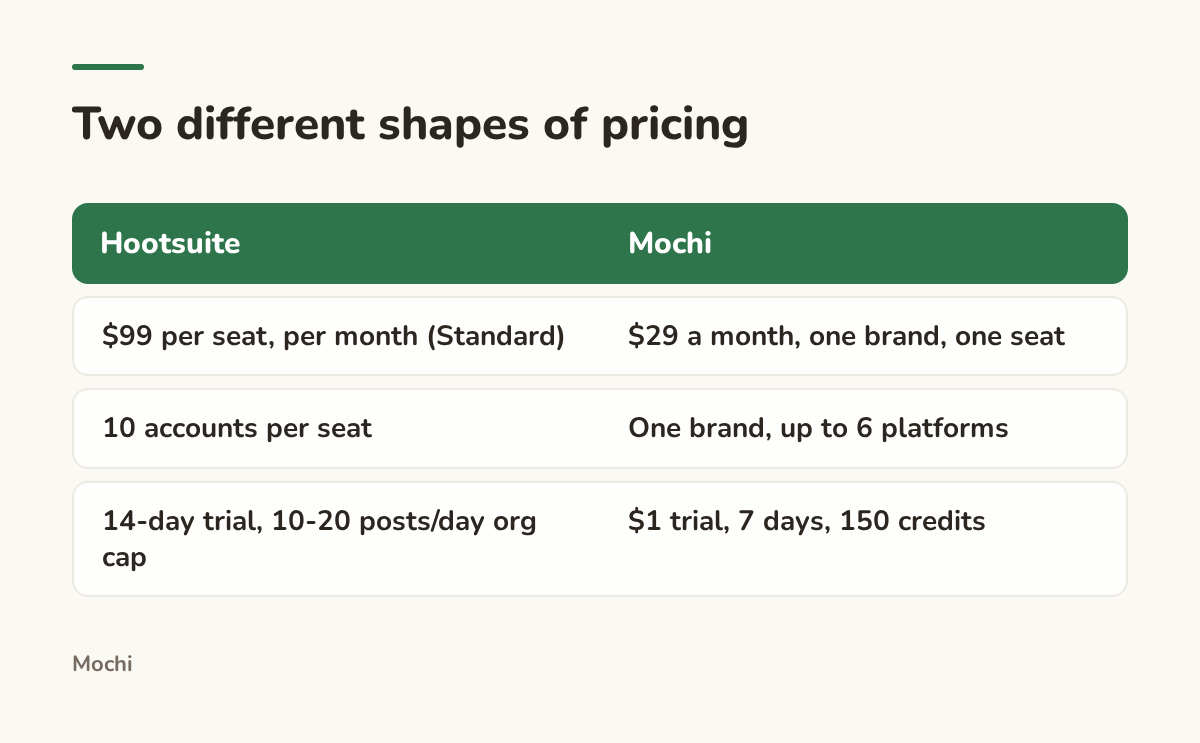
Built for two different sizes of team.
What the Seat Count Is Actually Paying For
Every number above multiplies by seats, and seats are the whole point of the pricing, not a detail inside it. Take a photography studio with five shooters working under one name: a studio manager scheduling the week, two assistants drafting captions, and the lead photographer doing final review before anything goes out. That's five logins and five sets of permissions, and a genuine reason to pay per seat, because the alternative is one laptop being the only way anyone at the studio posts anything. Five seats on Standard runs $495 a month before a single extra account or feature. That math is doing real work for a five-person studio. For one person running one account, it's five times a price for four seats nobody's going to sit in.
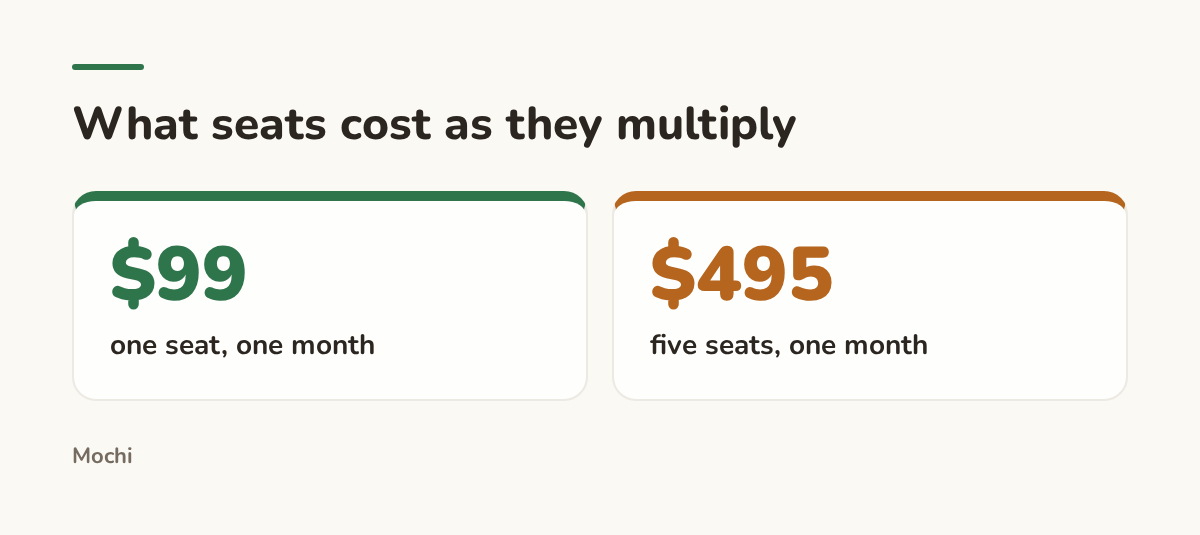
The price scales with the team, not with the work.
So what does the other big line item, listening, actually watch for?
Listening: Watching a Market a Solo Account Doesn't Have
Social listening, as an independent marketing glossary defines it, means tracking what gets said about a brand across accounts it doesn't own: mentions, reposts, sentiment, competitor chatter, often across markets and languages at once. Hootsuite keeps its own version, Lumen, inside the Enterprise tier, the one with no price on the page, and that placement tracks with what listening is actually for: a company watching its name move through a market too big to see by scrolling.
Picture a touring musician whose new single gets picked up by three fan accounts and a regional radio blog in the same week, none of which she follows. She'd rather know the day it happens than whenever a friend forwards a screenshot. That's a real want. For a company managing a name across dozens of markets, it's worth a dedicated tool. For one artist, it's usually served well enough by a saved search and a Monday morning scroll, not a monitoring platform priced for a market she isn't operating in.
Seats and listening both assume a team. The last piece, approval workflows, assumes something even more specific: that more than one person's judgment has to sign off before a post goes live.
Approvals: Built for More Than One Hand on the Post
A multi-stage approval workflow, the kind documented in Asana's own guide to giving feedback and approvals, exists to solve one problem: a draft goes up, a second person reviews it, and nothing publishes until they sign off. Picture a small tattoo studio where an apprentice drafts the week's healed-work posts and the shop owner has final say on anything showing a client's skin before it's fully healed. That review step earns its place there, because a wrong call becomes an awkward conversation with a client the next day.
If you're the one person drafting and the one person approving, that workflow isn't catching anything you'd have missed. It's a second click on your own work.
None of this makes Hootsuite the wrong tool. It makes it the wrong tool for a specific size of business. So where's the actual line?
When a Creator Would Actually Need Hootsuite
A few honest signs you've outgrown a single-brand tool: more than one person needs to log in and post under the same name, a client or manager has to approve posts before they ship, or you're tracking how a brand, not just a post, gets talked about across accounts you don't control. Any one of those is a real reason to look at Hootsuite's Standard tier and work up from there.
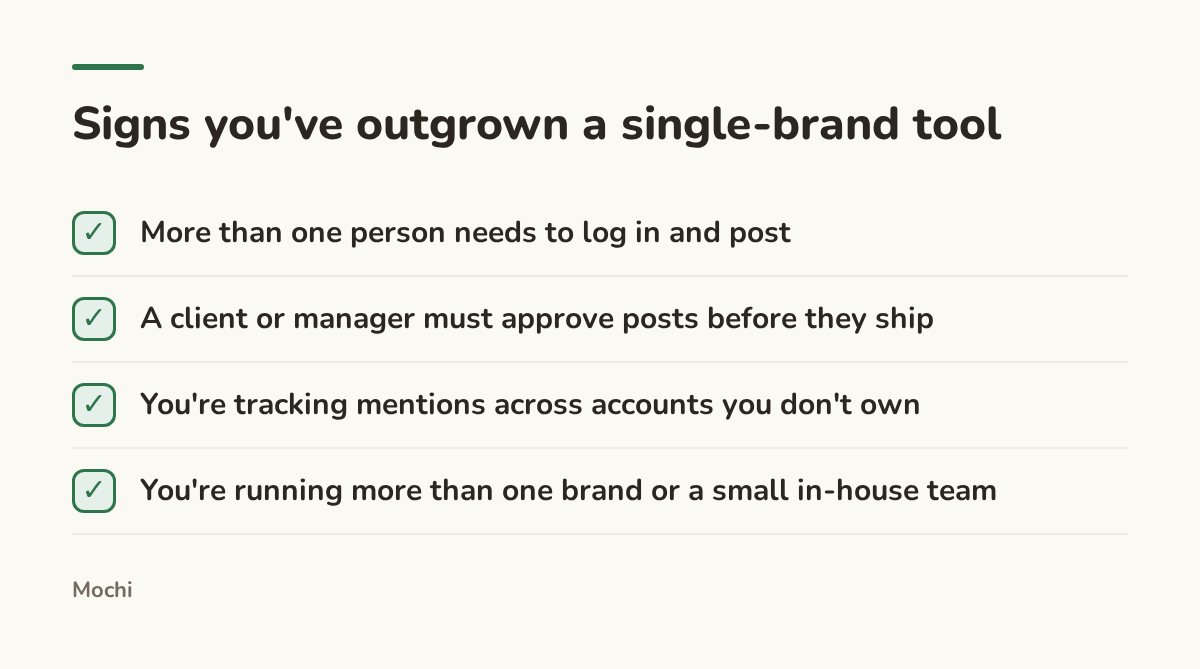
If none of these are true yet, keep reading.
If none of that is true yet, the other side of the ledger is worth a look.
What Mochi Covers for a Single Brand
Starter and Pro, plainly
Mochi starts at $29 a month for Starter: one brand, one seat, 10 research runs a month on a weekly refresh, 500 credits, scheduled posting, and analytics. Pro moves to $59 a month and adds two more seats, daily research refreshes, 1,500 credits, and the inbox. A trial runs $1 for seven days with 150 credits, card required, and rolls onto whichever plan you picked unless you cancel it. Extra brands run $9 a month each with 100 credits, for anyone running more than one.
Mochi doesn't cover everything either. There's no free plan, no annual discount, and no posting to X, Pinterest, or Bluesky, so if any of those is where your audience actually lives, that's a real gap, not a small one.
The inbox, as a differentiator
Take a wedding photographer who's used to pointing people to a timeline-planning guide buried in her bio and nowhere else. On Pro, she sets a rule watching for the word "timeline" in a comment. When a couple drops it under a reel, Mochi replies and sends them the guide by direct message, in her own voice, that same afternoon instead of whenever she next opens the app.
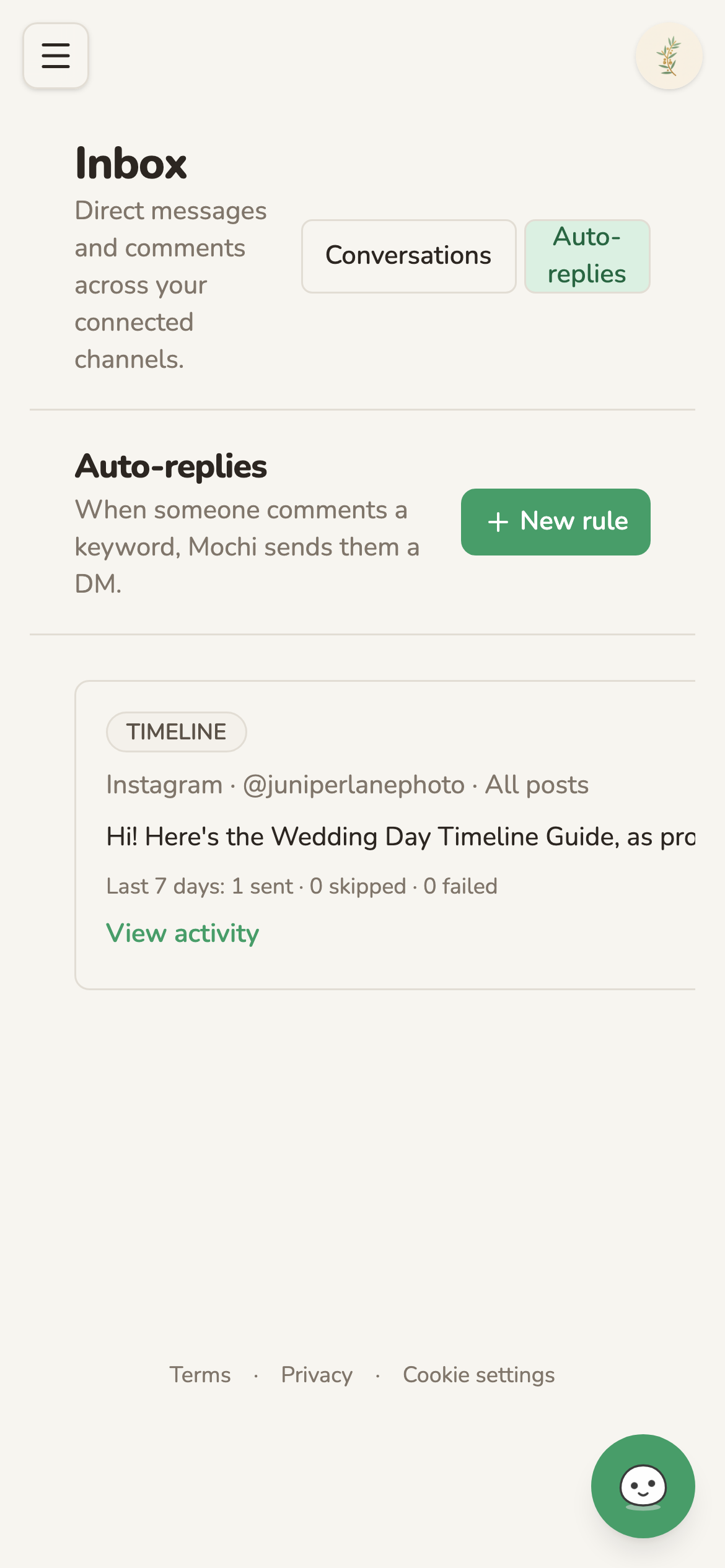
A comment containing TIMELINE triggers a DM with the Wedding Day Timeline Guide, and the card counts what it sent.
Hootsuite's nearest equivalent, AI smart replies, sits behind the Professional tier at $199 a seat, bundled with trend forecasting. For one brand on Pro, the keyword reply just comes with the $59 plan.
Anyone weighing the two can see the actual numbers on Mochi's pricing page before starting the $1 trial.
The Honest Answer
Hootsuite earns its price once a brand has outgrown a single login, a single judgment call, and a single account worth watching. Until then, the price of entry buys seats, sign-offs, and market-wide listening nobody's using yet. The real question isn't which tool is better. It's whether your account needs a team's worth of software, or just something that keeps up while you're behind the camera, the kit, or the mic. Which one is actually true for your account right now?
Part of a series
Mochi vs. the Field
Honest comparisons of Mochi with the social media tools creators already use, and what is different about an agent that learns your brand.