 Mochi Labs
Instagram for Clothing Brands: The Complete Playbook
A practical guide to Instagram for clothing brands: shoppable grids, Reels that show fit, TikTok Shop, and a posting rhythm built around drops and restocks.
· We keep this page up to date, so bookmark it and come back.
A customer can't touch the fabric before they buy. That's the whole problem a clothing brand is solving every time it posts, and these days the solving happens on Instagram and TikTok, not on the brand's own site.
If you run a boutique, a small label, or a one-person print line, you already know the stakes. A shopper decides whether a piece fits their life while they're still mid-scroll, thumb hovering, long before they land on a product page. Get social media marketing for clothing brands right and that scroll turns into a saved post, a DM about sizing, a sale. Get it wrong and the piece just looks like laundry on a hanger.
This is the pillar page for that work: how Instagram and TikTok actually move clothing, section by section.
Instagram for Clothing Brands
Instagram quietly runs separate ranking systems for Feed, Stories, Reels, and Explore, each one deciding what gets shown on its own terms, as Instagram's own breakdown of how Feed, Stories, Reels, and Explore each decide what to show lays out. For a clothing brand, that means one photoshoot isn't one post. It's four different chances to get found, and each one needs its own cut.
Make the grid look like a closet someone wants to raid
Treat the grid itself like a closet a stranger would want to dig through, not nine identical flat-lays in a row. Texture should change shot to shot: a slouchy jacket next to a crisp blouse next to someone laughing in a fitting room mirror. The caption carries as much weight as the photo. "New arrivals" tells a scroller nothing about why they'd want this particular piece.
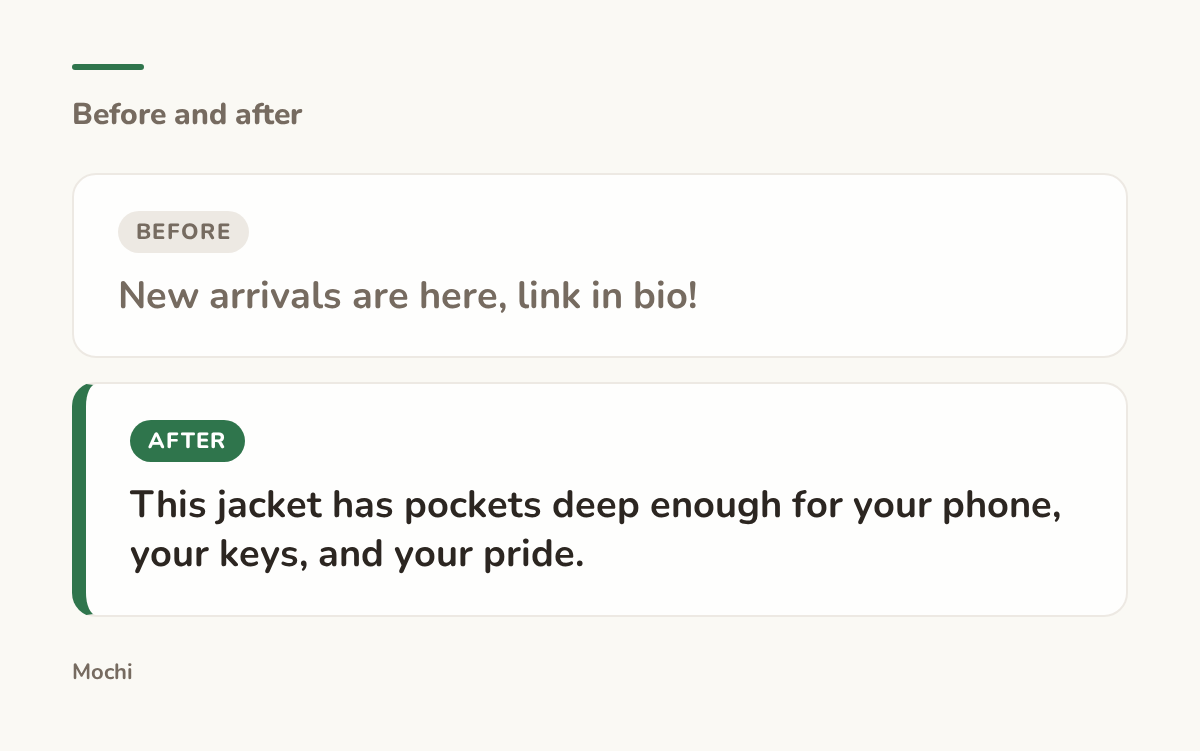
Before: New arrivals are here, link in bio! After: This jacket has pockets deep enough for your phone, your keys, and your pride.
Specific beats generic every time.
A generic caption asks for nothing in particular and gets nothing in particular back. A specific one gives a scroller a reason to stop that has nothing to do with the brand name.
Shop tags: turn the grid into a storefront
Tagging products only matters if the tag is attached to something worth tapping. Meta's guide to setting up a shoppable Instagram catalog covers the eligibility rules and the tagging mechanics, but the mechanics are the easy part. The harder part is deciding which posts earn a tag at all.
Not every post needs five products stapled to it. A styling Reel showing three ways to wear one skirt earns a tag on the skirt and nothing else. Tag the shoes, the bag, and the earrings too, and the post stops looking like a styling idea and starts looking like a department store directory.
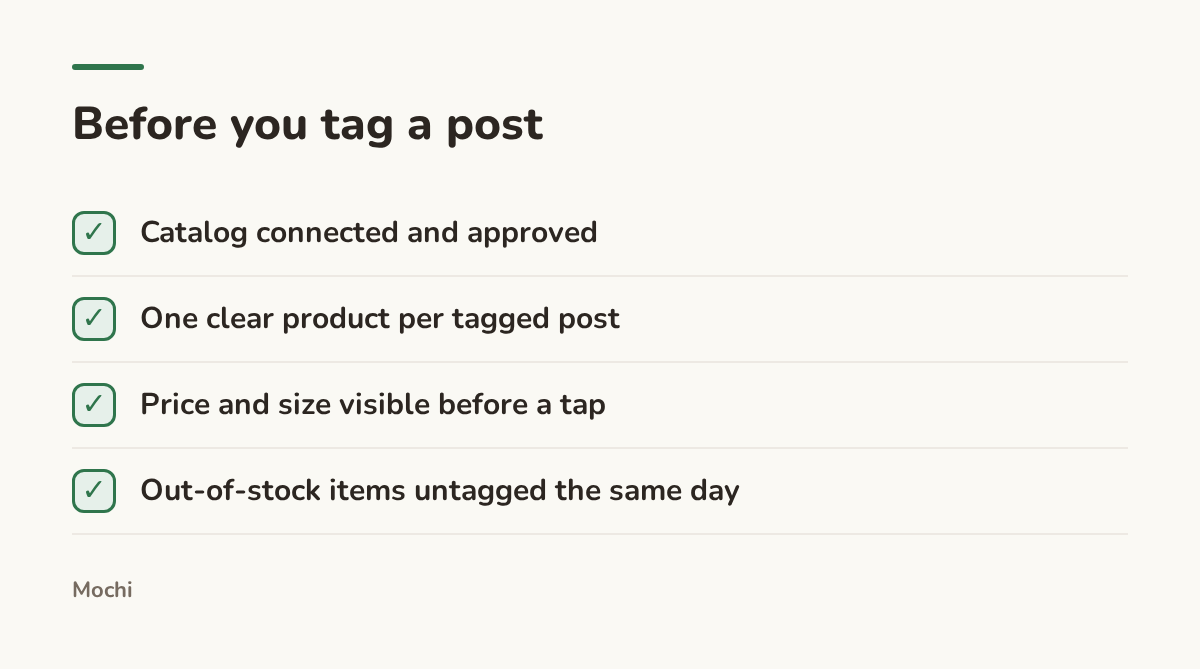
A shoppable post only works if the tag earns the tap.
Reels that show the fit, not just the hanger
Instagram has said plainly that creators and viewers both have some say in what Reels get pushed further, covered in its own post on how creators and viewers can shape what Reels get recommended. Posting consistently in one lane, styling, fit, behind-the-rack, is part of how that shaping plays out over time.
A flat garment tells a shopper almost nothing about how it moves, sits, or wrinkles after an hour of wear. Picture a small label that posts the same cardigan two ways: once as a product shot on a hanger, once as a ten-second clip of someone walking across a parking lot in it. The clip is the one that pulls the size questions in the comments, because it's the one that looks like a real body wearing it.
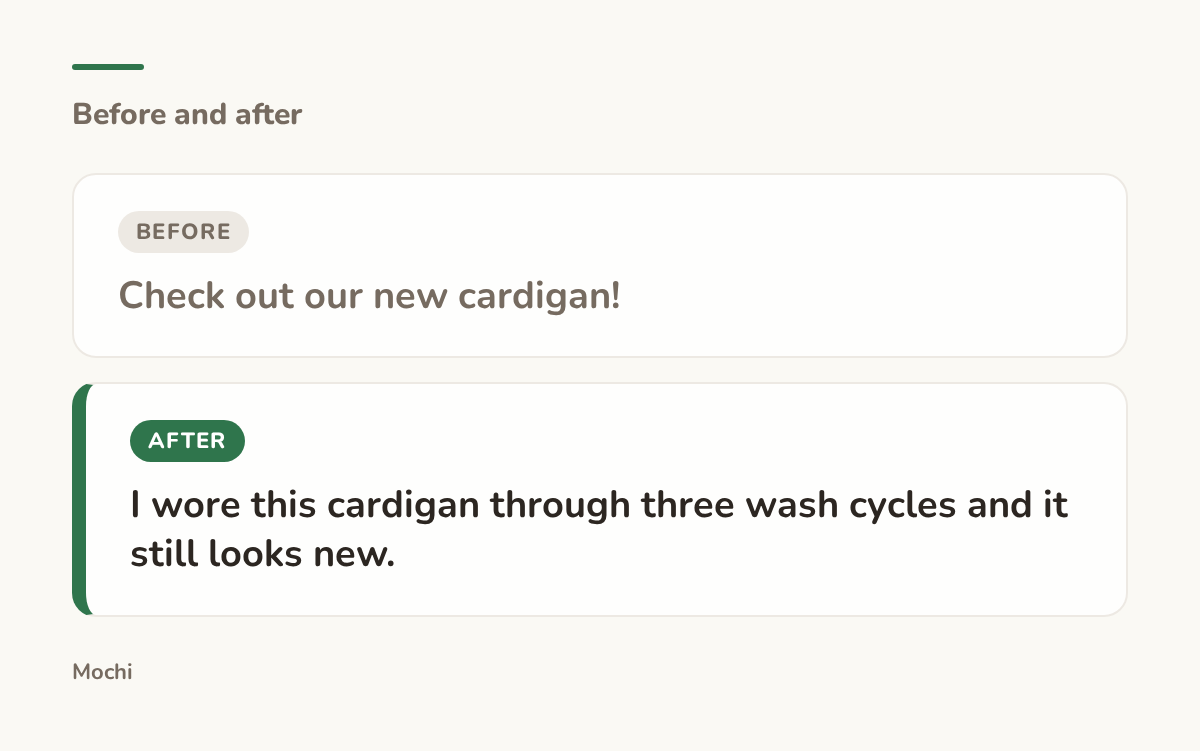
Before: Check out our new cardigan! After: I wore this cardigan through three wash cycles and it still looks new.
A claim like that survives scrutiny. "Check it out" doesn't ask for any.
Stories and Highlights as a fitting room
Stories carry the questions a product page can't answer: does it run small, is it see-through, does the color match the photo. Pin a Highlight by garment type or by concern (Sizing, Fabric, Returns) so a new follower can find the answer without digging through the whole archive. A size-guide Highlight for a boutique's pants does more quiet selling over a year than any single Reel, because it's sitting there every time someone is one question away from adding to cart.
TikTok for Clothing Brands
Instagram tends to sell the finished look. TikTok sells the decision to buy it, usually inside a video that doesn't look like an ad at all.
TikTok Shop and the try-on video
TikTok Shop folds the purchase into the scroll much the way Instagram's tags do, but the format that carries it best is the try-on video, not the product demo. A try-on clip works because it answers the one question a shopper can't get from a photo: how does this actually sit on a body that isn't a sample-size model.
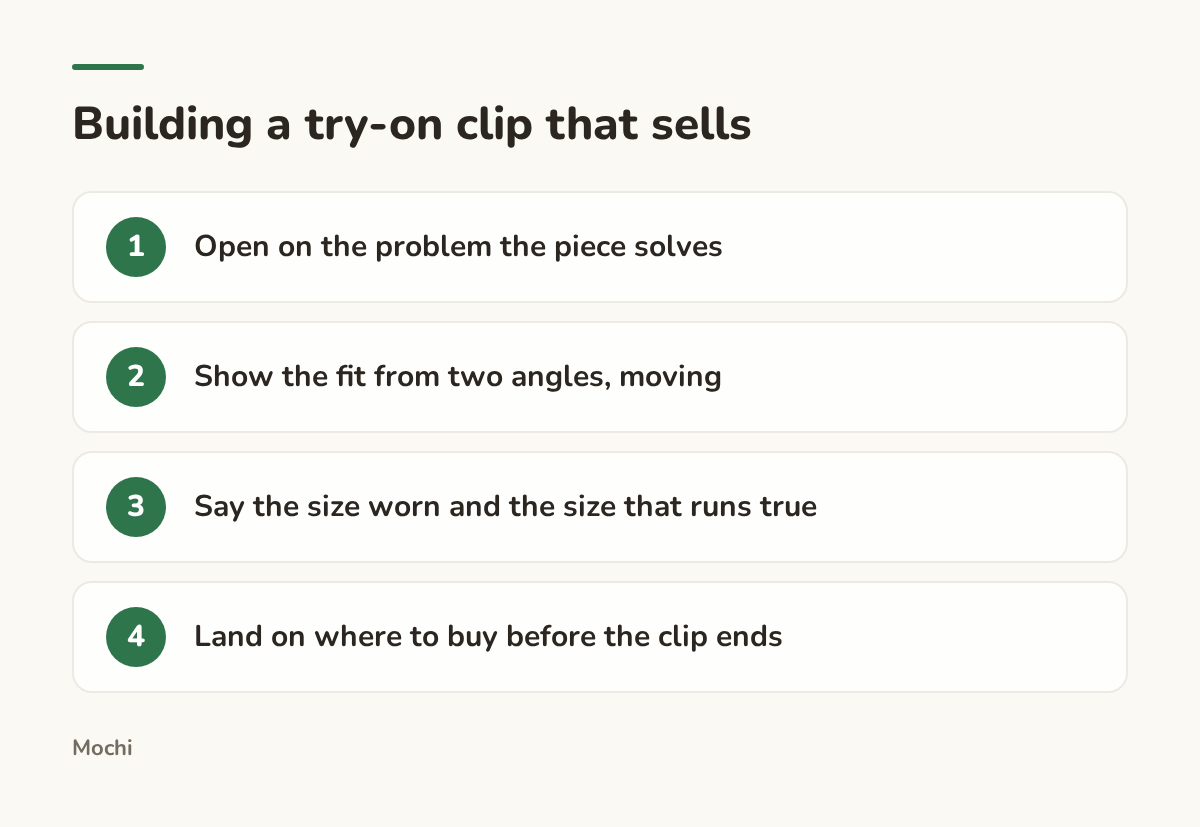
Four beats, in that order, every time.
UGC, duets, and customer hauls
The most convincing clothing content on TikTok usually isn't filmed by the brand at all. A customer haul, shot in a bedroom with bad lighting, reads as more honest than a studio shoot, because it is. Reposting or duetting a customer's haul does two things at once: it rewards that customer for advertising you for free, and it hands your own account a piece of content that has already proven it resonates with at least one real buyer.
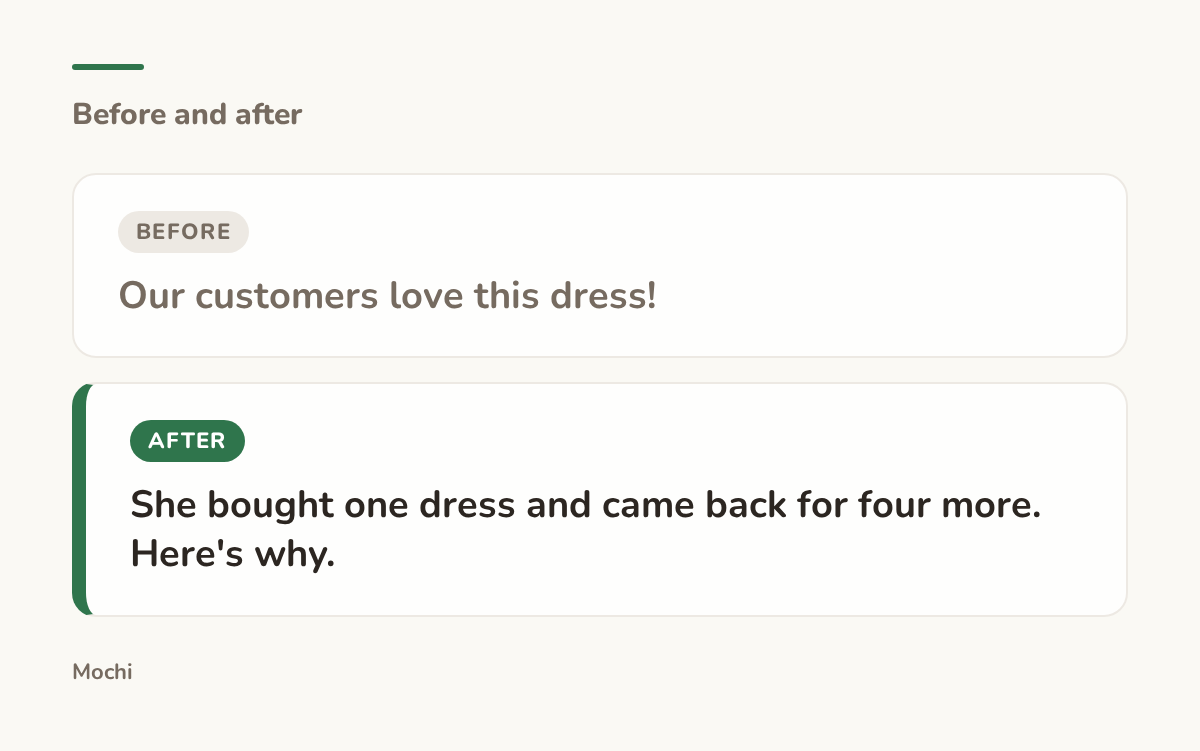
Before: Our customers love this dress! After: She bought one dress and came back for four more. Here's why.
Hashtag challenges and brand collabs
A hashtag challenge only works at scale when the prompt is something an ordinary person can actually do with their own closet, not just with the brand's stock. TikTok's own case study on how ASOS's hashtag challenge drove over a billion video views is built on exactly that: a prompt simple enough that anyone with a phone could join. "Show us your [brand] styled your way" travels further than "shop the new collection," because it hands the creative work to the audience instead of asking them to just watch.
A smaller label can run the same shape at a smaller scale. Pick one versatile piece, invite a styling challenge around it, and feature the best entries back on the brand's own account. The entries become the catalog.
Content Pillars and a Posting Rhythm for Clothing Brands
Instagram and TikTok both reward a brand that shows up with something to say, and pillars are how you decide what that something is before you're staring at an empty caption box.
Pick pillars that match how you actually make and stock clothes
A content pillar should describe a kind of post, not a vague mood. For a clothing brand, that usually sorts into something like: new arrivals, styling and outfit building, behind the making (cutting, sewing, printing, sourcing), and customer features. Four pillars is plenty. The point isn't variety for its own sake, it's having an answer ready when you sit down to plan a week and don't know what to post.
Build the rhythm around drops, restocks, and quiet weeks
The honest schedule for a clothing brand follows the inventory, not a flat rule about posting three times a week. A restock week can carry a post a day because there's real news to share. A quiet production week might only earn two posts, and that's fine as long as those two are good.
We built Mochi's calendar to hold exactly that: a week's worth of scheduled posts, laid out across a brand's own content pillars.
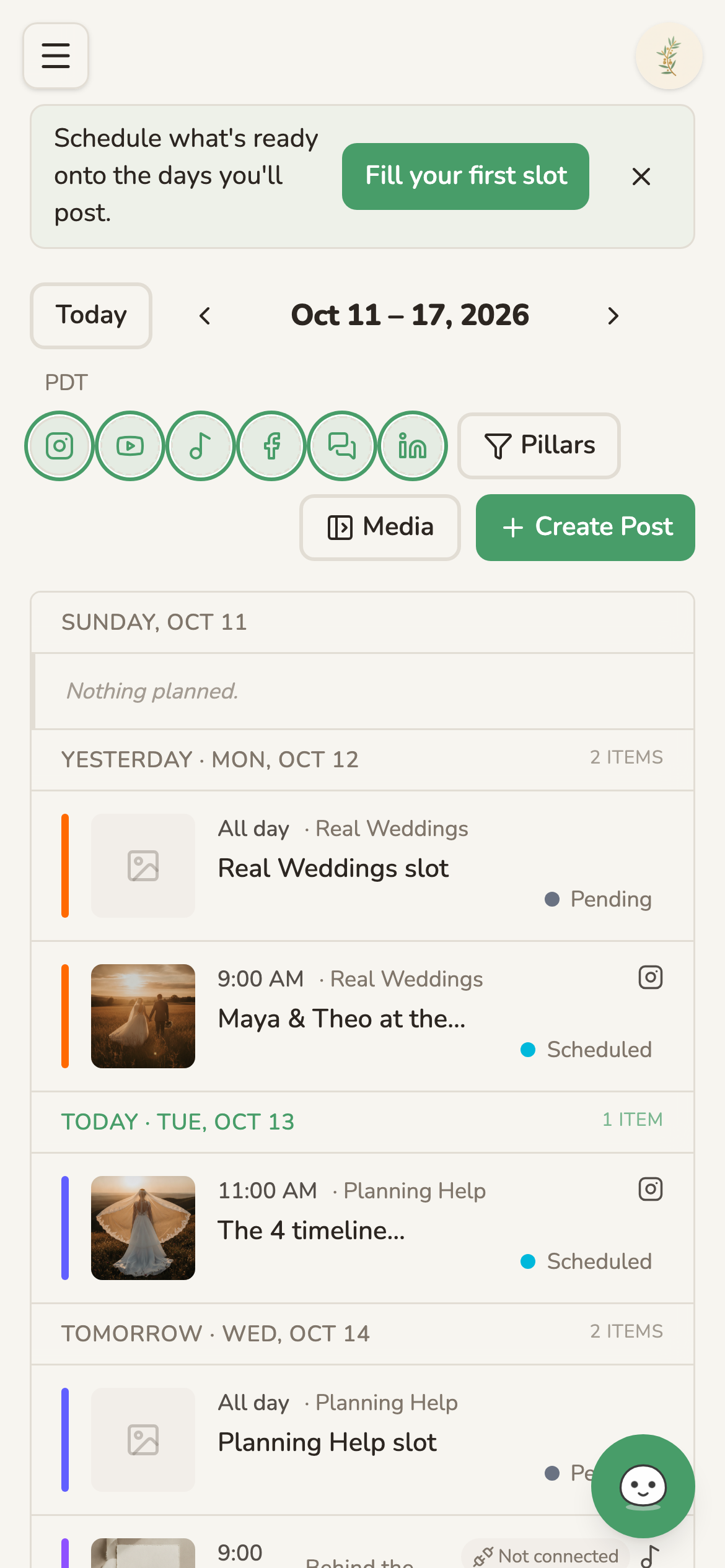
A week of scheduled posts, spread across content pillars.
Paid Reach When Organic Isn't Enough
Organic reach on a young account can be slow enough to be discouraging, especially with inventory sitting in a storage unit right now. Paid is the honest shortcut. Meta's starting point for setting up and running Instagram ad campaigns covers the setup end, and its page on ad placements, formats, and policies covers what you're actually allowed to run.
A small budget spent boosting the post that's already working organically usually beats a small budget spent on a brand-new ad nobody has validated yet. Let the audience tell you which piece to put money behind before you spend on one.
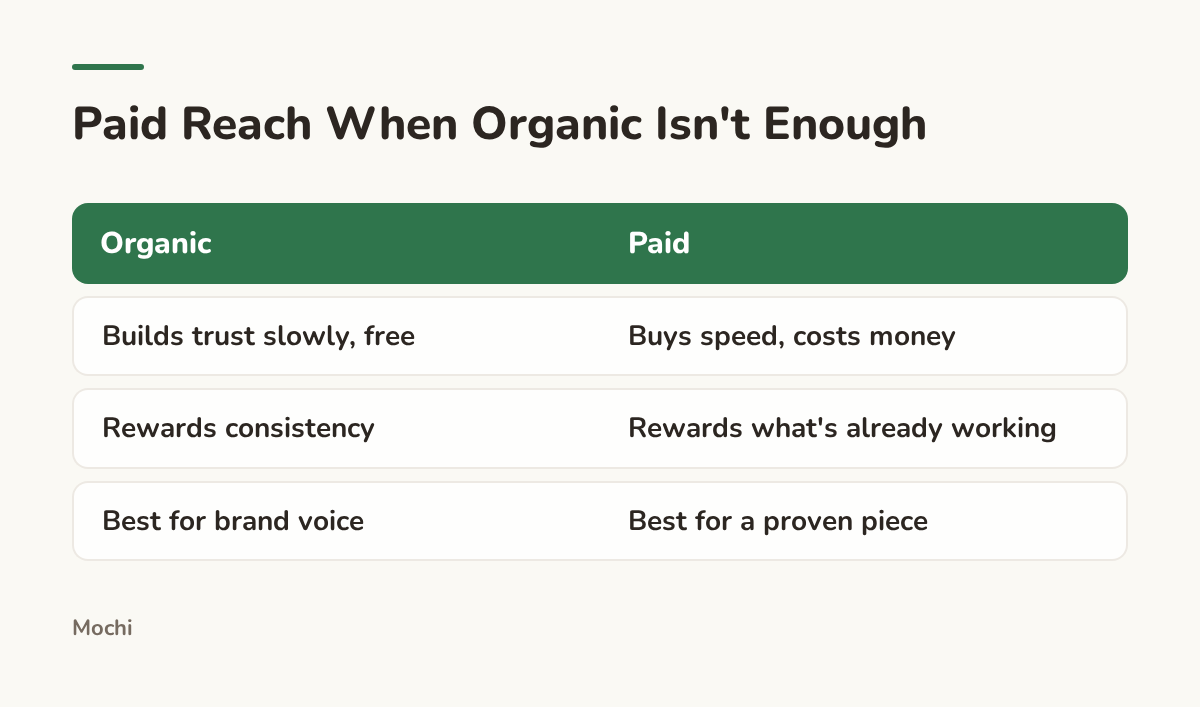
Spend behind what's already proven, not a guess.
Answering DMs About Sizing, Restocks, and Shipping
The comment section of a clothing brand fills up with the same handful of questions: does this run true to size, when's it back in stock, does it ship internationally. Treat that repetition as research, not noise. Picture a boutique that gets the same sizing question under every new drop. Instead of typing the same answer out each time, it pins one comment with the sizing chart and tags new customers into it, turning a chore into a resource that's already waiting when the next person asks.
Sizing questions in particular deserve speed. A shopper quietly comparing your reply time against some other store's return policy won't wait around for an answer.
More for Clothing Brands
The deeper guides for clothing brands are on their way.
What changed this week for clothing brands: this week in your niche.
Part of a series
The Creator's Playbook
Evergreen craft for working creators: brand, content planning, and publishing, written by the team that builds Mochi.