 Mochi Labs
Instagram Reel Ideas: The Complete Playbook
A practical playbook of Instagram Reel ideas, plus TikTok: worked examples, a before-you-publish checklist, and a system for never running dry.
You open the app to post a reel. Nothing.
You scroll your camera roll for inspiration and find raincloud footage from March.
The posting slot is in two hours and the idea well is dry again.
That moment is the actual problem this guide is for, not "how does the algorithm work" in the abstract. This guide covers why the well runs dry, a working set of idea categories for Instagram, how those ideas need to change shape for TikTok, and a simple way to keep a backlog so you're never starting from a blank screen again.
Why the idea well runs dry
It's rarely a creativity problem. It's a format problem: most people only have one mode for a reel (announce something, dance to a trend, repost a photo as a slideshow), and that mode gets boring to make before it gets boring to watch. Instagram has gotten more direct about how its ranking systems decide what gets surfaced: it's watching watch time, replays, and whether someone sends your reel to a friend, not just a like. Instagram's own reel-success guidance points the same direction, toward reels that give someone a reason to watch past the first second and a reason to share it.
So "just a reel" isn't the goal. A reel that earns a replay or a send is.
Instagram Reel Ideas
Think of this less as a list to post through once and more as a set of drawers. When you're stuck, open one.
1. The before and after
Nothing earns a replay like a transformation the viewer wants to see land. A hairstylist filming a color correction, a photographer showing a raw file next to the edit, a boutique owner steaming and restyling a thrifted jacket: all the same move. Show the state nobody would post, then the state everyone wants.
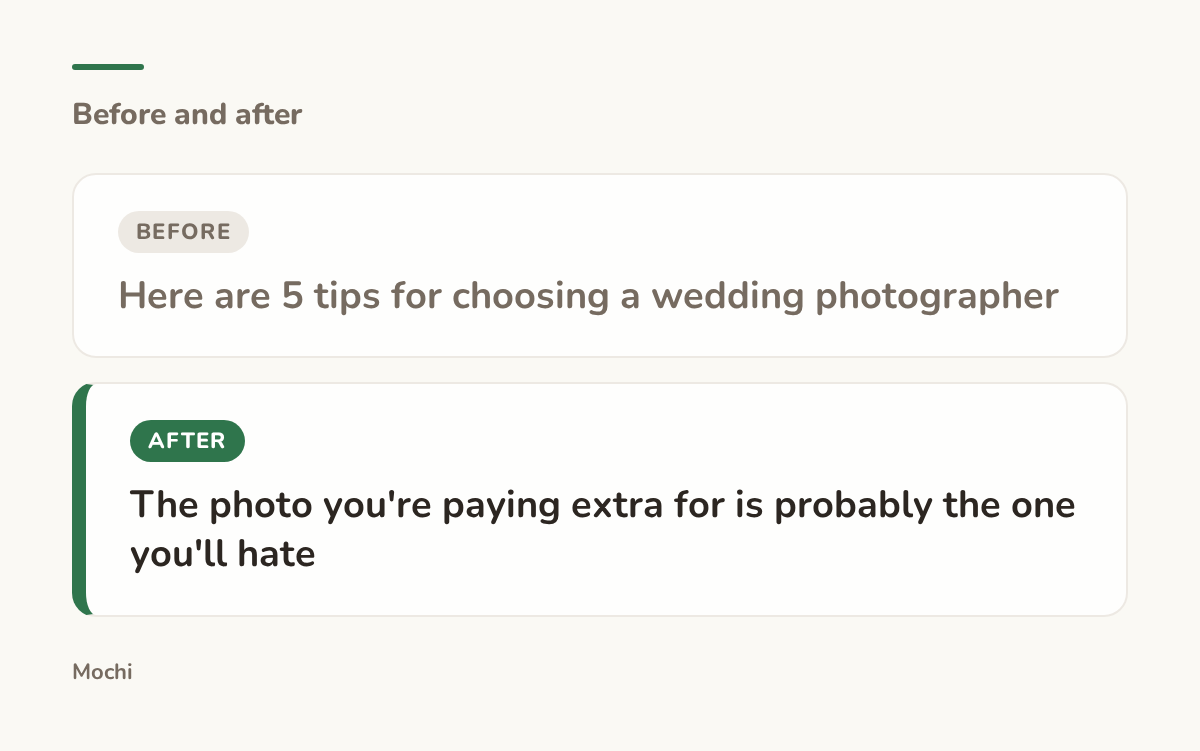
Before: Here are 5 tips for choosing a wedding photographer After: The photo you're paying extra for is probably the one you'll hate
The myth-busting hook names a cost, not a category.
That rewrite works because it names a specific, slightly uncomfortable claim instead of a generic topic. A viewer scrolling past "5 tips" has seen that exact phrase a hundred times. A viewer who just paid a photographer flinches at "the one you'll hate."
2. The process, slowed down
A baker decorating a cake, a florist building a bouquet stem by stem, a tattoo artist's needle work in close-up: these reels need almost no script, because the process is the content. The only job is to film it cleanly and let a few seconds breathe before the cut.
3. A normal day of work
Not the highlight reel, the actual day. A DJ loading gear into a venue at 4pm, a real estate agent doing a lockbox run between three showings, a videographer backing up footage at midnight after a shoot. Viewers curious about your field watch for the texture, not the drama.
4. Answer the question you get every week
Every niche has one question that comes up on repeat in DMs or comments. Pin it as a reel instead of retyping the answer each time.
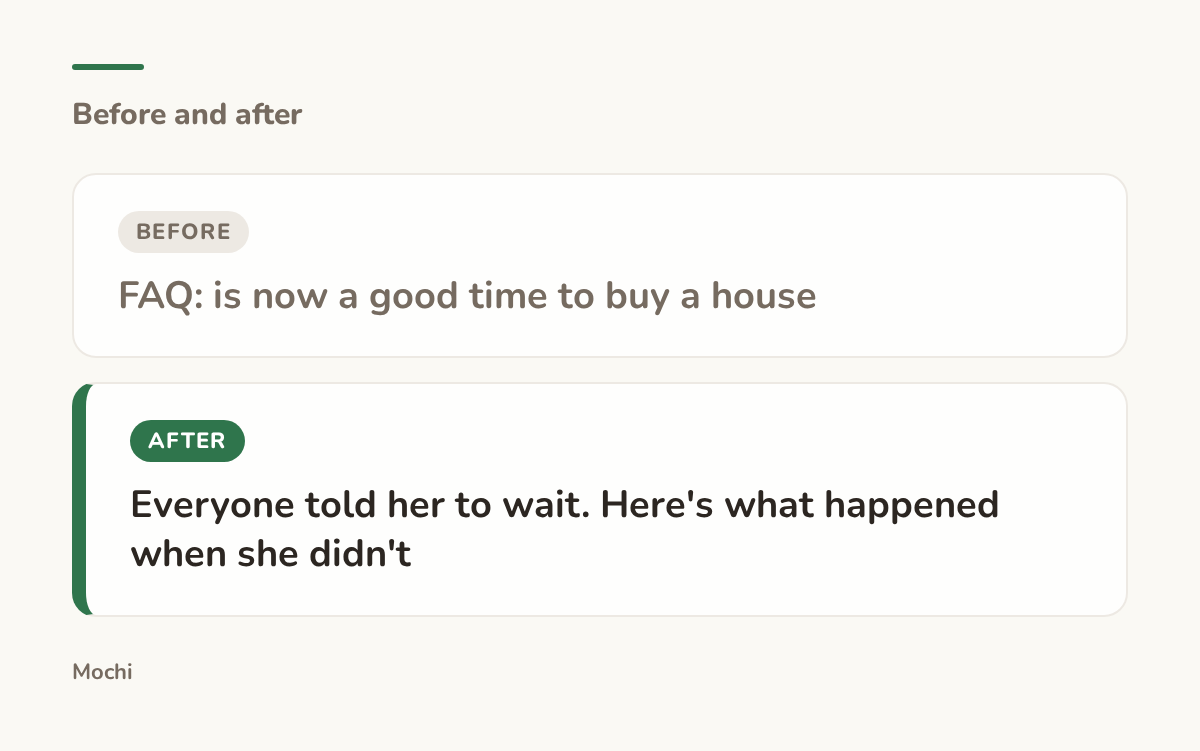
Before: FAQ: is now a good time to buy a house After: Everyone told her to wait. Here's what happened when she didn't
A named "her" beats a generic FAQ every time.
A question answered as a story, with a specific buyer instead of a hypothetical one, gives the viewer a reason to watch to the end instead of skimming a caption.
5. Bust a myth in your field
Every craft has a belief clients walk in with that isn't true: that more megapixels means a better photo, that a bigger wedding needs a bigger photography package, that a short song can't be a single. Naming the myth out loud, on camera, is a hook most people in your field are too polite to use.
6. Show the part nobody films
The unglamorous reality: the inbox at 2am, the gear that broke mid-shoot, the client email that took four drafts to get right. It reads as honest in a feed that's mostly curated, and it's one of the few reel types that doesn't need a trending sound to work.
7. Hand the camera to someone else
A client reaction, a customer trying the product for the first time, a guest's first bite: borrowed authenticity beats a brand's own claim about itself almost every time. Picture a cafe filming a regular's actual order instead of writing "best latte in town" over a product shot.
8. Let your personality show
A musician's take on a trending sound played on their own instrument, a trainer's blunt opinion on a popular workout myth, a stylist's running joke about the one haircut everyone asks for: this is the category that turns a business account into someone a viewer wants to keep following, not just a feed they tolerate.
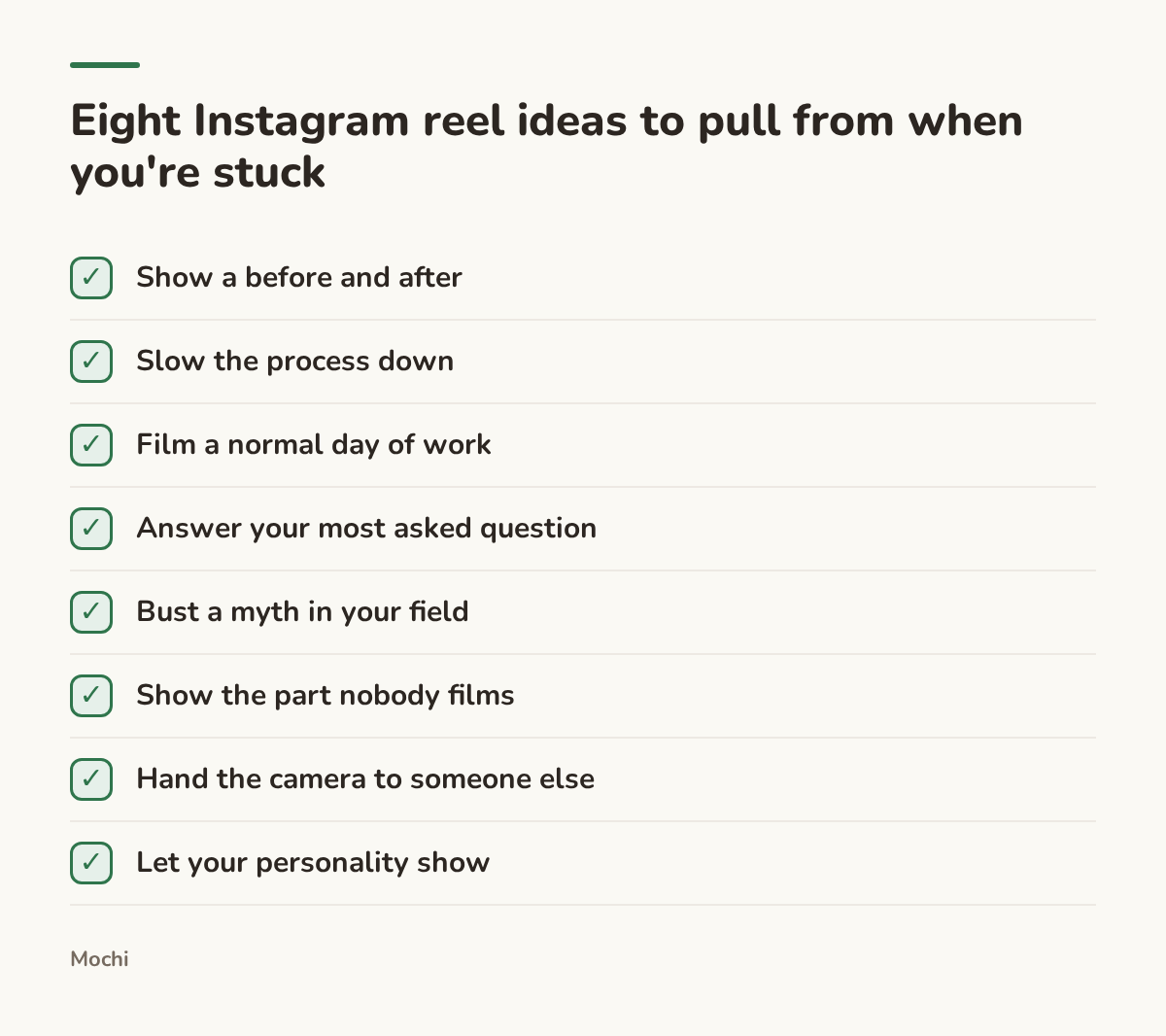
Pick one drawer, not all eight at once.
TikTok Reel Ideas
The categories above travel to TikTok, but the shape of the video needs to change. TikTok's feed leans harder on completion rate and on how fast a clip moves inside a trend, which changes what the first second needs to do and how much polish the rest can afford to skip.
1. Native over polished
A clip shot handheld with a clean cut and no graded color often outperforms the version with a logo intro and a branded lower third. Save the polished cut for Instagram and post the raw take, same day, to TikTok.
2. Put the hook in on-screen text, not your voice
On Instagram a spoken opening line can carry a reel. On TikTok, assume the sound is off until proven otherwise and put the hook as text across the first frame.
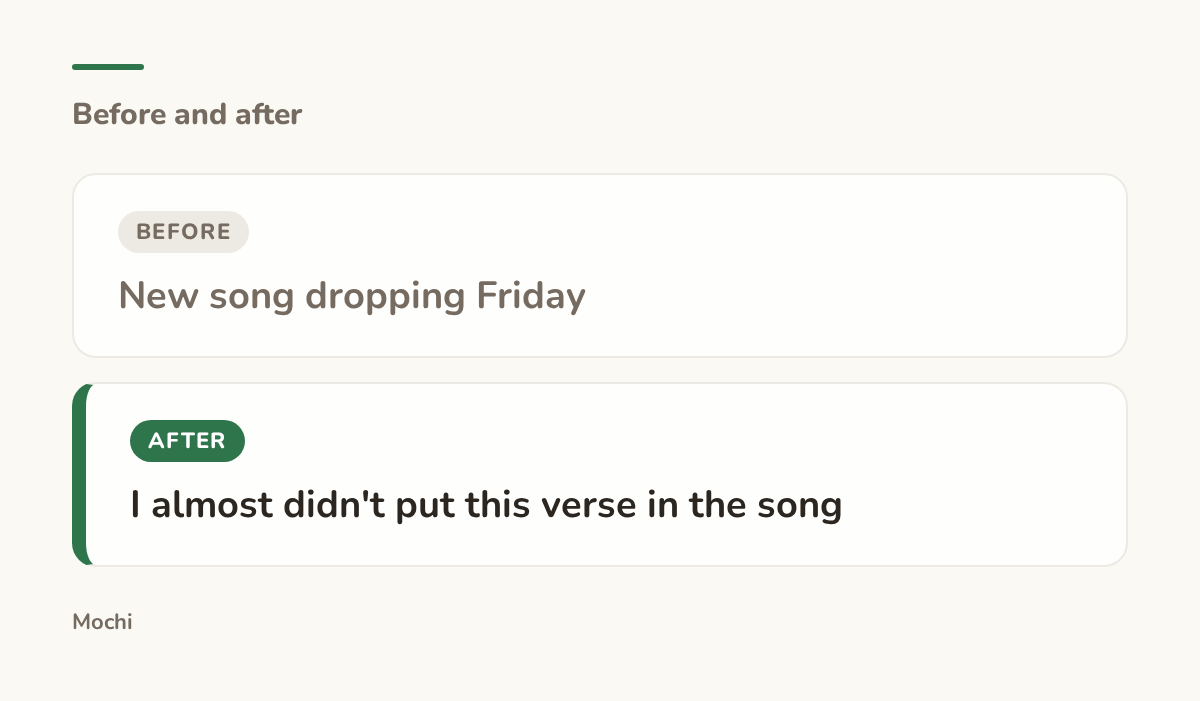
Before: New song dropping Friday After: I almost didn't put this verse in the song
The text-first hook gives a reason to keep watching before any audio plays.
3. Let the trending sound drive the edit
On Instagram, a sound is decoration. On TikTok, the cuts tend to land on the beat, and a trending sound is often the reason the video gets surfaced to people who've never seen your account. A florist re-cutting her bouquet-build footage to match a trending sound's beat drops will reach a different audience than the same footage posted quietly with no sound at all.
4. Reply to a comment as its own video
Stitching or duetting a question from your own comments, or responding to a common misconception in your field, turns a one-line reply into a full video that other people with the same question will find.
5. Post it as a series
"Part 1 of 3" works harder on TikTok than almost anywhere else, because it gives someone a reason to follow before the next part exists yet. A videographer breaking one wedding day into three reels (getting ready, the ceremony, the reception) earns three separate chances to be found instead of one.
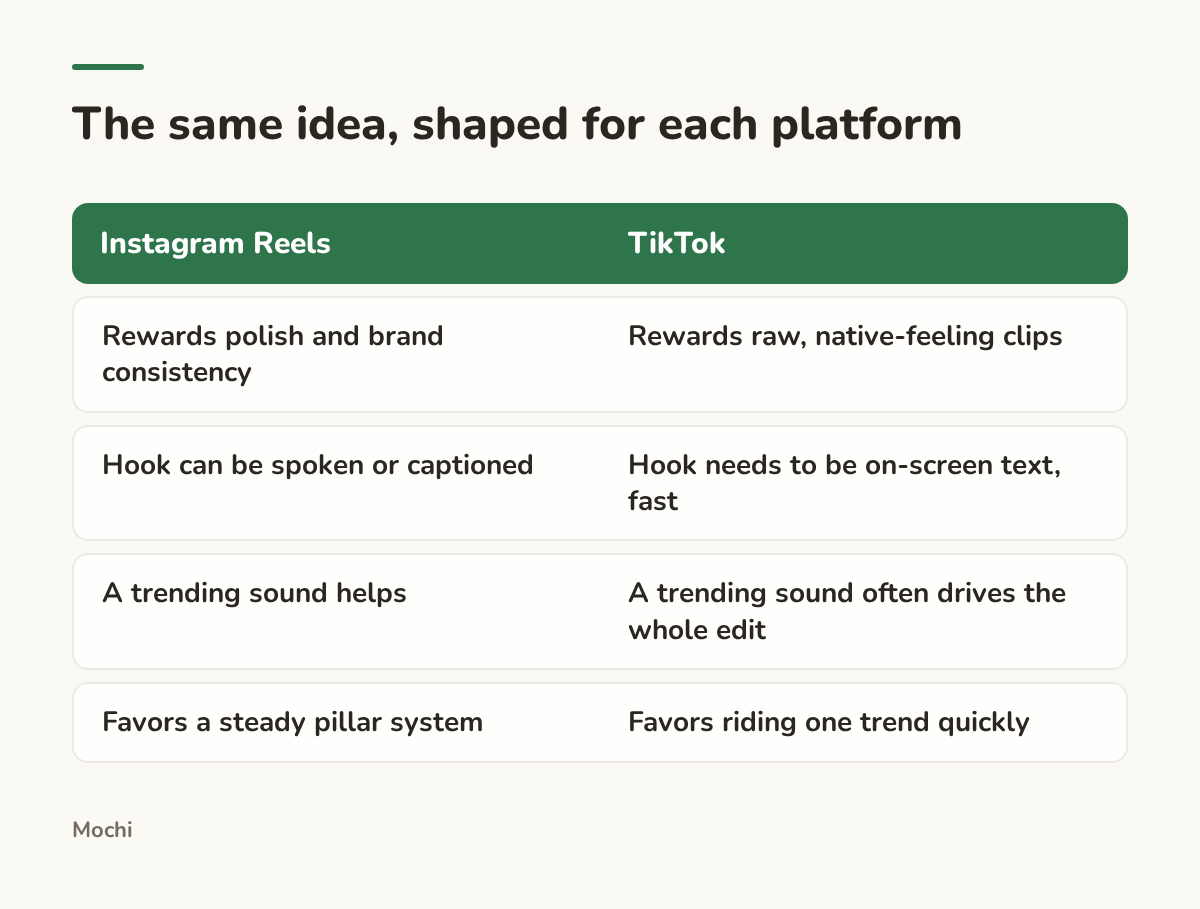
Reuse the idea, not the exact cut.
Building a reel idea pipeline so you're not starting from zero
A list of categories solves today's blank screen. A backlog solves next month's. The simplest version is a running note where every idea gets written down the moment it occurs, whether it's a half-formed line overheard from a client or a trending sound that fits your niche, so posting day is a choice between ten options instead of a search for one.
The other half is writing the idea down with enough detail that it's actually shootable later: the angle, the hook, and what you want the viewer to do when it ends. An idea that's just "do a before and after" is still a blank screen in disguise. An idea that says which before, which after, and what line opens it is ready to film.
We built this into Mochi for exactly this reason: every idea it proposes carries its own brief, with hooks, key points and a call to action already written down, so nothing starts from a blank screen on shoot day.
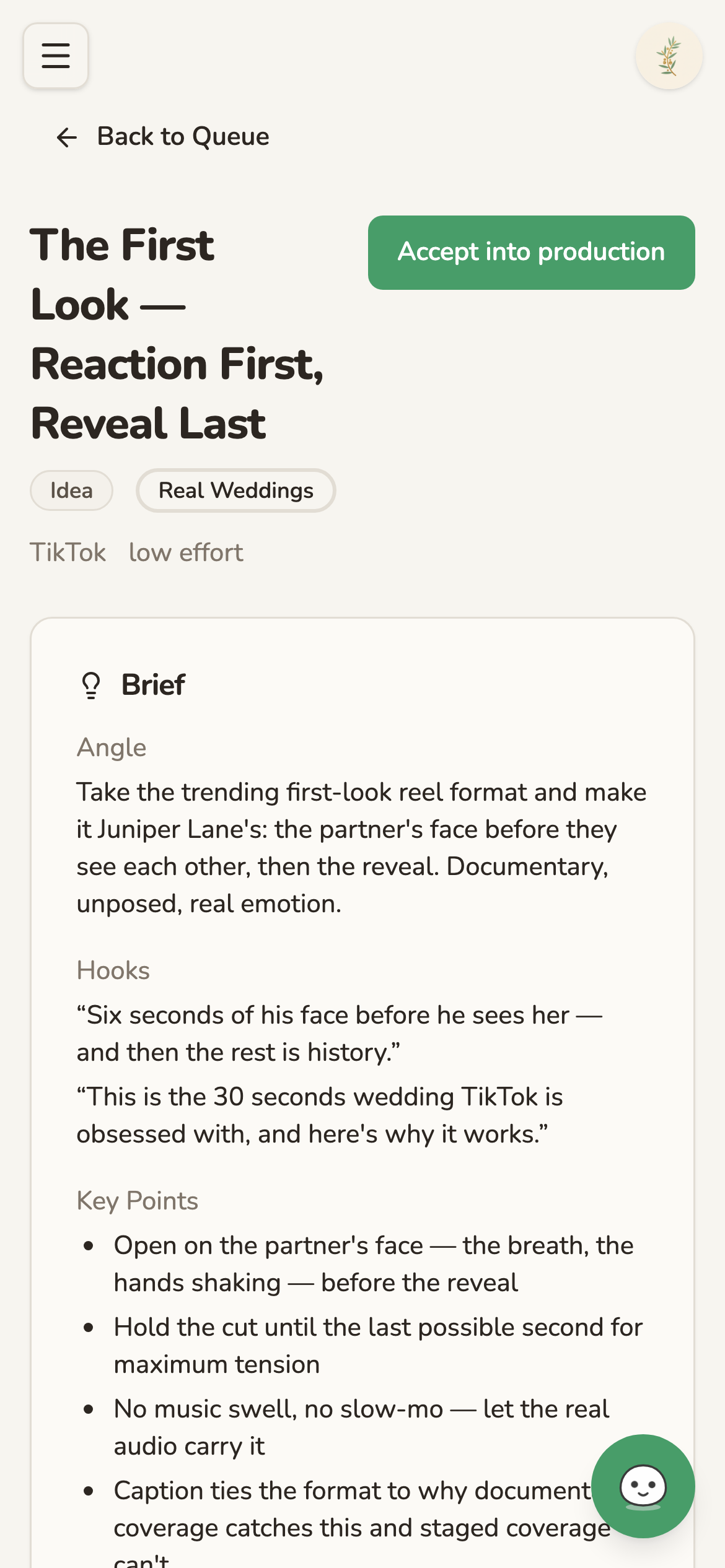
An idea carries its own brief, hooks and a call to action included, ready to shoot.
Before you hit publish
A good idea can still fail on the basics. Run through this before you post.
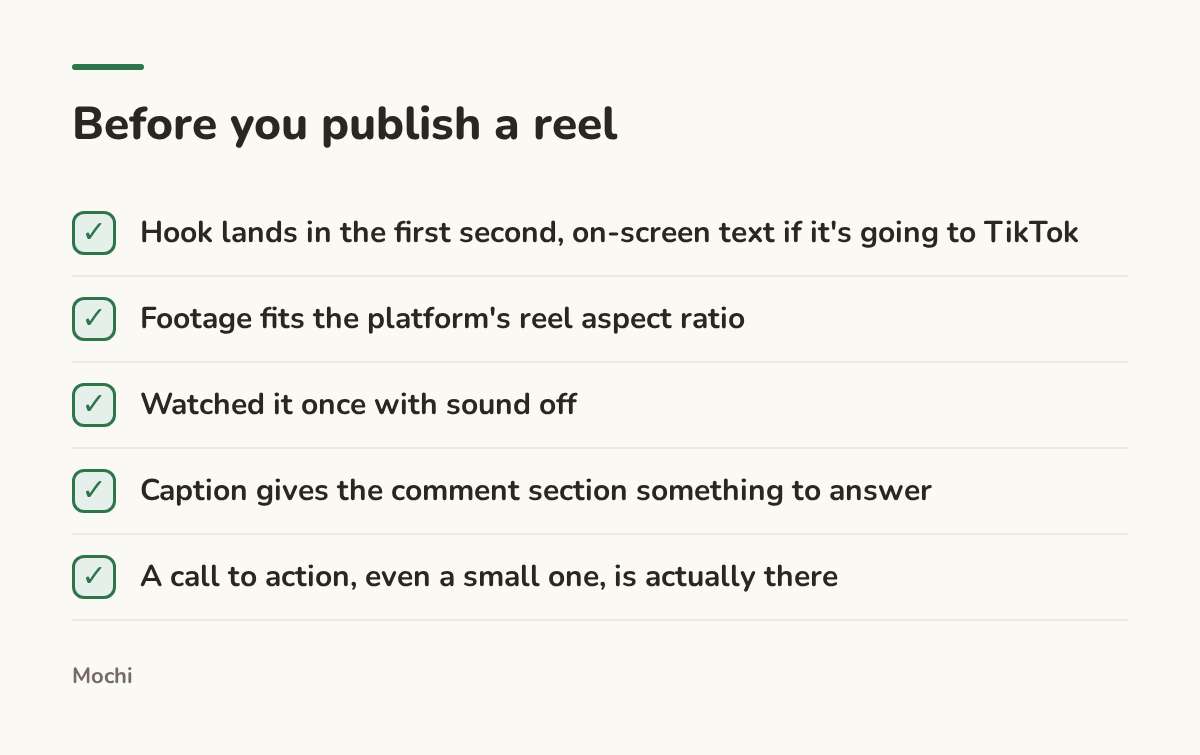
Thirty seconds of checking saves a reshoot.
Worth a bookmark for that second item: Instagram publishes the exact size and aspect ratio specs for reels, and footage cropped wrong at the edges is a small, fixable reason a reel underperforms that has nothing to do with the idea itself.
None of the categories above are the point by themselves. The point is having more than one drawer to open when the posting slot is in two hours and the well feels dry, and having last week's idea already written down with a hook attached so this week doesn't start from zero either. What's the last reel idea you wrote down the moment you had it, instead of trusting yourself to remember it later?
More Instagram Reel Ideas
More guides on Instagram reel ideas are on their way.
Part of a series
The Creator's Playbook
Evergreen craft for working creators: brand, content planning, and publishing, written by the team that builds Mochi.