 Mochi Labs
Repurposing Podcast Content: Turn One Recording into Three Weeks of Posts
A practical workflow for repurposing podcast content: how to pick the three moments in a long recording worth their own post, before you even hit record.
Ninety minutes of audio and video. By next week, most of it will be forgotten by everyone in the room, including you.
Here's the part almost nobody plans for: which three moments inside that recording are worth a dedicated post. Not clipped after the fact, hunting for ten good seconds in an hour of footage. Decided before anyone presses record.
Why Repurposing Podcast Content Starts Before You Hit Record
Most repurposing advice starts in the wrong place: the edit bay. Record first, review later, cut whatever looks decent. By the time you're scrubbing through an hour of footage looking for "good parts," you've already lost the thing that made a moment good in the first place, the context of why it mattered in the room.
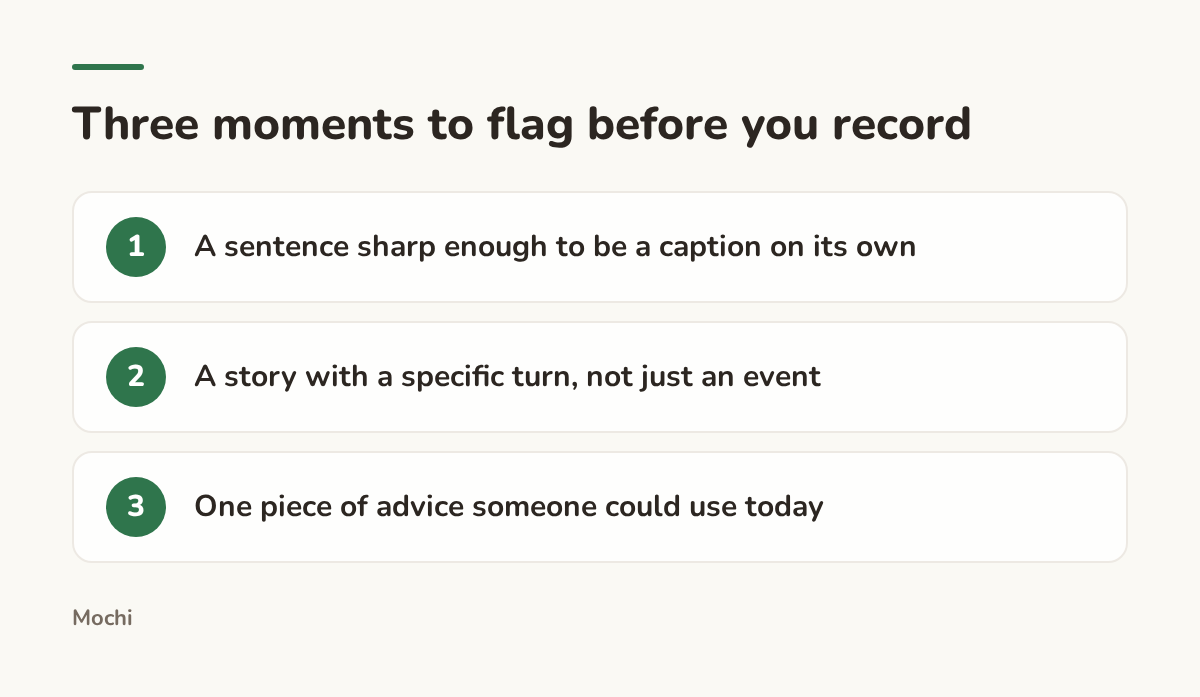
Flip the order and the job gets easier. Before you record, decide on three kinds of moments you're hunting for, and steer the conversation toward them on purpose:
A quote moment: one sentence sharp enough to stand alone as a caption or a graphic.
A story moment: a specific anecdote with a turn in it, the kind a viewer stays for.
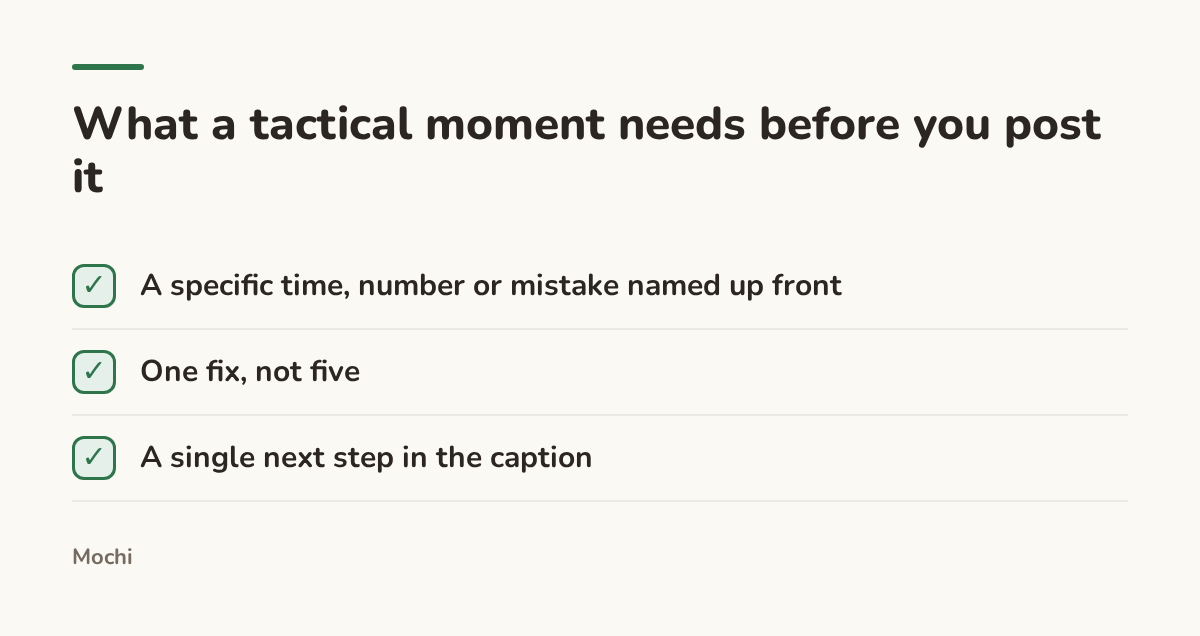
A tactical moment: one piece of advice specific enough that someone could act on it today.
Three moments, three different posts, three different weeks. That's the whole model, and it works because it matches how little time a viewer actually gives you. Research on scrolling and attention keeps finding how fast people decide whether to keep going, which is exactly why a vague, average recording repurposes so badly. Nothing in it was built to earn that decision on its own.
Decide what you're listening for before the mic goes on.
Flag the Three Moments While You're Still Recording
Planning the three moments doesn't help if you can't find them again in an hour of footage. The fix is low-tech: mark them the second they happen.
Say the word "clip" out loud when something lands, or jot the rough timestamp on a notepad next to you. On video, a hand gesture or a glance at the camera works just as well, something you or an editor can spot on a scrub-through without re-listening to everything.
The moment it happens is the only time it's cheap to mark. Five minutes later, you're guessing which part the room actually reacted to.
This habit costs almost nothing in the moment and saves the entire review pass later. Instead of re-watching an hour to find three minutes of usable content, you're pulling three pre-flagged timestamps and building around what you already know landed.
Turn the Quote Moment into a Post Built to Be Saved
The quote moment is the easiest of the three to waste, because it looks like it needs nothing. Drop a strong line as plain text with no framing, and it mostly gets scrolled past.
Take the sentence that got a reaction in the room, usually something that surprised even you on playback, and build the whole post around that one sentence instead of restating the context around it.
Before: Here's a quote I liked from this episode. After: The best wedding photo I ever took almost didn't happen.
The rewrite works because it states a claim instead of announcing a mention. Peer-reviewed research on what makes short videos spread found that specificity, not production value, was one of the stronger predictors of reach, which lines up with why the second version earns a second look and the first one doesn't.
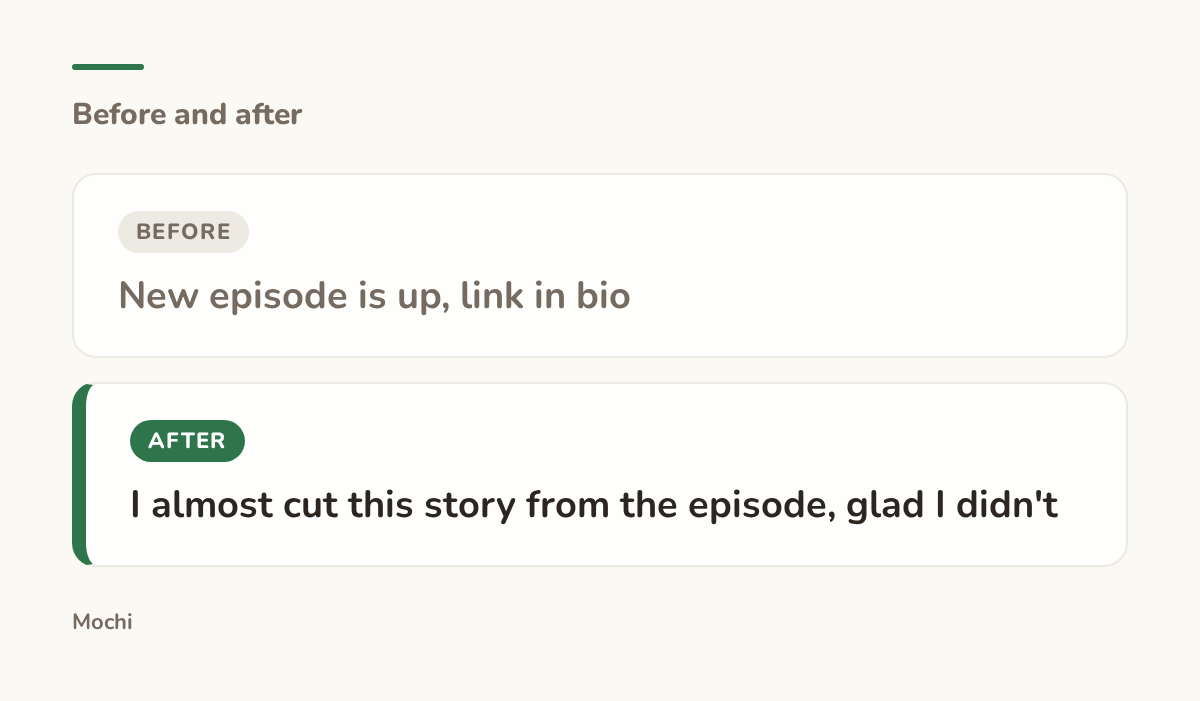
Before: New episode is up, link in bio After: I almost cut this story from the episode, glad I didn't
Same news, framed as a claim instead of an announcement.
Turn the Story Moment into a Short or a Reel
The story moment is the one most creators undersell, because in the long recording it's wrapped in setup and wander. Strip the wander and keep the turn.
Picture a wedding photographer telling a long, winding story about a shoot that almost didn't happen: a flat tire, a missed flight, a venue that fell through at the last minute. In the full recording, it takes four minutes to get to the point. The short version needs to get there in four seconds.
Before: So this next part is kind of a funny story from the shoot. After: I almost didn't photograph this wedding. Here's what almost went wrong.
The stakes come first in a Short. The subject can wait a few seconds. The attention can't.
The second version states the stakes before the subject, which is the one move that matters most when you're converting long-form into something built for a feed. YouTube's own creator blog walks through how creators pull Shorts-worthy segments out of a longer upload, and the ones that work share that same trait: they open on the turn, not the setup.
Keep the clip to the length of the story's actual turn: the moment before and the moment after. Cut the run-up. If a viewer needs the full four minutes of setup to understand why the ending matters, the moment wasn't specific enough to flag in the first place.
Turn the Tactical Moment into a Carousel or a LinkedIn Post
The tactical moment is the easiest to make boring, because advice tends to come out generic unless you force in a specific detail.
Before: Here are some tips for better lighting. After: Your reception photos go flat at 6pm because of one mistake most photographers make.
The rewrite works because it names a specific time and a specific failure, and implies a fix without giving it away yet, which is exactly what earns the next slide or the next frame. A carousel or a LinkedIn post built around a tactical moment should follow the same shape as the caption: one specific problem stated as a fact, then the steps that solve it.
Research comparing how people actually use short-form and long-form video found that short-form consumption rewards content that front-loads the payoff, while longer formats can afford a slower build. A carousel sits closer to short-form in that respect. The first slide needs to earn the swipe the same way a caption needs to earn the read.
Specific beats generic, every time.
How This Works in Mochi
Once the three moments are flagged, the next problem is turning "the thing at minute forty" into something an editor, or future you, can actually produce without re-listening to everything. That's worth writing down as a brief: the angle, the hook, the key points, and what you want the viewer to do next.
This is the kind of thing we built Mochi's ideas queue to hold. A flagged moment becomes an idea with its own brief, hooks, key points and a call to action, instead of a timestamp sitting in a notes app. You can see the shape of it on the product tour.
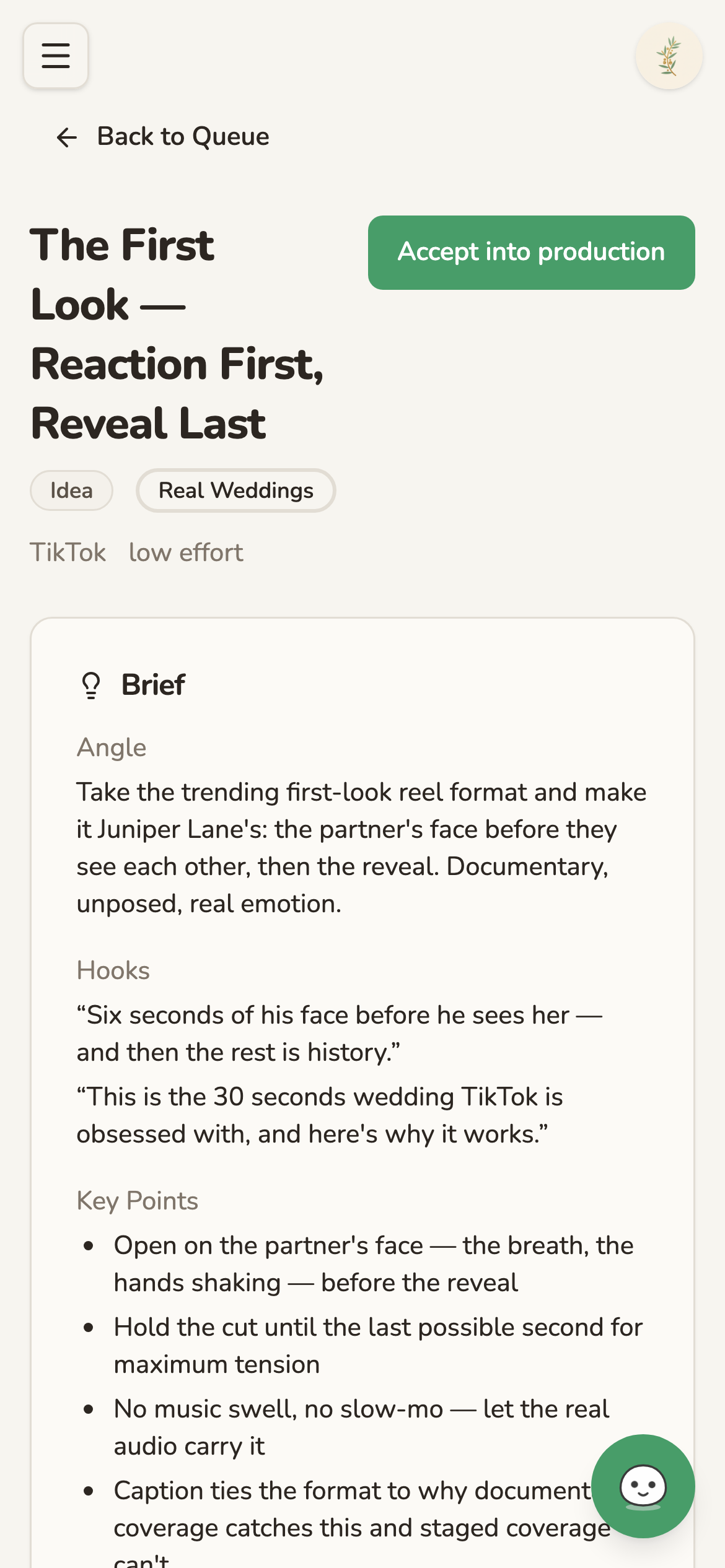
A flagged moment, turned into a brief with its hook and call to action.
Spread the Three Posts Across Three Weeks
Three moments from one recording doesn't mean three posts on the same day. Spread them out and each one gets a full week to do its job instead of competing with the other two for attention.
The model underneath this isn't new. Newsrooms have run on a version of it for well over a decade: create the thing once, then publish it everywhere it's useful, in the shape each place needs. NPR's early writeup of its own API explains where that create-once-publish-everywhere idea actually came from, and the logic holds just as well for one long recording as it does for a newsroom's wire copy.
Put the quote moment out first, usually the easiest lift and the fastest to produce. Give the story moment its own week once you've had time to cut it properly. Save the tactical moment for last, since it often needs the most editing to land clean.
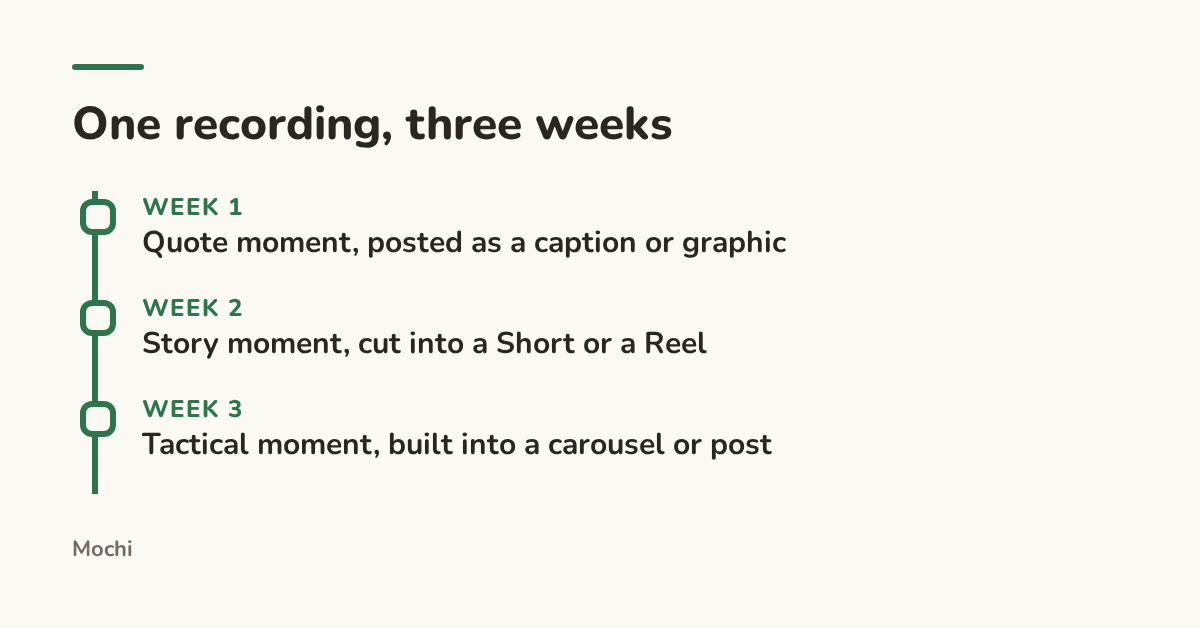
Three different reasons to pay attention, from one hour you only recorded once.
None of this requires recording more. It requires deciding, before the microphone goes on, what you're actually listening for: a sharp sentence, a story with a turn, one piece of advice worth acting on. Flag them when they happen, write them down as a brief instead of a vague memory, and let three weeks of posts come out of the same hour you were already going to record.
What's the last recording you made that had a moment worth a whole post, and did you catch it in time?
Part of a series
The Creator's Playbook
Evergreen craft for working creators: brand, content planning, and publishing, written by the team that builds Mochi.