 Mochi Labs
Sends Per Reach: What Makes Instagram Content Worth Sharing in 2026
Instagram now weighs sends per reach above likes and saves. Here's what actually makes a post worth forwarding to one specific friend, not just liking.
A like costs nothing. A send costs something real: a person has to stop, picture one specific friend, and decide that friend would actually want this in their inbox. That's a much higher bar than a tap, and in 2026 it's the bar Instagram is actually grading against.
Not every post needs to be likeable.
It needs to be sendable.
Adam Mosseri said as much when Instagram confirmed it now weighs DM shares more heavily than likes in how far a post travels. That lines up with what we keep seeing when we plan content for our clients or ourselves: the posts that actually move are the ones somebody was willing to stake a little of their own taste on by handing them to a friend. So the planning question has changed. It's not "would someone like this," it's "who, specifically, would someone send this to."
What "Sends Per Reach" Actually Measures
A like is public and cheap. It takes a quarter of a second and tells the world almost nothing about the person who gave it. A send is private and expensive. It means someone read or watched the whole thing, thought of an actual name, and chose to put their own credibility behind it by hitting share.
That's why sends per reach, the ratio of how many people forwarded a post against how many people saw it, has become the number worth tracking instead of likes per reach or even saves per reach. A save tells you someone wanted to keep something for themselves. A send tells you someone vouched for it to another human being. Platforms reward the second behavior more, because it's a stronger signal that the content is worth the next person's time, not just scroll-stopping for a second.
This isn't just a platform story either. Pew's research on how people engage with content online found that private sharing happens far more often than public liking or posting, which tracks with what most of us feel: we're far more willing to text a friend a video than to comment on it where everyone can see.
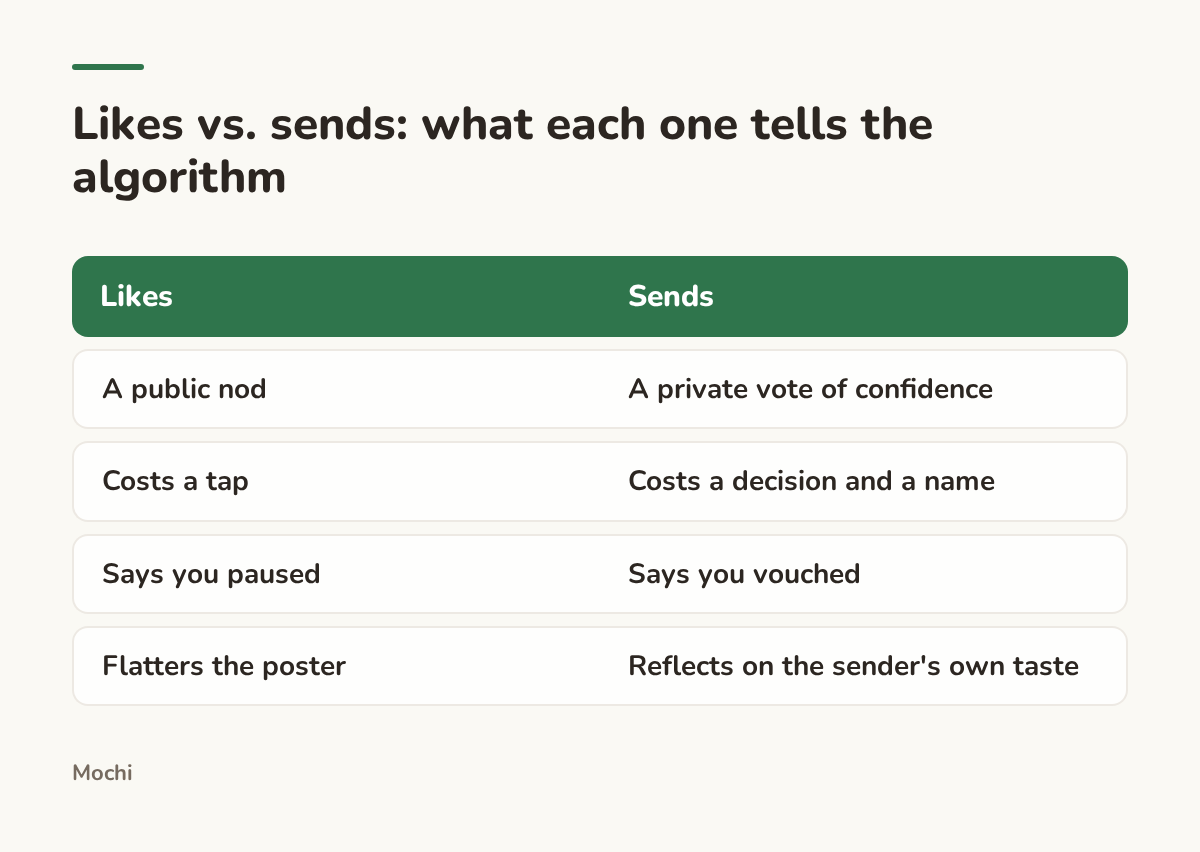
A send is the viewer putting their own credibility on the line.
So the planning question moving forward isn't "how do I get more likes." It's "what would make someone stop and think of one person by name." Here's what that actually looks like when you build it into a calendar.
1. Give the Sender One Specific Person to Picture
The weakest version of a shareable post leaves the sending decision to chance. The strongest version does the work for the viewer: it names, or heavily implies, exactly who this is for.
Take a wedding photographer whose reel shows a groom crying before he's seen the bride. A generic "tag someone who needs to see this" caption asks the viewer to invent a candidate from scratch, which most people won't bother doing mid-scroll. Naming a specific, slightly funny trait instead hands the viewer a face before they've even finished reading the sentence.
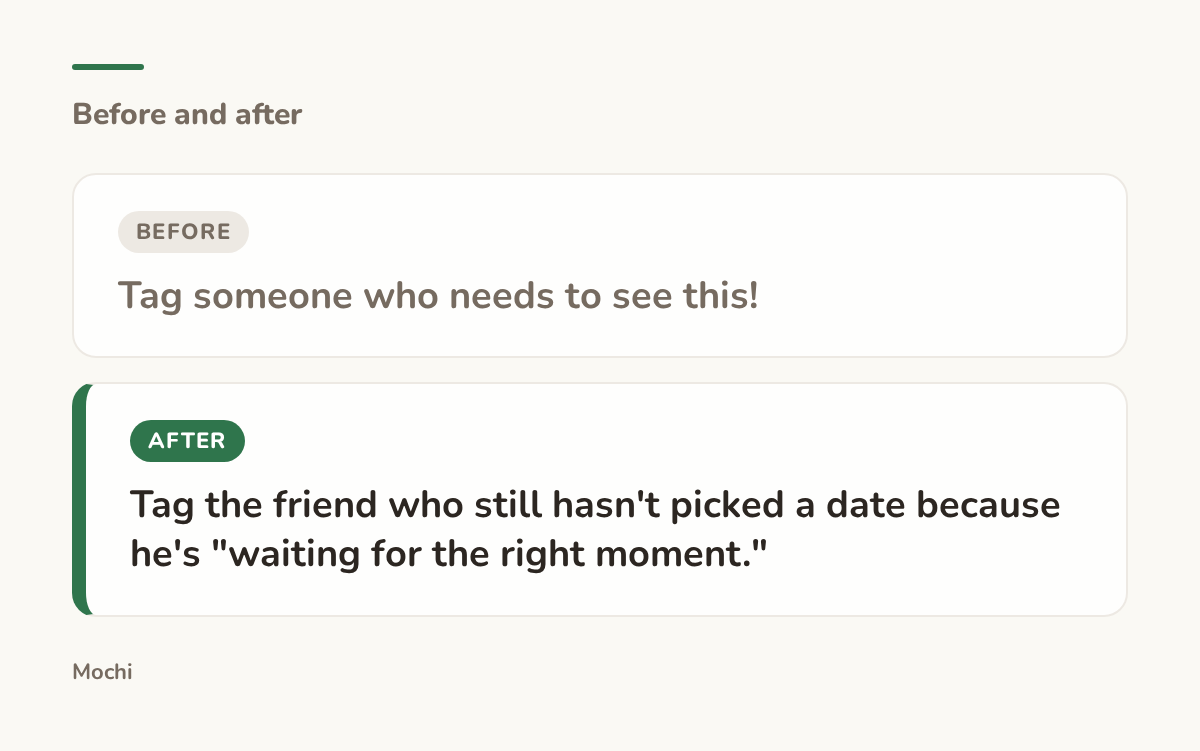
Before: Tag someone who needs to see this! After: Tag the friend who still hasn't picked a date because he's "waiting for the right moment."
The second version hands the viewer an actual person to picture, not a category.
The rewrite works because it swaps a category for a person. "Someone" requires effort. A specific trait requires none, because the viewer's brain has already sorted their contact list by the time they finish reading.
The same move works outside weddings. A musician posting a clip of a song that didn't make the album can write "send this to the friend who still asks why you didn't release the acoustic version," instead of "which version do you like better?" The question invites a comment. The named friend invites a send, and a send is the thing the algorithm is actually counting right now.
2. Make It Self-Relevant Before It's Informative
A post that teaches something is useful. A post that makes the viewer recognize themselves in it is shareable, and those aren't the same thing. Research on why people forward content online points to the same mechanism over and over: people share what feels personally relevant to them or to someone they're thinking about, not simply what's accurate or well made. A study on self-related and social thoughts in online sharing found that content triggering a thought about yourself, or about someone you know, gets passed along at a much higher rate than content that's merely informative.
Practically, that means leading with a recognizable mistake or moment before the fix. "Five lighting tips every beginner should know" is informative, but nobody pictures a friend while reading it. "The lighting mistake that made every photo from my first paid shoot look cheap" is self-relevant, because every beginner photographer has lived some version of that exact shoot.
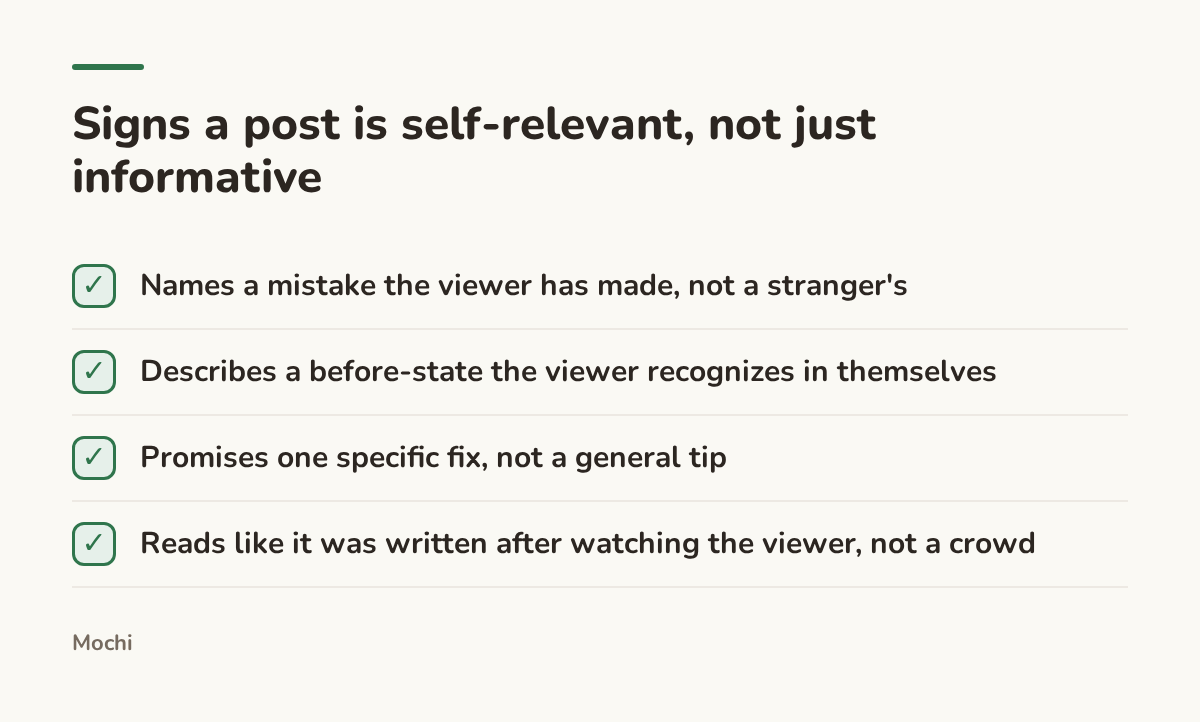
There's also a self-presentation piece to this worth sitting with. When someone sends your post to a friend, they're putting their own taste on display, even in a one-on-one DM. A cross-sectional study on self-presentation on social media found that what people choose to share is shaped heavily by how it reflects on them, not just by how useful it is. A post that lets the sender look thoughtful, funny, or in-the-know for having found it travels further than a post that's merely correct.
3. Keep It Short Enough to Finish and Specific Enough to Screenshot
A post can't be sent if it isn't finished. That sounds obvious, but a lot of creators build content around a full tutorial or a long process video, and a viewer who drops off at the forty percent mark never gets to the part worth forwarding.
Picture a home cook whose usual format is a five-minute full recipe video. The version that gets sent isn't the full video, it's a short clip of the one step everyone gets wrong, isolated from the rest of the recipe so a friend watching it in a DM thread doesn't need any surrounding context to understand why it's landed in their inbox.
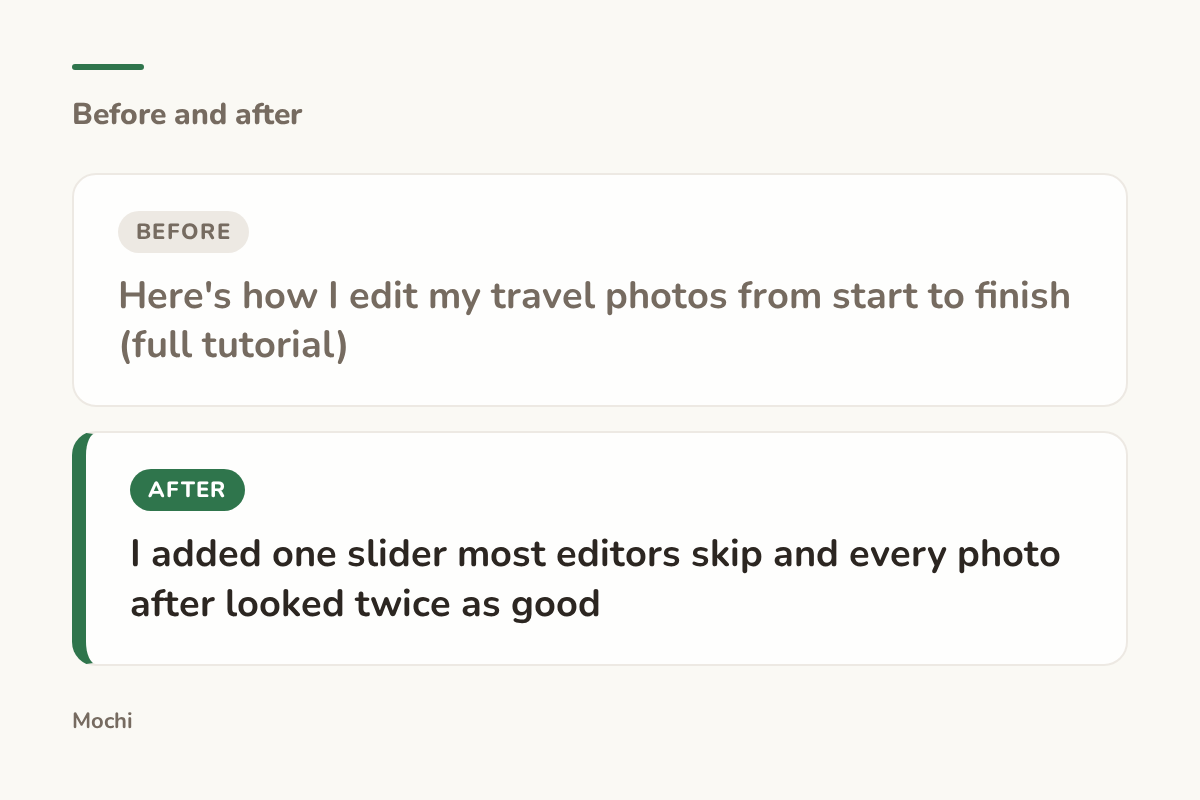
Before: Here's how I edit my travel photos from start to finish (full tutorial) After: I added one slider most editors skip and every photo after looked twice as good
The rewrite isolates one moment a viewer can watch, understand, and forward with no setup.
The lesson travels past photography. A send has to work with zero context, because the person receiving it in a DM thread didn't watch the three posts before it. If your content only makes sense inside your own feed, it dies there.
That's a useful test to run on anything before you publish it: open the post on its own, with no caption visible and no feed around it, and ask whether a stranger could still tell what it's about and why it matters within the first few seconds. If the answer is no, it's not ready to be sent, no matter how good the full version looks inside your grid.
4. Build In a Moment Worth Defending or Arguing
Some of the most-sent content isn't a tip at all, it's a stance. A DJ who posts a strong opinion about overplayed wedding songs is handing people ammunition for a conversation they're already having with a friend about music taste. The send isn't "watch this," it's "see, I told you."
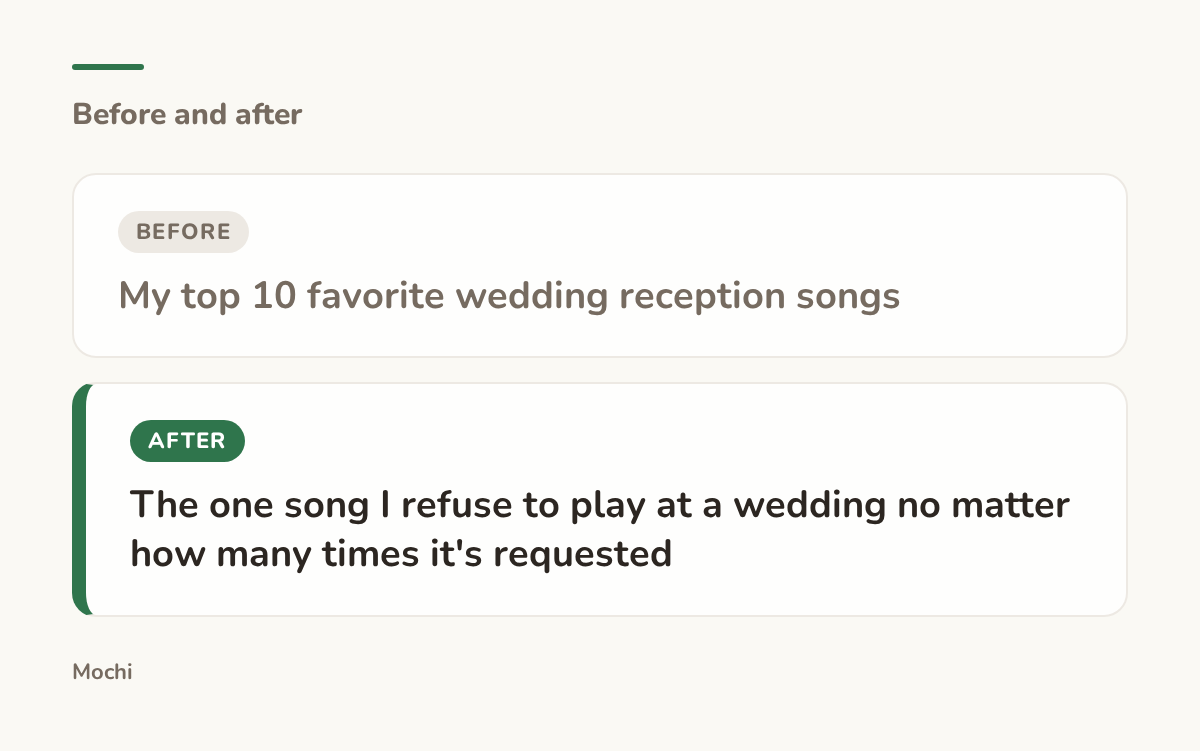
Before: My top 10 favorite wedding reception songs After: The one song I refuse to play at a wedding no matter how many times it's requested
A stance gives a sender a reason to say "this is what I've been telling you," not just "this is good."
This is also where a comments section becomes a tell. If people are arguing in the replies, that same post is almost certainly getting forwarded into group chats where the argument continues. A flat, agreeable post rarely earns either.
A fitness coach gets the same lift from a stance as a DJ does. A plain tip like "stretch before you run" rarely gets forwarded, because nobody disagrees with it. A post arguing that static stretching before a run does nothing and naming what to do instead gives every runner in the viewer's group chat a reason to weigh in, and the viewer a reason to drag them into the conversation by sending the clip first.
5. Ask for the Send, Don't Just Hope for It
A viewer who's already decided your content is worth forwarding will still sometimes forget to do it. The fix isn't subtle: ask. Naming the exact person you want it sent to, the friend who's getting married next spring, the one who always plans the group trip, does measurably more work than a generic "like and follow for more," because it names the action you want and gives the viewer a specific person to act on.
This is one place a planning tool like Mochi earns its keep, because the ask has to live in the brief before the post exists, not get bolted on after editing is done. We write a call to action into the brief alongside the hook and the key points, specifically so the direct ask to send it isn't an afterthought typed into the caption box at the last minute.
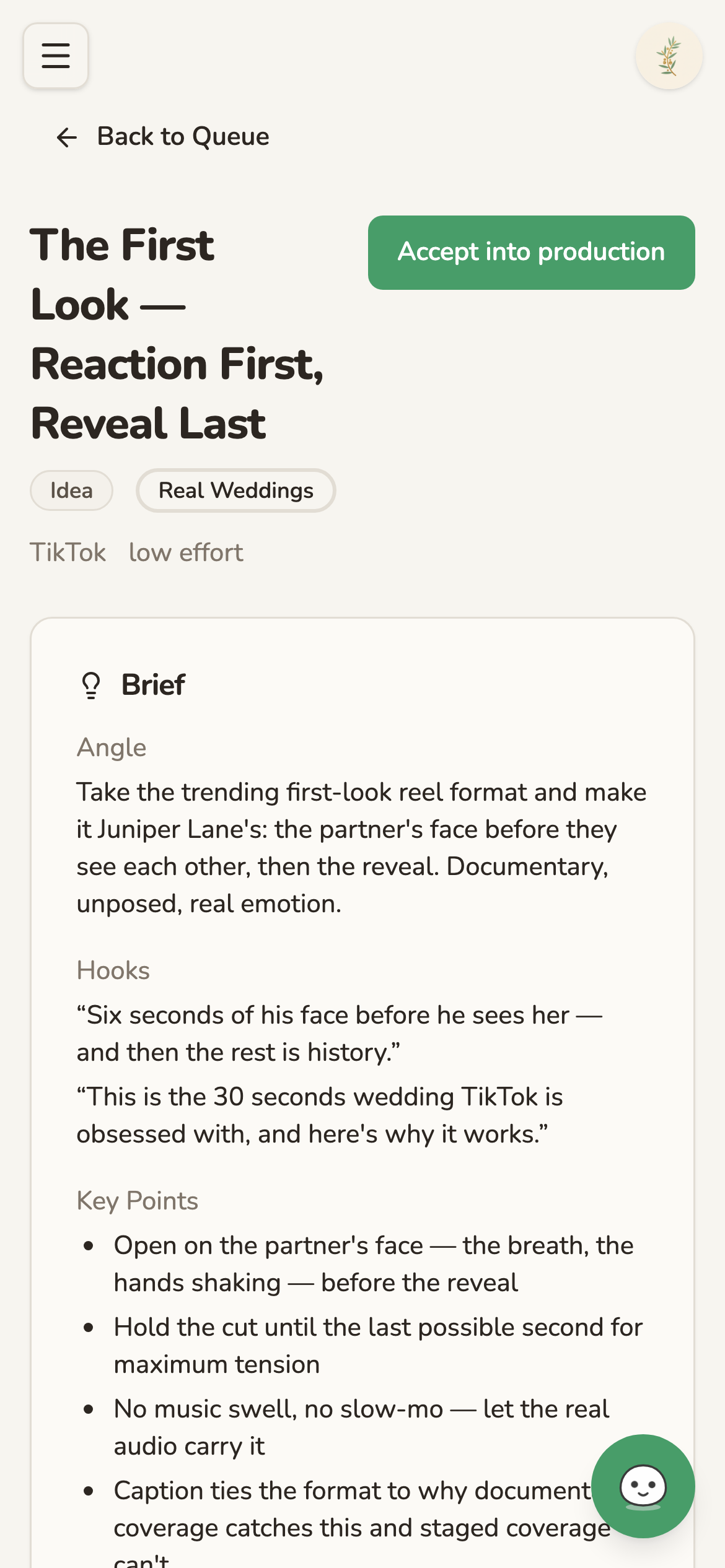
An idea carries its own brief, with hooks, key points and a call to action, ready to produce.
Write that call to action the same way you wrote the tag-a-friend line in step one: name a type of person, not a category. "Send this to someone who'd love it" is a category. "Send this to the one friend in your group chat who always plans the trip nobody else wants to organize" is a person. One of those gets acted on.
The Throughline
None of this means likes stop mattering or that saves are suddenly worthless. It means the question worth asking before you publish has changed. Not "will someone like this," but "would someone stake a little of their own taste on sending this to one specific friend." Build toward that question, name the person in the ask, and keep the moment short enough to arrive in a DM thread with no context needed.
What's the last thing you sent to one person, not posted for everyone? Could the next thing you make earn that same move?
Part of a series
The Creator's Playbook
Evergreen craft for working creators: brand, content planning, and publishing, written by the team that builds Mochi.