 Mochi Labs
Social Media Marketing for Musicians: The Complete Playbook
A practical guide to social media marketing for musicians: how to use Instagram and TikTok for releases, fan replies, and a posting rhythm you can keep.
· We keep this page up to date, so bookmark it and come back.
Three chords and a decent voice used to be enough. Now a song also needs a hook that survives the first two seconds of a scroll.
Can a good song still travel on its own? Mostly, no, not anymore. The acts getting heard right now treat Instagram and TikTok like another instrument: something they tune and practice, not something they bolt on after the mix is finished.
That is the real shape of social media marketing for musicians. The platform work is not separate from the music career. It is part of it, the same way a tour schedule or a merch table is part of it. This guide walks through what that work actually looks like on Instagram and TikTok, the two platforms doing the heaviest lifting for music discovery right now, and how to keep a rhythm that survives tour, sessions, and everything else competing for your time.
Here is the shape of what is ahead: how Instagram's reels, stories, and DMs fit into a release cycle, what makes TikTok different for musicians and how to use the platform's own artist tools, and a posting rhythm you can actually keep between releases.
Let's start with the platform most fans still check first for anything happening right now.
Why Instagram and TikTok Carry Most of the Weight
A music video used to be the big swing: expensive, planned months out, released once. A reel or a TikTok is the opposite. It is cheap to make, it can go out the morning you write it, and if it uses your actual track as the sound, it can pull a stranger back to your profile without you spending a cent on an ad.
That is the real difference between these platforms and almost everything else a musician used to lean on. A press mention or a playlist placement puts the song in front of people once. A clip that uses your song as its sound can keep surfacing on that sound's own page for as long as people keep using it, including people who have never heard of you.
The two platforms also split the work differently. TikTok is better at putting a song in front of a total stranger. Instagram is better at turning that stranger into someone who checks whether you're actually active, whether there's a show nearby, whether the new song is out yet. Treat them as two different jobs, not two copies of the same post.
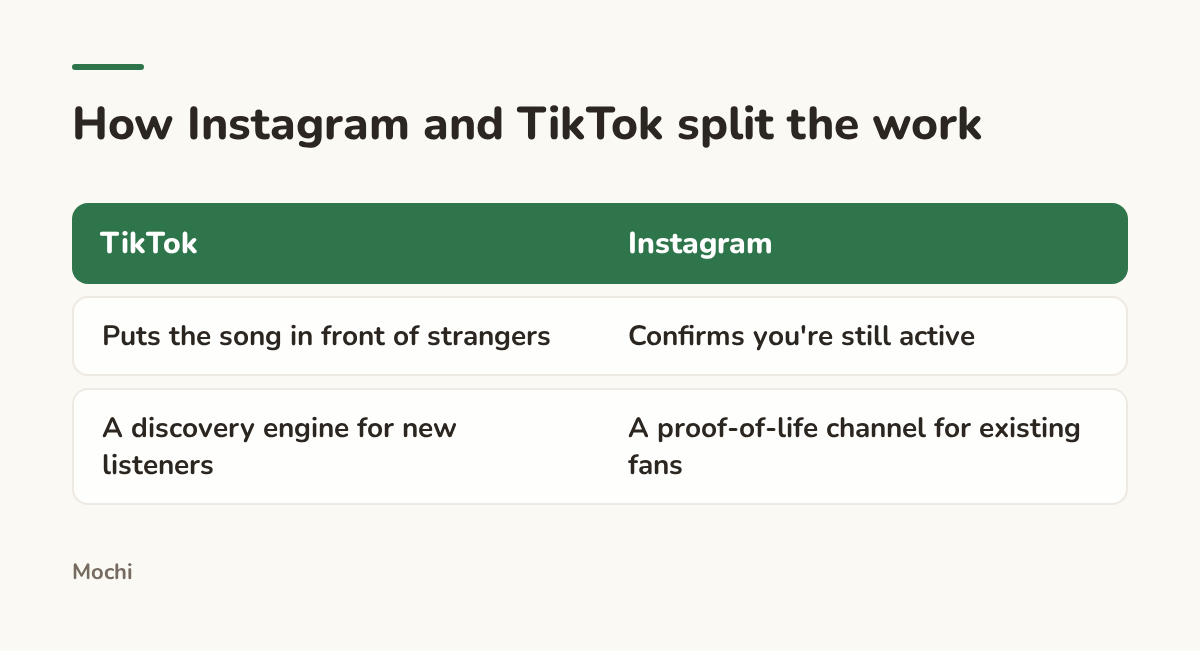
Two different jobs, not two copies of the same post.
Instagram for Musicians
Instagram is still where a lot of fans go to check whether you are actually active, so it carries two jobs at once: discovery through reels, and proof of life through stories, posts, and replies.
Reels Built Around the Song, Not the Announcement
A common mistake is treating a reel like a flyer: cover art, a caption that says new single out now, and a link in the caption that almost nobody taps. A reel works better when it is built around one specific moment in the song, the part that actually changes something, not the fact that the song exists.
Picture a singer-songwriter releasing a ballad with a key change in the second chorus. Instead of posting the album cover with a release-day caption, she clips eight seconds around that key change, syncs the cut to the exact beat it lands on, and writes a caption that asks a question tied to the lyric instead of announcing the release. The clip does the work the press release used to do, in a place people are already scrolling.
Instagram's own walkthrough on adding licensed music to a reel covers the tracks you can pull straight from its library, which is useful for covers and fan edits that use someone else's song. For your own original, uploading your own master as the sound matters more, partly because it ties plays back to your artist page, and partly because it sidesteps most of the licensing limits that apply to reels, stories, and live, which are built around using other people's music, not your own.
Independent reporting on Meta's own disclosures about how reels actually get ranked points at completion rate and replays as real signals, which lines up with why a tight, specific clip tends to earn more of both than a wide, generic one.
Stories for the In-Between Moments
Reels are for the moment that is finished. Stories are for everything that is not: the half-written bridge, the terrible green room coffee, the soundcheck that went sideways. None of it needs to be good. It needs to exist, because a fan who only ever sees the polished release post starts to assume you only exist on release day.
Take a touring cover band that posts a shaky soundcheck clip the night before a show, then the actual set highlight the morning after. The rough clip is not a weaker version of the polished one. It is the reason the polished one lands harder, because the fans watching already feel like they were backstage for it.
Turning Comments Into Something More Than a Comment
A repeated comment is a signal, not an interruption. If you keep getting the same question under every post, when's the tour coming to my city, where can I get the acoustic version, that question is telling you what people actually want next.
How this works in Mochi: a comment keyword such as TOUR or MERCH can trigger an automatic reply that sends the fan the tour dates or the merch link by DM, and Mochi can run that kind of rule, so a fan commenting on a reel gets routed straight to what they were actually asking for.
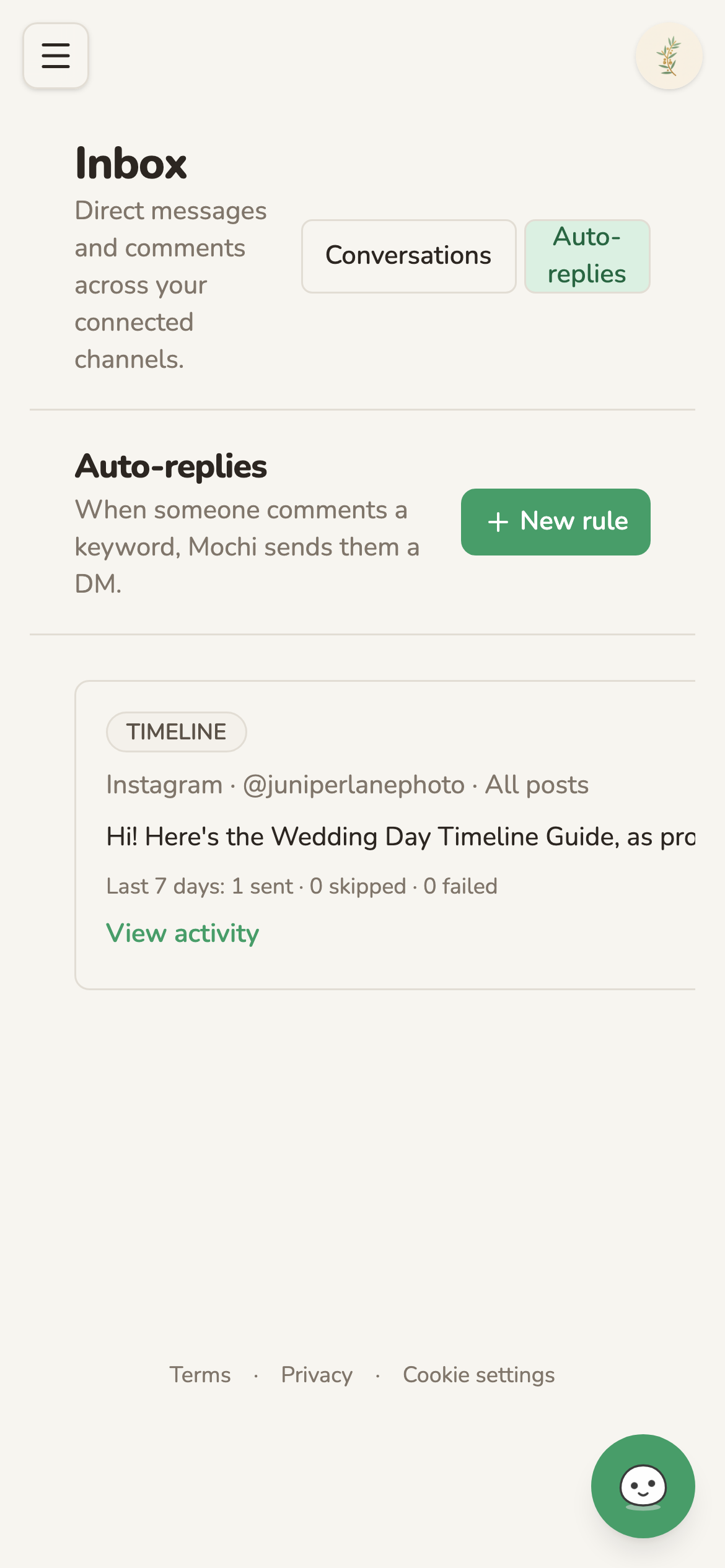
A comment containing a keyword triggers an automatic DM reply, and the card counts what it sent.
TikTok for Musicians
TikTok runs on a different logic than Instagram. A song does not need a big following behind it to travel, it needs to get picked up as a sound other people want to use. That is still the platform's clearest advantage for an unsigned or independent act: the algorithm is built to surface a clip to strangers, not just to people who already follow you.
The clip doesn't need a studio. It needs a reason to stop scrolling.
Hooks That Earn the First Two Seconds
A TikTok hook has one job: survive the moment someone's thumb decides whether to keep scrolling. "Check out my new song" does not survive that moment, because it asks for interest instead of creating it.
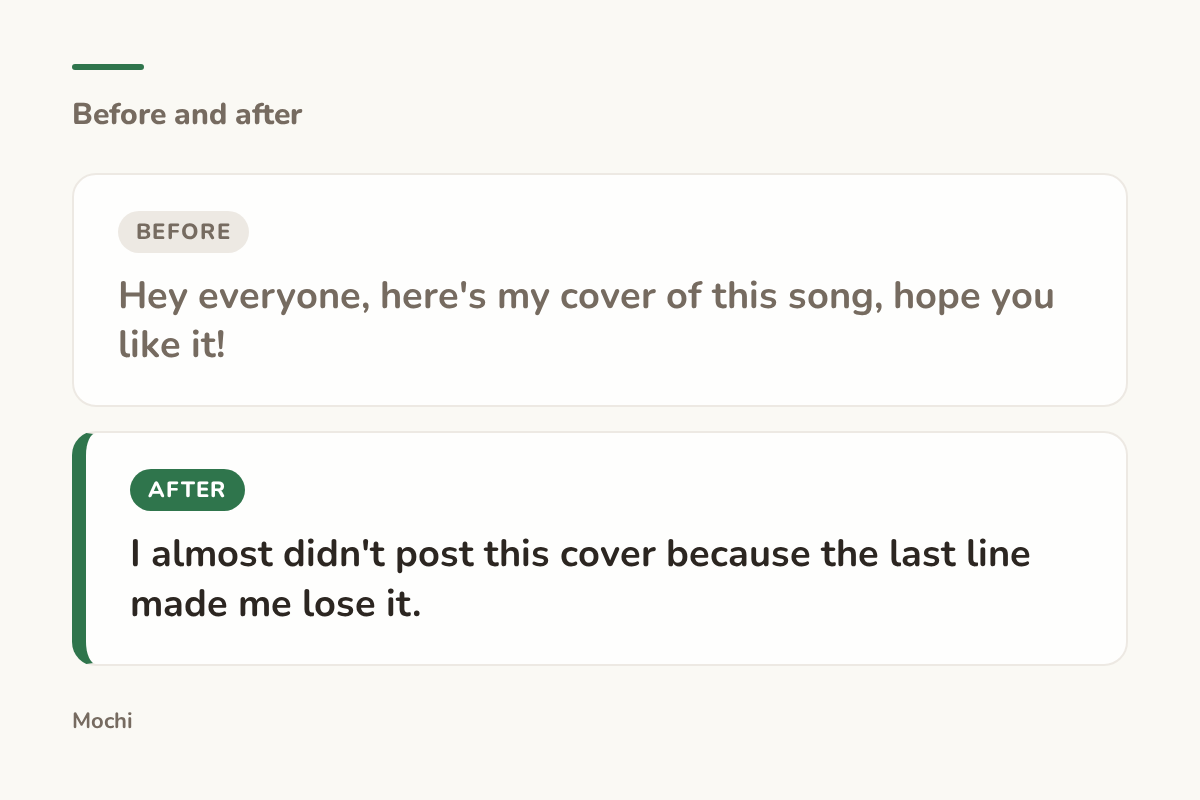
Before: Hey everyone, here's my cover of this song, hope you like it! After: I almost didn't post this cover because the last line made me lose it.
Specific emotional stakes beat a generic announcement.
Naming a reason to watch instead of asking for one is the whole difference between a hook and an introduction. The same logic works on a teaser for a release that isn't out yet.
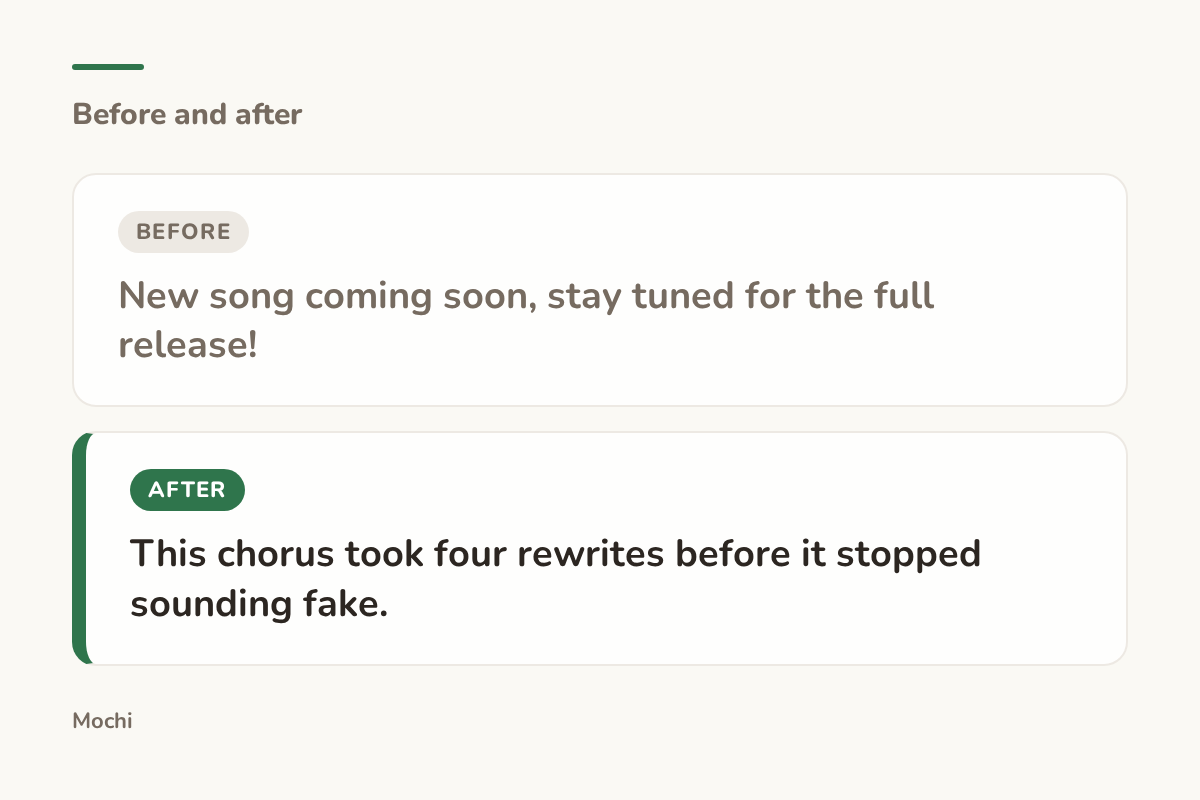
Before: New song coming soon, stay tuned for the full release! After: This chorus took four rewrites before it stopped sounding fake.
A process detail reads as a real moment, not a promotion.
A rewrite count is specific in a way a release date never is, and specific is what makes a stranger stop scrolling. The same move works for a DJ or producer promoting a new mix instead of a song.
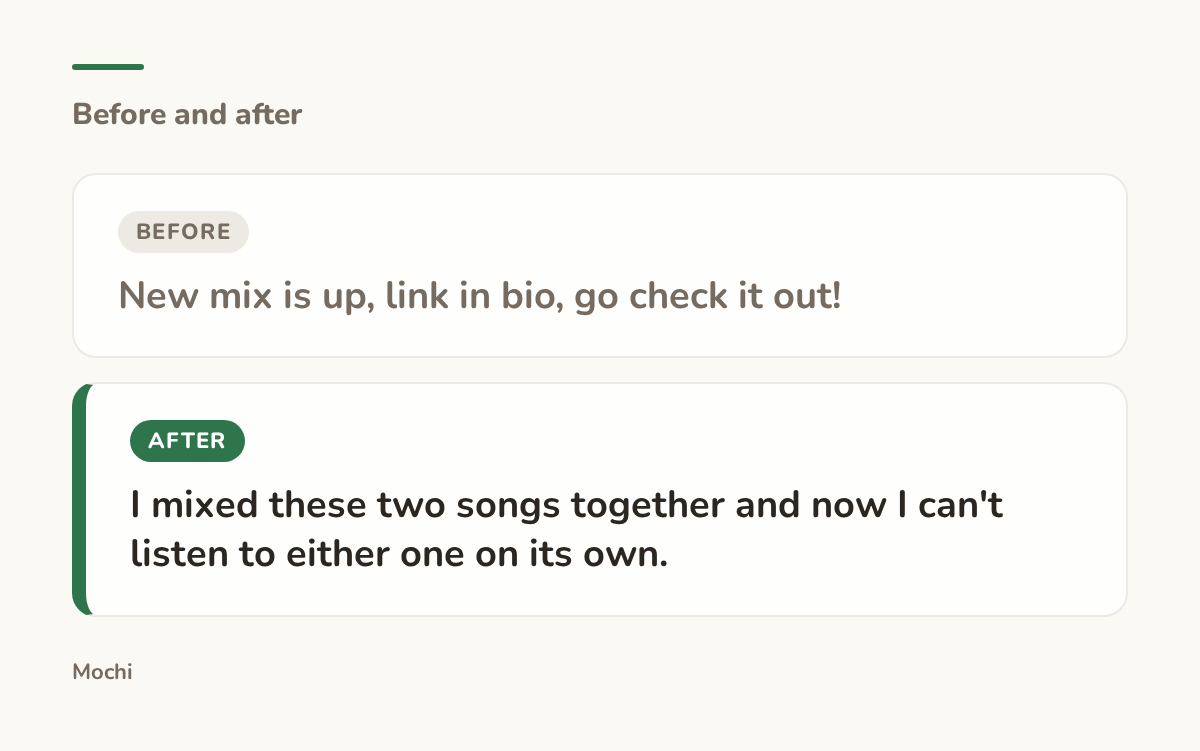
Before: New mix is up, link in bio, go check it out! After: I mixed these two songs together and now I can't listen to either one on its own.
Naming the craft move beats pointing at a link.
Each rewrite names the actual craft move instead of describing where to click, and that is what gives a stranger something to be curious about.
Using TikTok's Own Tools for Artists
TikTok has built out an official dashboard for musicians, TikTok for Artists, with insights and promotional tools built around how a song moves on the platform rather than generic account analytics. If you have not opened it yet, it is worth checking alongside whatever analytics you already watch, since it is built specifically around how a track spreads as a sound rather than how an account grows.
Building a Posting Rhythm You Can Actually Keep
None of the above matters if it burns you out before the next release. A qualitative study of twelve UK musicians, published in Frontiers in Psychology in 2025, found working musicians describing social media as a "content factory": real benefits alongside real harms, including the pressure to keep posting. The job is not to post every day. It is to build a rhythm that follows the actual work instead of a schedule imposed on top of it.
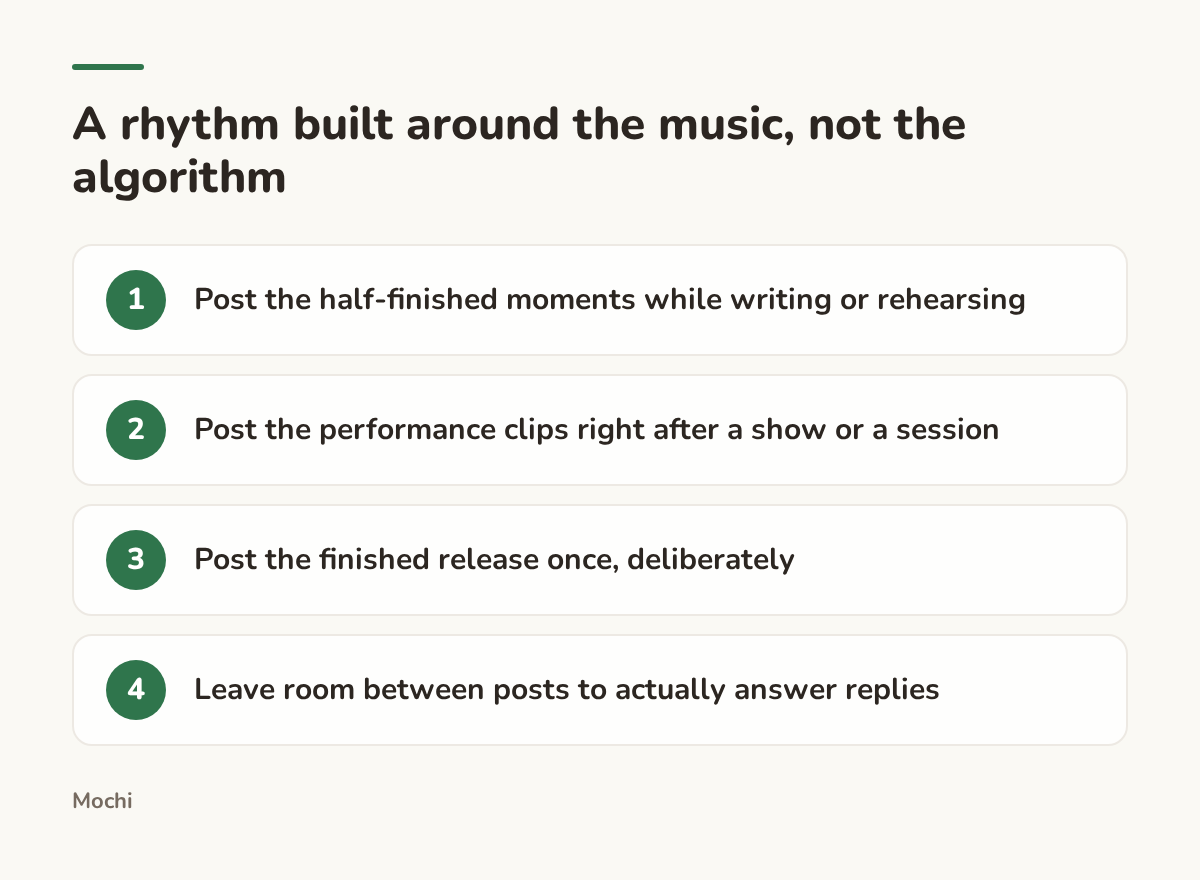
The schedule should follow the work, not the other way around.
A DJ dropping a new mix most weeks keeps a different rhythm than a classical quartet releasing once a year, and neither rhythm is wrong. What matters is whether the rhythm follows how the music actually gets made, not a posting frequency borrowed from an account in a completely different genre.
If you want a fuller, structured path through this instead of a single guide, Berklee's own Music Marketing 101 course goes deeper into branding and strategy than any single article can.
None of this works if the rhythm only survives on a good week. Keep the reel built around the song instead of the announcement, keep the TikTok hook specific instead of generic, and leave enough room in the schedule that replying to a fan does not feel like falling behind. Do that consistently and the platform work stops competing with the music and starts being part of it.
More for Musicians
The deeper guides for musicians are on their way.
Part of a series
The Creator's Playbook
Evergreen craft for working creators: brand, content planning, and publishing, written by the team that builds Mochi.