 Mochi Labs
TikTok for Gamers: The Complete Playbook
A practical guide to TikTok for gamers and Instagram for gamers: what to film, how to handle patch days, and how to build a calendar that actually holds.
· We keep this page up to date, so bookmark it and come back.
Picture it: three hours of grinding ranked, one clutch play, and the clip barely moves. Another creator posts almost the same moment the next day and it takes off. The play wasn't better. The packaging was.
That gap is the whole subject of this guide. Gaming is one of the biggest content categories on TikTok and Instagram, which also makes it one of the most crowded, so generic social media advice (post consistently, use trending sound, add three hashtags) doesn't tell a gaming creator anything the other thousand gaming accounts in their niche haven't already tried. What actually moves the needle is specific to gaming: which clip from the session to pull, how TikTok and Instagram treat the same footage differently, and how to keep a calendar running through a patch, a slow month, and the week before a big release. That's what this guide covers, platform by platform.
Who's Actually Watching Gaming Content
Where the Audience Already Is
Independent research on teen media habits keeps landing in the same place: most teens who play video games are also spending real time on TikTok and Instagram, and a good share of that time goes to watching other people play, not just playing themselves. Pew's survey on teens and video games breaks down how deep gaming habits run in that age group, and its companion report on teen social media use shows TikTok and Instagram are where most of that audience already lives. If a creator's plan still assumes the gaming audience is mostly watching on YouTube and Twitch alone, that plan is a few years out of date.
What They Actually Want From a Creator
A gaming audience isn't watching for production value. It's watching for proof: proof a strategy works, proof a build is worth the parts list, proof the creator is actually good, or actually funny, or actually knows the game better than the comment section arguing underneath. The accounts that hold an audience past the first clip are usually the ones with a clear personality on top of the skill, not skill by itself.
TikTok for Gamers
Pick a Lane Inside Gaming
"Gaming" isn't one audience, it's dozens of them, and TikTok's algorithm rewards a creator who picks one and feeds it consistently. Take a competitive shooter clipper who only posts the round-winning play, against a cozy-game creator who posts quiet, commentary-free sessions of a farming sim. Both can build a following on TikTok. Neither would build it posting the other's content, because the algorithm learns the account from what it already posted, and a feed that jumps between competitive clips and cozy ambience never teaches it anything useful.
Four Formats That Carry a Gaming Account
Most gaming accounts that last are built on some mix of four formats. The highlight clip is the clearest one: the clutch round, the one-shot kill, the speedrun split, trimmed down to the few seconds that matter. The tutorial or strat breakdown is the one viewers save, the fix or rotation or build order nobody else explained clearly. The LIVE session works differently: it's unscripted, and it's often where a real following forms, because viewers get to ask questions as it happens instead of just watching a finished clip. And the gear or build reveal, what's actually inside the PC or the peripheral setup, pulls in viewers who have nothing to do with the game itself but everything to do with the hardware.
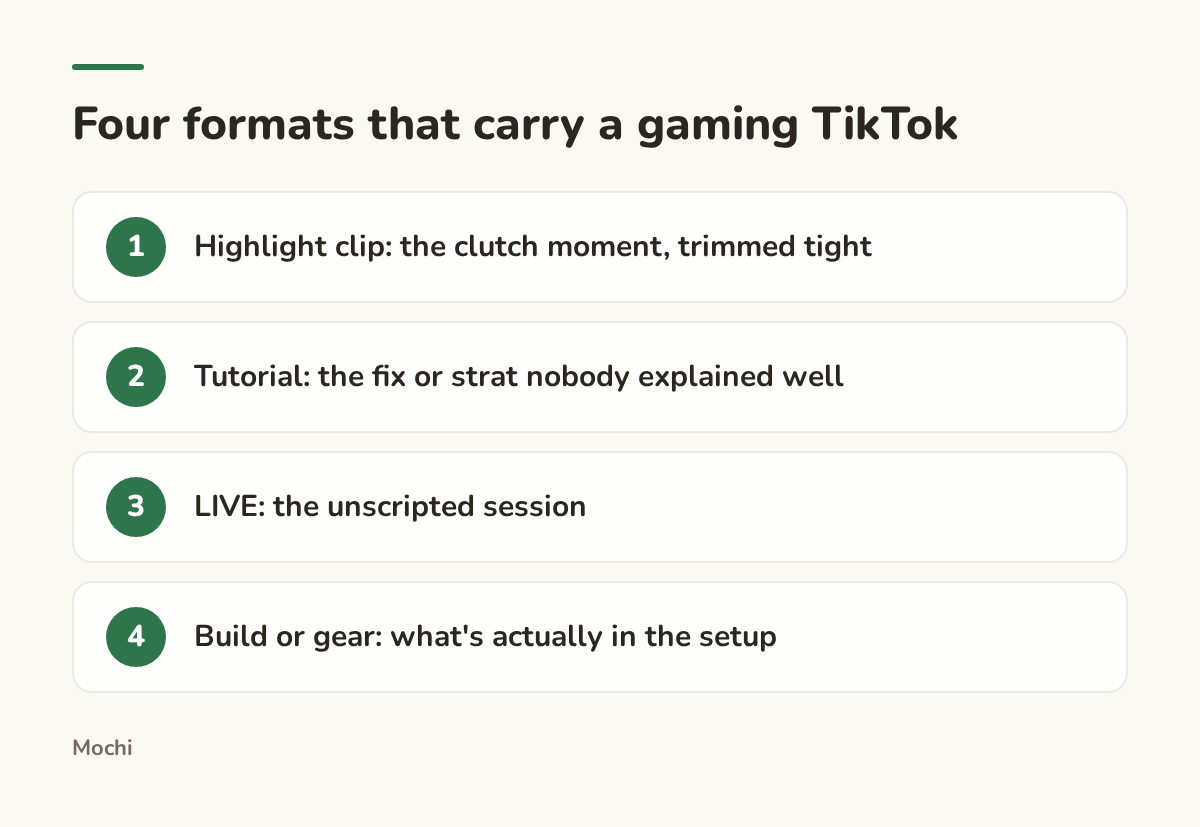
Pick one as your anchor, mix in the rest.
A Rhythm That Survives Patch Days
A patch changes the meta inside a few hours, and the gaming creators who treat that like breaking news instead of a Tuesday post the fastest reaction and get the reach for it. Build the rest of the week around play sessions instead of a fixed grid: clip the highlights right after a session while the footage is fresh, and save the tutorial breakdowns for the slower days, when there's time to explain something properly instead of just posting a moment.
The hook decides whether any of that gets watched. A line that opens with the channel name is a hook nobody asked for.
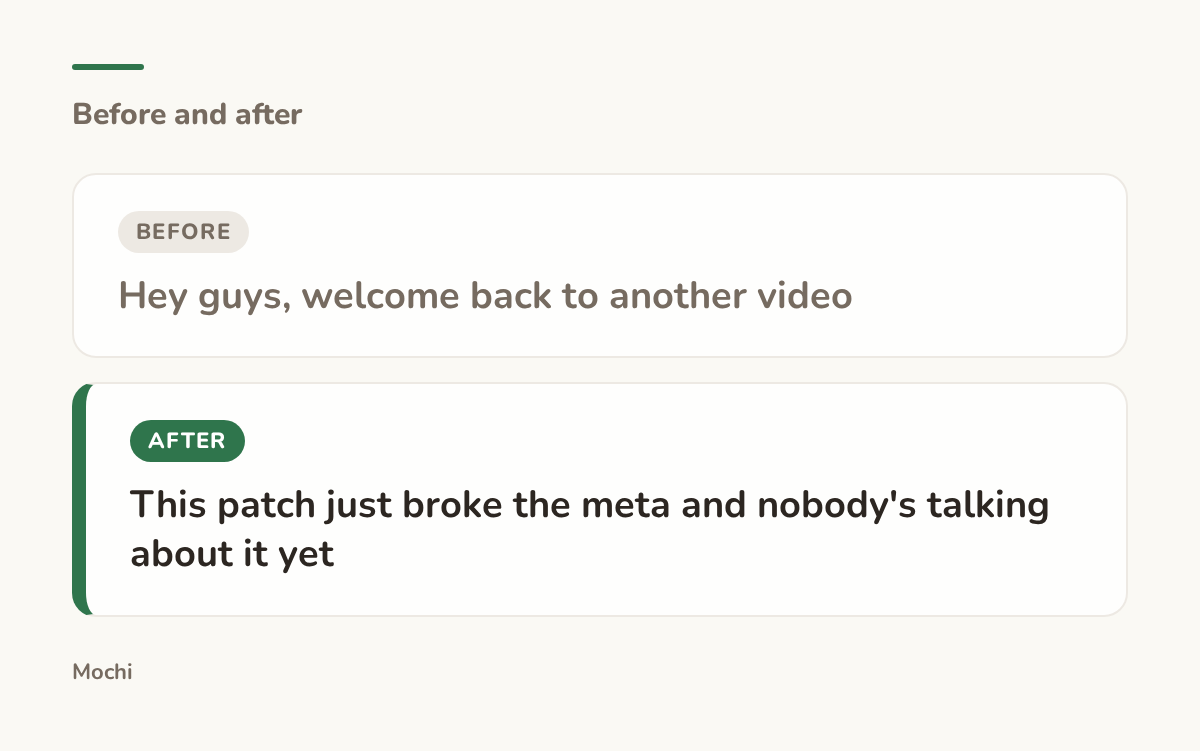
Before: Hey guys, welcome back to another video After: This patch just broke the meta and nobody's talking about it yet
The second version names the stakes, something changed, before it names the channel. A viewer decides whether to keep watching in the first second, and "something changed" earns that second in a way "welcome back" never will.
TikTok's own Creator Academy walks through picking a gaming niche and a format in more detail, and its business blog breaks down which creator formats and partnerships actually perform inside the gaming category specifically.
Instagram for Gamers
Reels Carry Discovery, the Feed Carries Proof
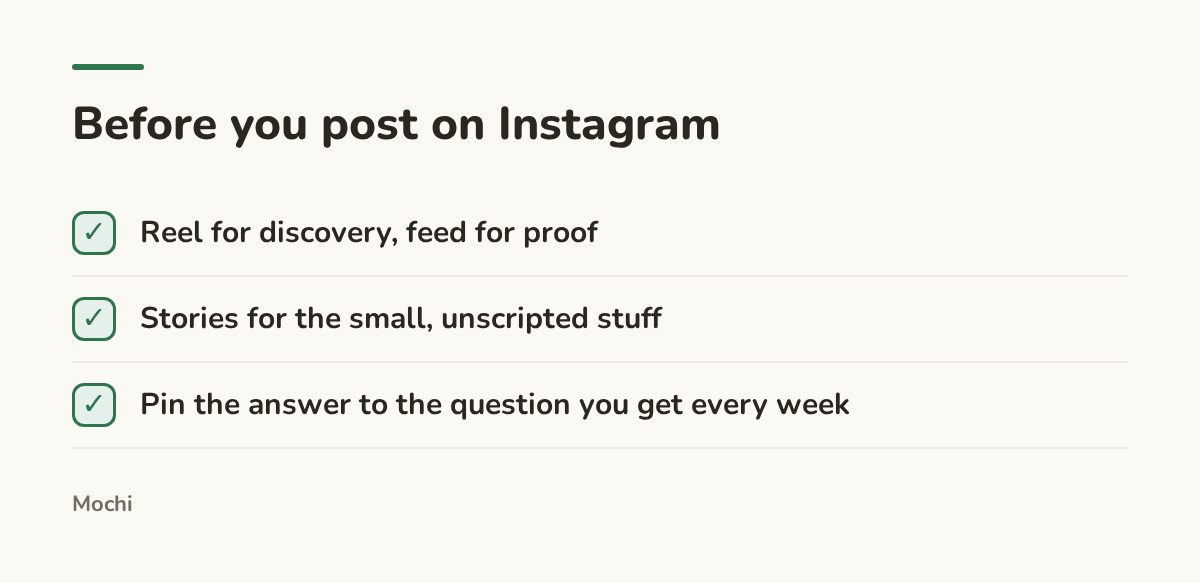
Instagram splits the job differently than TikTok does. Reels are where a gaming creator gets found, the highlight clips and quick build reveals doing the same work they do on TikTok. The feed grid works more like a portfolio: a rank progress screenshot, a finished build photo, a tournament placement, the kind of post someone checks after they've already followed, to decide whether to keep following.
Stories for the Between-Match Update
Stories are where the small stuff goes: a poll on what to queue next, a behind-the-scenes shot of a build mid-teardown, a countdown to a scrim or a local tournament. None of it needs to be polished, and that's the point. It's the layer that makes a following feel like it's watching a person play a game, not a channel publishing content about one.
Answer Comments Like a Community, Not a Help Desk
Picture a creator who gets the same comment under almost every clip: what sensitivity do you play on. Answered the same flat way each time, it's just upkeep. Turned into a pinned reply, or its own quick post breaking down the full settings, it becomes content the next hundred people asking the same question actually find. A repeated comment is a sign of what the audience wants explained next, not an interruption to clear before moving on.
The caption still has to carry its own weight once the clip has done its job.
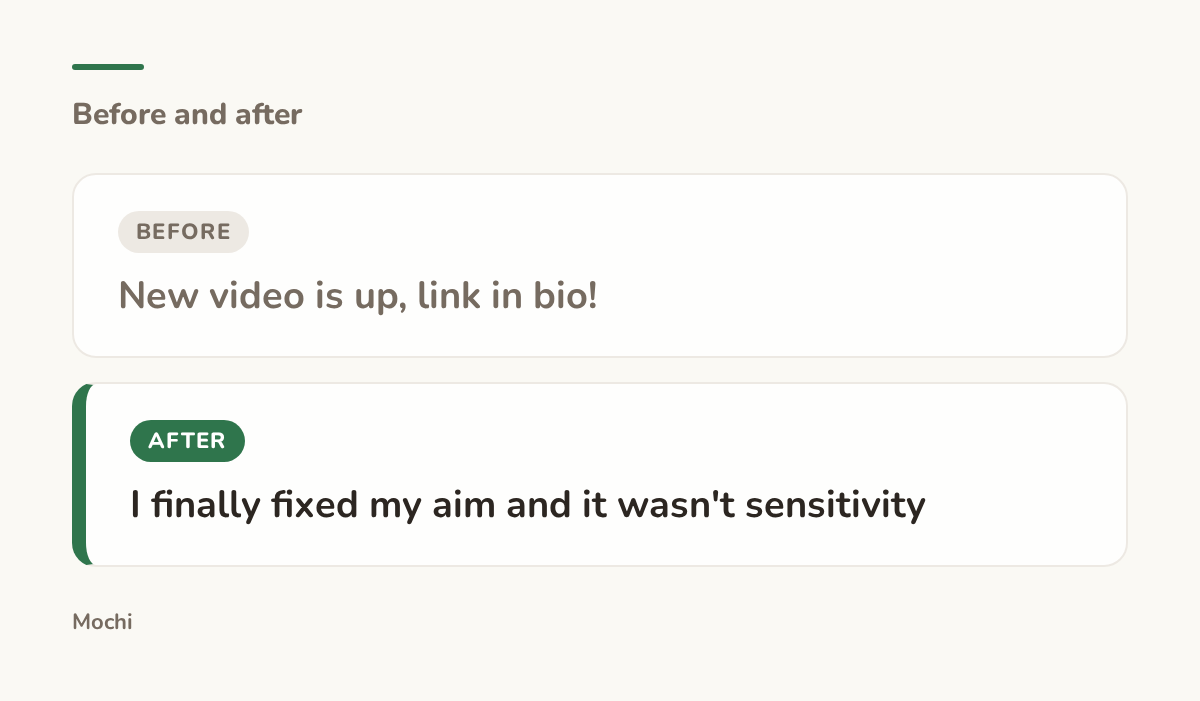
Before: New video is up, link in bio! After: I finally fixed my aim and it wasn't sensitivity
Meta's own creator hub lays out how often to post Reels and how reach actually works on the algorithm side, and its newsroom writeup on the in-app education hub for creators is worth checking back on as that guidance updates.
Research: Knowing What to Make Before the Meta Moves
What to Track Before You Film
A gaming creator's research list looks different from most niches. It's patch notes and dev blog posts, the clips other creators in the same game are getting traction with, what the subreddit or Discord is actually arguing about this week, and whether a tournament or release is about to put a spike of new eyes on the game. Miss a patch for two days and the clip explaining the old meta is already dead on arrival.
Letting the Research Run on Its Own
Checking all of that by hand, every week, on top of actually playing and filming, is where most gaming creators fall behind. We built Mochi's research routines to run on a schedule instead of waiting for someone to remember to check: pick the sources worth watching for a game or niche, set how often to check them, and read back a document that separates what's picking up from what's cooling off, sources attached, ready to turn into an actual idea instead of another open tab.
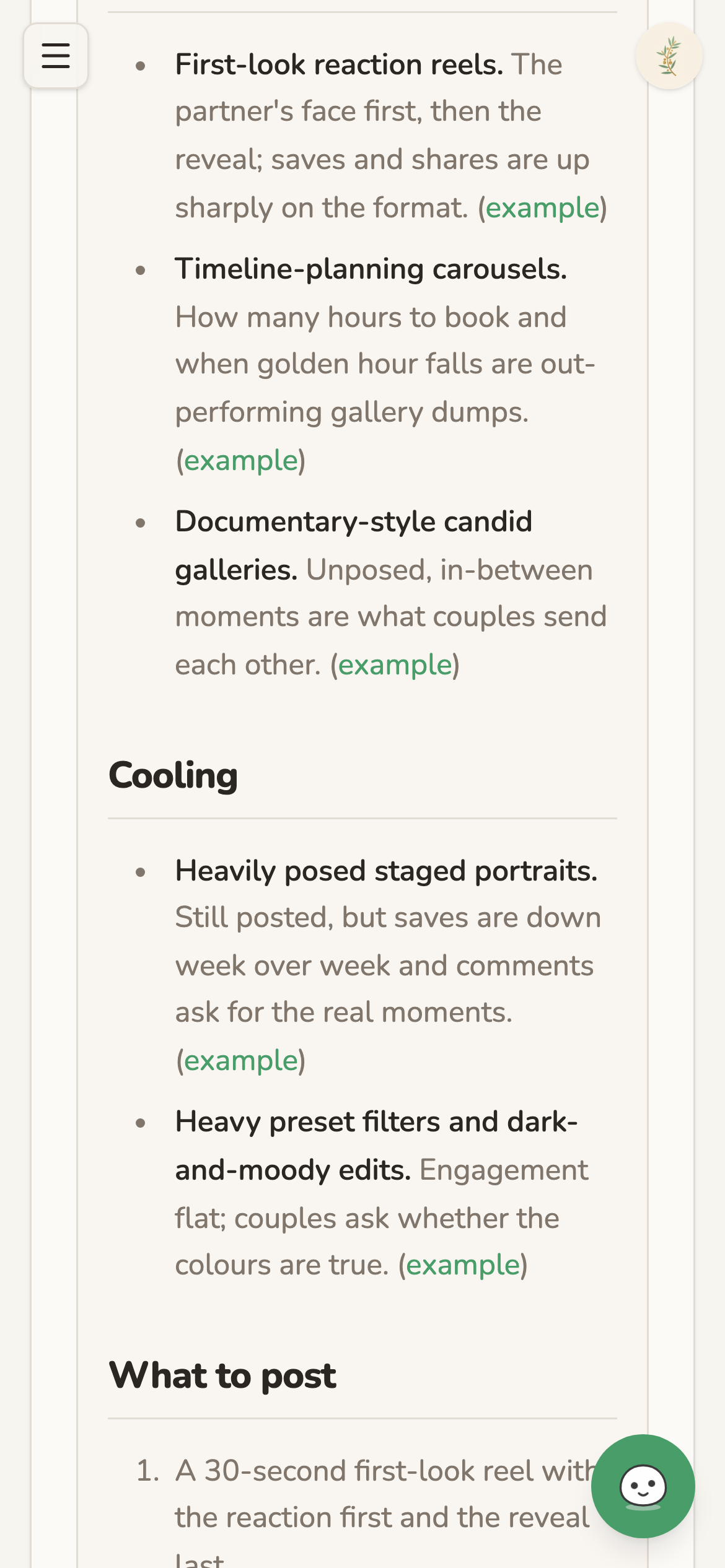
A research run sorting what's picking up from what's cooling off, sources attached.
Build a Calendar Around the Game, Not Around a Grid
Treat Patch Day Like Breaking News
Clear the queue for the few hours after a patch drops. The post that reacts fastest to a meta shift usually outperforms the better-produced post that reacts to it a week late, because by then the audience already knows.
Fill the Dead Weeks on Purpose
Every game has weeks where nothing changes: no patch, no tournament, no new content to react to. That's not a week to skip, it's a week for the content that doesn't depend on the meta: a build walkthrough, a tier list, a story about a specific loss or win, the kind of post that works whether or not anything happened in the game this week.
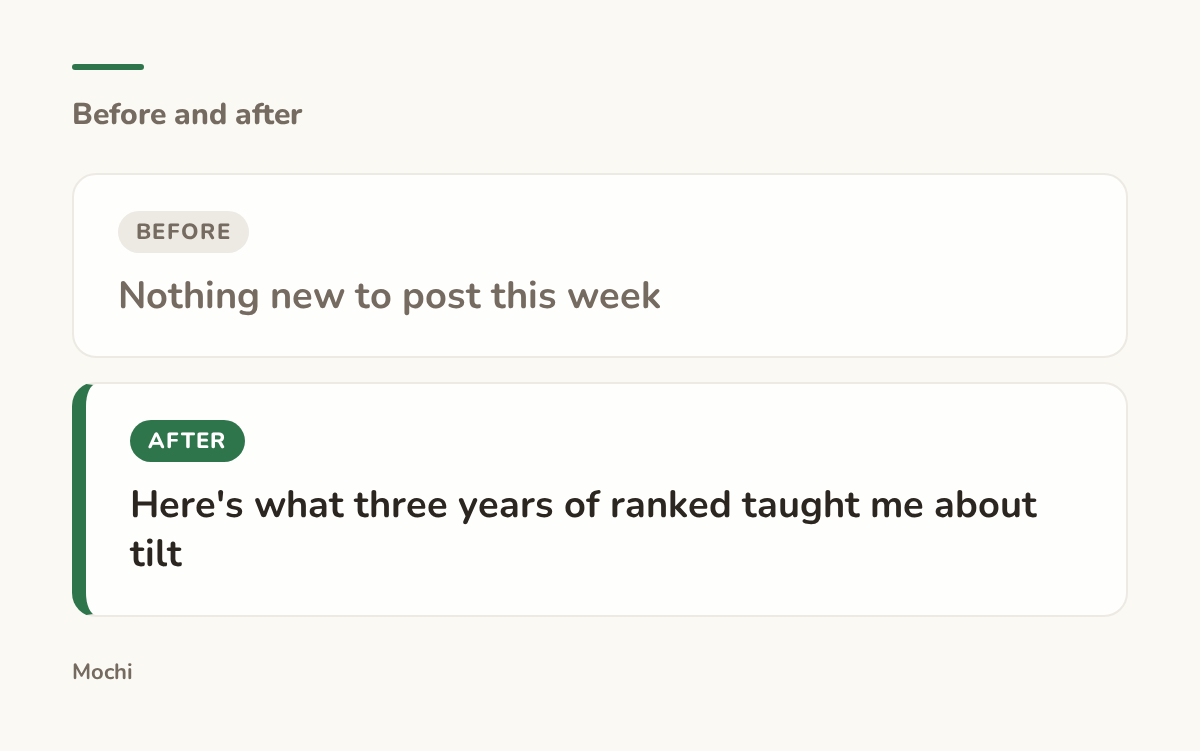
Before: Nothing new to post this week After: Here's what three years of ranked taught me about tilt
More for Gamers
The deeper guides for gamers are on their way.
Part of a series
The Creator's Playbook
Evergreen craft for working creators: brand, content planning, and publishing, written by the team that builds Mochi.