 Mochi Labs
The TikTok to Spotify Discovery Funnel: A 2026 Guide for Musicians
A plain guide to the TikTok to Spotify discovery funnel: how musicians turn short-form video views into real streams in 2026, step by step.
A clip gets a million views. The song gets four thousand streams. You've seen this happen, or you've lived it.
That gap is the whole problem with chasing a viral moment instead of building a funnel. A view is not a listener. A like is not a fan. The moment someone can skip the hard part, is exactly the moment to think about.
Why Virality Doesn't Become Fandom
Survey data from 10,000 consumers found something a lot of independent musicians already suspected: watching a sound on a short-form video and actually following the artist behind it are two different behaviors, and most viewers never make the jump between them. Industry reporting on streaming data backs that up from the other direction, showing that even the biggest TikTok sound-of-the-moment songs are converting to streams at a lower rate than they used to. A peer-reviewed look at the same question, using heavy-tailed streaming outcomes, found the same pattern: a spike in video plays sustains streaming growth in only a minority of cases.
None of that means TikTok, Reels, or Shorts stopped mattering. It means they do one job, not two. They are extremely good at putting a fifteen-second fragment in front of a stranger who has never heard of you. They are not built to turn that stranger into someone who opens Spotify, searches your name, and hits follow. That second step has to be built on purpose, because the platform won't build it for you.
The Two-Platform Funnel: Discovery Layer, Conversion Layer
Think of it as two jobs split across two tools. Short-form video is the discovery layer: it's where a stranger first hears eight bars of your hook over someone's dance, cooking video, or storytime. Spotify is the conversion layer: it's where that stranger either becomes a listener with a name and a follow count attached, or scrolls on and forgets you by dinner.
The handoff between those two layers is the part most independent artists skip. They post the clip, they watch the view count, and they assume the rest happens on its own. It doesn't. A viewer who liked your fifteen seconds has to be told, shown, or nudged into typing your name into a search bar on a different app entirely. That's a real behavioral jump, and it only happens reliably when the clip is built to cause it.
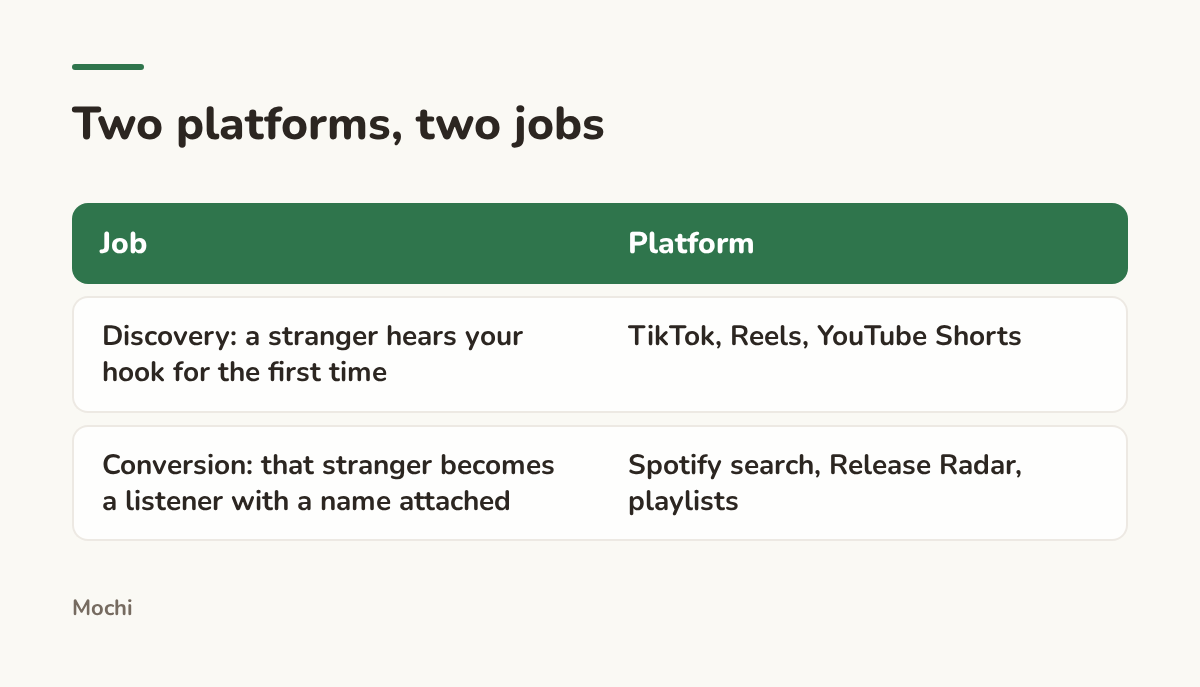
Virality happens on one platform. Fandom gets built on the other.
Step 1: Treat the Clip as the Trailer, Not the Single
Start by giving up on the idea that the fifteen-second clip is the thing you're promoting. It isn't. It's the trailer for the thing you're promoting, which is a three-minute song sitting on a streaming platform that the viewer hasn't opened yet. A trailer's whole job is to make someone want the full version badly enough to go find it.
That changes what you cut. A trailer doesn't resolve. It interrupts right at the point where the viewer needs the rest, and the gap between "I need to hear how this ends" and "I can go hear how this ends" is where the search happens.
Picture a singer-songwriter who used to open every clip the same flat way, and rewrote the opener to sit right at the edge of a confession instead.
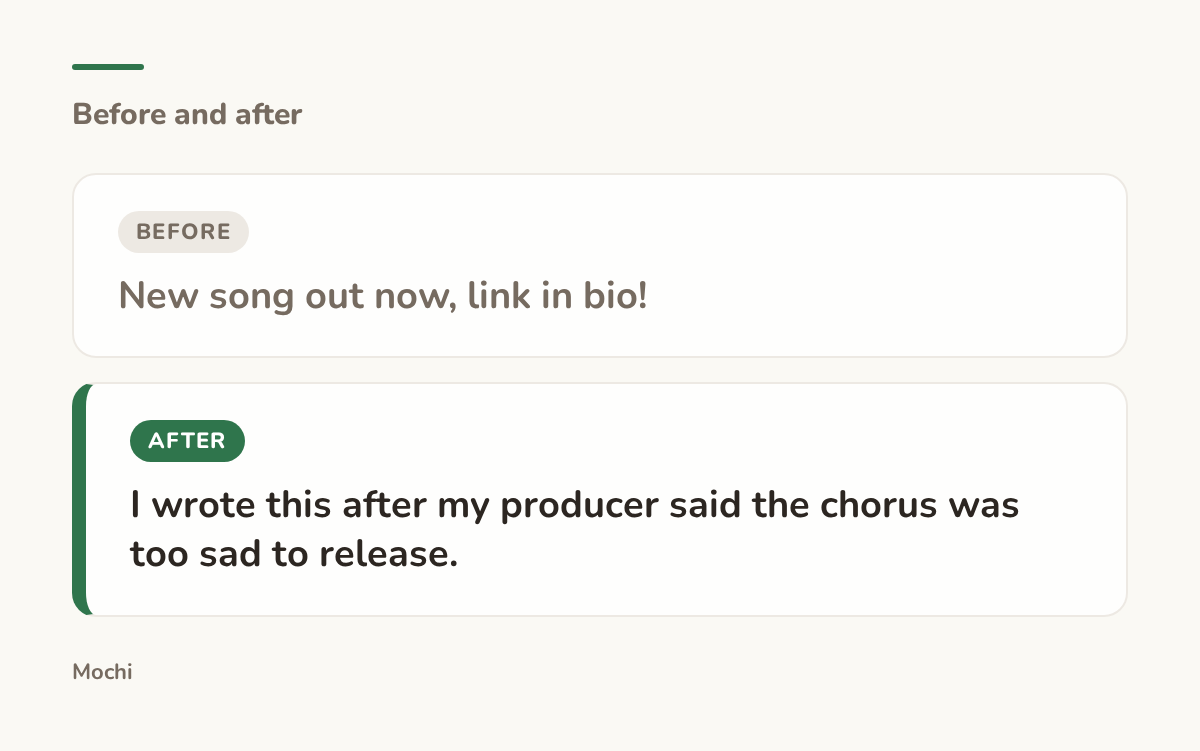
Before: New song out now, link in bio! After: I wrote this after my producer said the chorus was too sad to release.
The first version announces. The second one makes you need the next thirty seconds.
The rewrite works because it opens a question (why was it too sad, what did she keep) instead of closing one. A caption that announces a release gives the viewer nothing to resolve, so there's nothing pulling them toward Spotify. A caption that opens a small, specific question does the pulling for you.
Step 2: Time the Clip to Spotify's Own Mechanics
A clip that lands the handoff still needs somewhere to land. Spotify has three mechanics built for exactly this moment, and most independent artists never line their release up with any of them.
Pitch before you post
Spotify's own submission rules require a track to be pitched to editorial playlist editors at least seven days before release. That means the pitching has to happen before a single clip goes up, not after the clip starts getting traction. Work backward from release day: pitch first, then build the clip calendar around a date you already know is locked.
Day one is for the Release Radar crowd
Release Radar surfaces a new release to everyone who already follows you, the moment it drops. That's a warm audience, not a cold one, and it's worth treating release day's clip differently from the clips that come after. The release-day post can speak to people who already know your name. The clips in the two weeks before it have to speak to people who don't.
Keep the algorithm fed after launch
Discovery Mode lets an artist or label prioritize a track for algorithmic recommendation, in exchange for a commission on the resulting streams. It's not a tool for release week. It's a tool for the weeks after, once you can see which track is actually holding attention and is worth leaning into further. Decide on that after you have real numbers, not before.
Lined up end to end, those three mechanics turn a vague "post the song and see what happens" into an actual sequence: pitch, then build clips aimed at cold viewers, then switch the release-day clip to speak to warm ones, then look at the data before deciding whether Discovery Mode is worth the spend.
Step 3: Point Every Caption at Search, Not Just the Profile
A viewer who liked your clip has two ways to find more of you: tap your profile, or open a different app and search your name. The profile tap keeps them on the discovery platform. The search is the one that gets them onto Spotify, and it's the one most captions never ask for.
Saying "link in bio" asks for the profile tap. Naming the song title out loud in the clip, or writing it plainly in the caption, asks for the search. Those are different requests, and only one of them moves someone to the conversion layer.
Take a DJ who used to let the caption do nothing but describe the clip, and rewrote it to give the viewer a specific, searchable reason to leave the app.
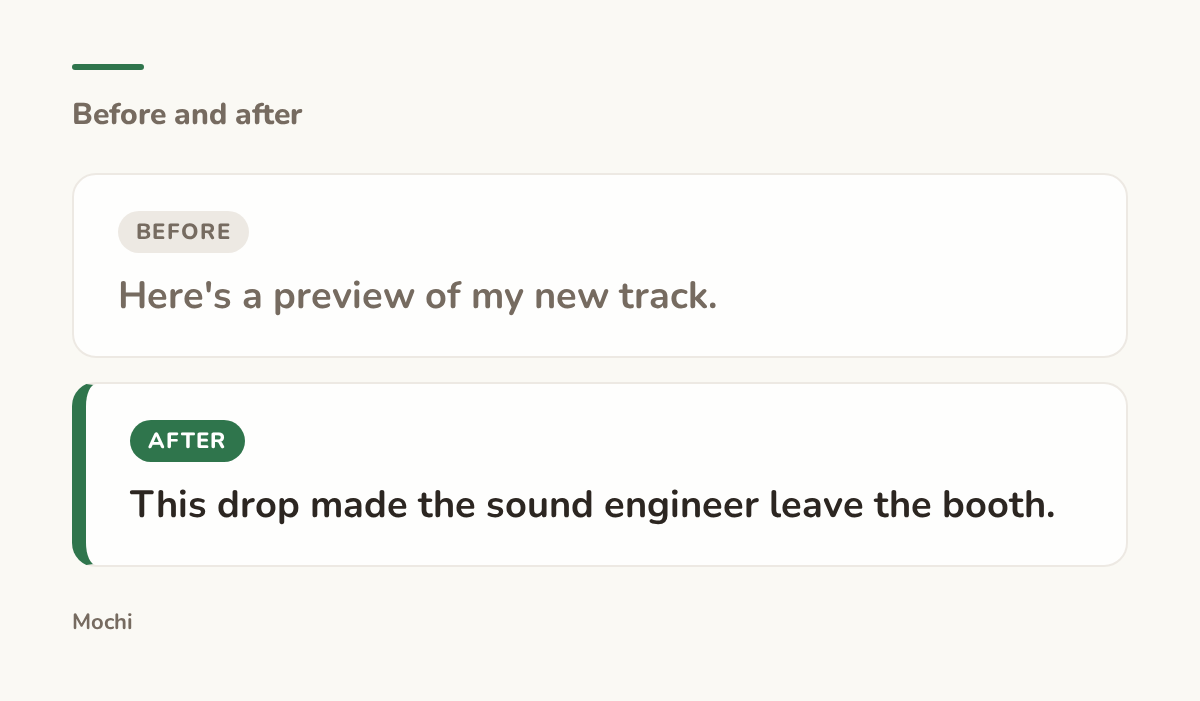
Before: Here's a preview of my new track. After: This drop made the sound engineer leave the booth.
A preview describes. A moment gives a stranger something to go confirm for themselves.
The rewrite works because "made the sound engineer leave the booth" is a claim a viewer can only verify by hearing the whole drop, and the only place to hear it is Spotify. A flat description gives nobody a reason to leave the app they're already on.
The same move works outside electronic music too. Picture an indie rock band that almost cut a bridge from their new single, and built a clip around that near-miss instead of around the song's chorus.
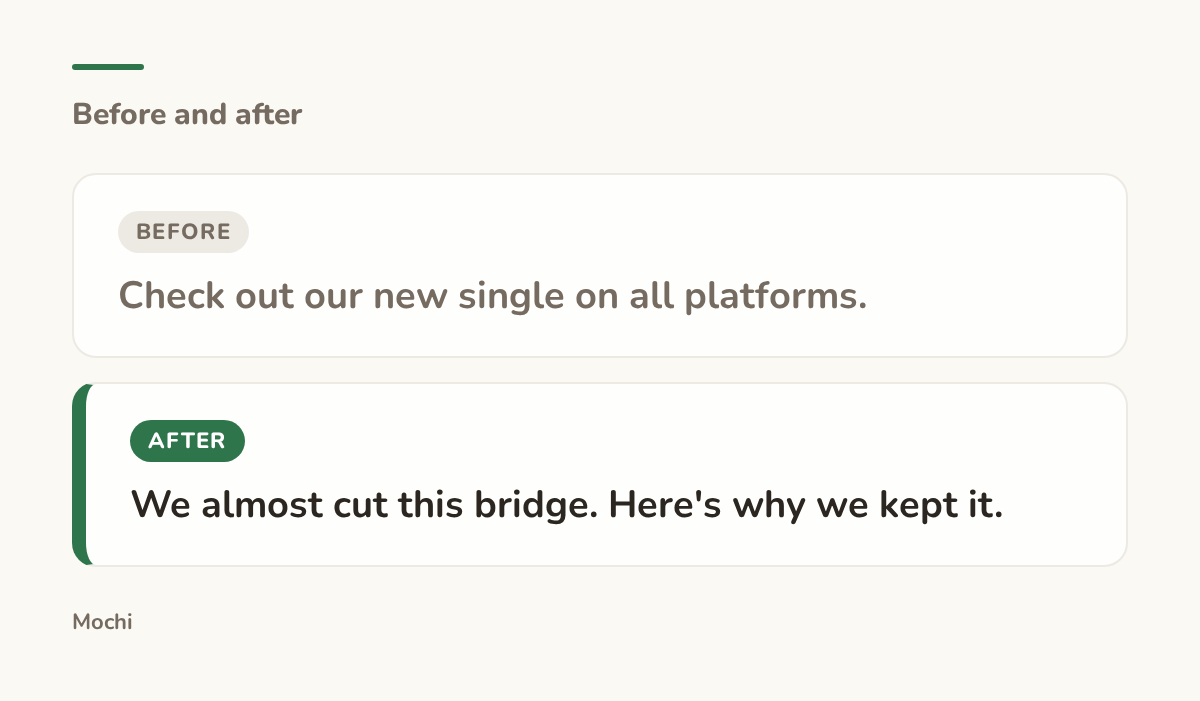
Before: Check out our new single on all platforms. After: We almost cut this bridge. Here's why we kept it.
A behind-the-scenes decision is a hook a chorus clip can't match, because it makes the full song feel like the answer to a question.
Notice what both rewrites have in common: neither one leans on the word "new." A song being new is information about you. A moment that made someone leave the booth, or a bridge that almost got cut, is information about the song, and that's the kind of detail that survives the jump from a fifteen-second clip to a search bar.
Step 4: Build the Week-by-Week Flow
Once the mechanics and the captions are both pointed the same direction, the last piece is sequencing, because a funnel that only exists on release day isn't a funnel. It's a single post with good intentions.
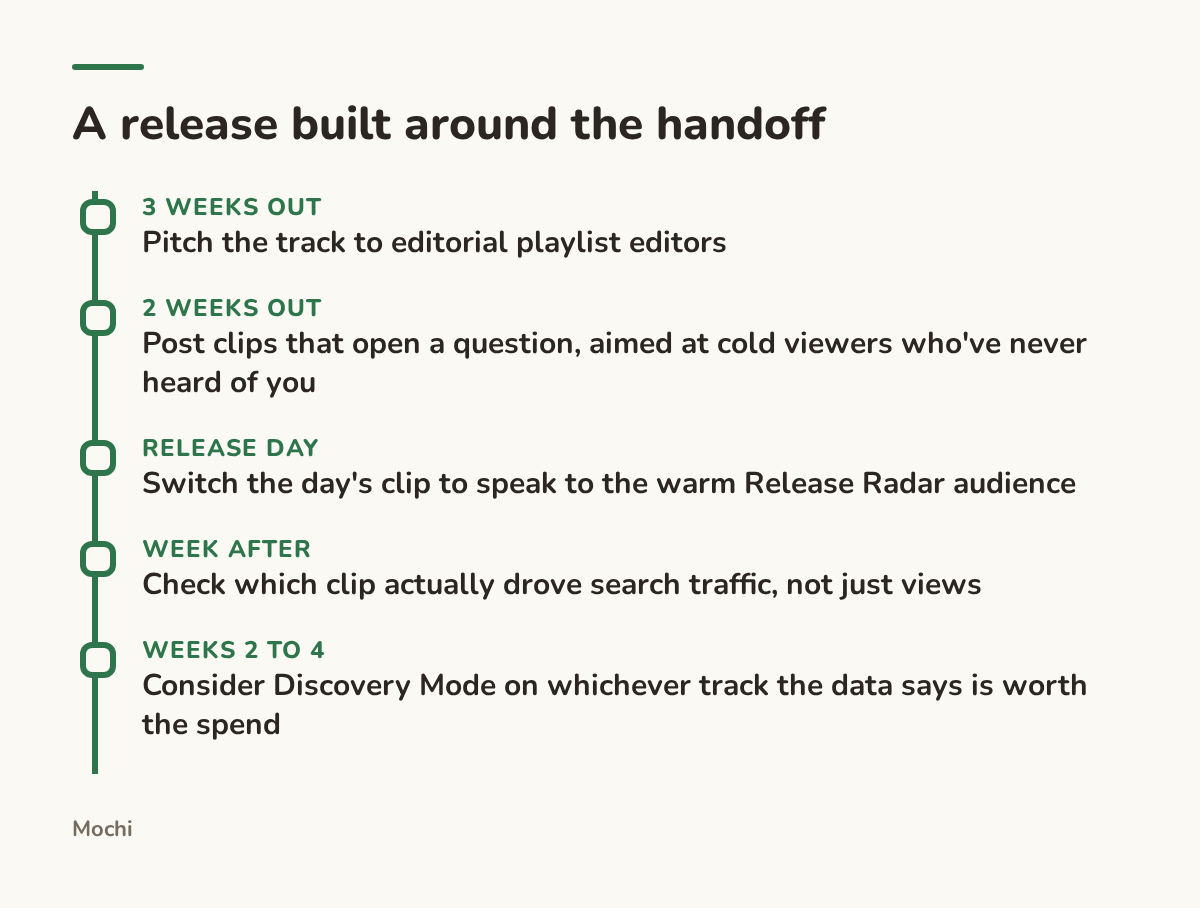
The handoff isn't one post. It's a sequence that starts before the song is even out.
The part most artists get wrong isn't any single step here. It's week two, the check on which clip actually drove search traffic instead of just views. Most short-form platforms will show you view counts without ever telling you whether those views turned into a Spotify search, so that number usually has to come from watching your own Spotify for Artists traffic in the days right after a clip goes up, not from the video platform's own dashboard.
How This Works in Mochi
This is where we built Mochi to help with the part of the funnel that's easiest to let slip: watching which sounds, hooks, and formats are actually accelerating in a given niche before you decide what to clip and when to post it, instead of guessing from your own feed.
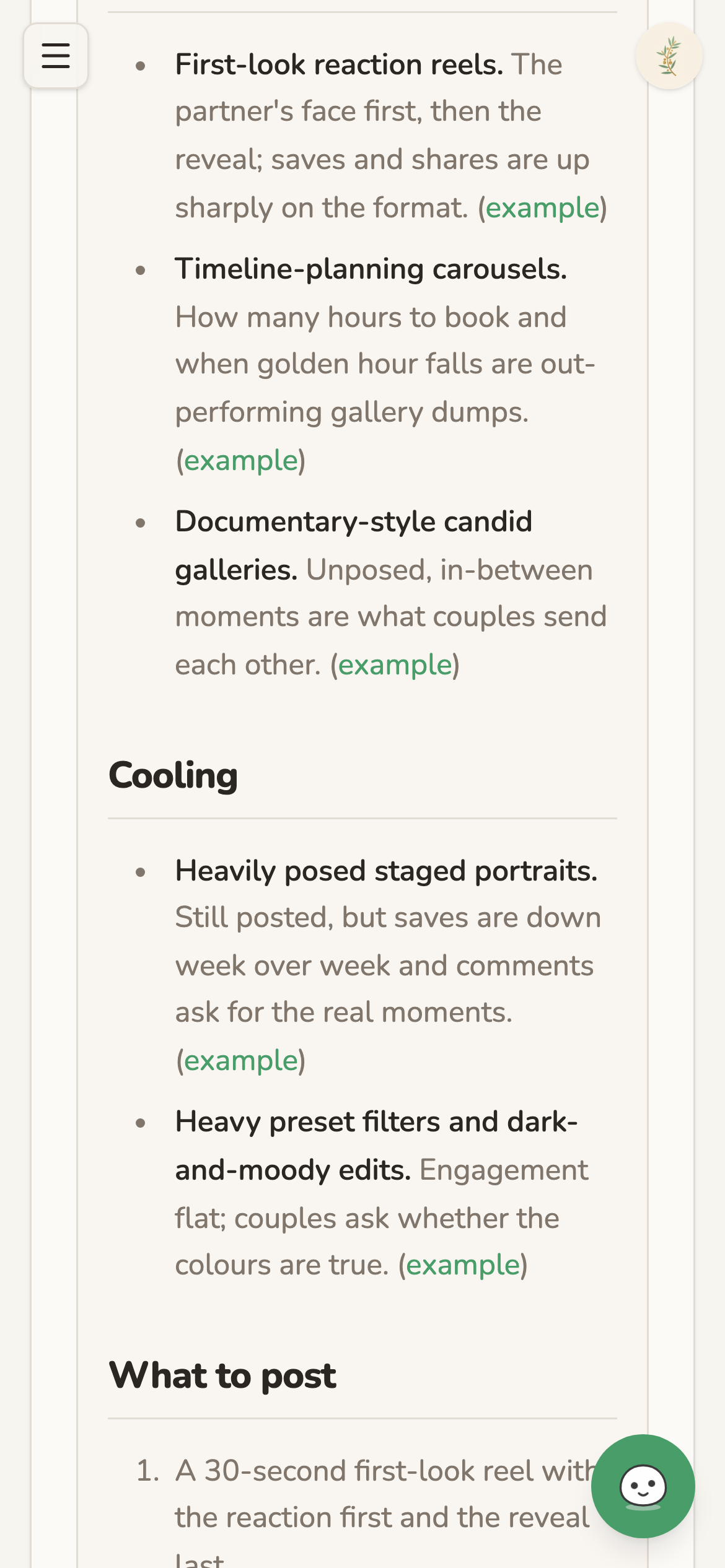
A research run sorts what's accelerating from what's cooling, with sources, so the next clip isn't a guess.
Start With the Handoff, Not the Hook
A great hook with nowhere for the viewer to land is still just a great hook. The funnel is what turns that moment of attention into someone who searches your name, finds the whole song, and sticks around for the next one. Pitch early, build clips that leave a question open, name the song where a stranger can search it, and check your Spotify traffic before you assume the clip worked.
What would your release calendar look like if you planned the search before you planned the post?
Part of a series
The Creator's Playbook
Evergreen craft for working creators: brand, content planning, and publishing, written by the team that builds Mochi.