 Mochi Labs
Instagram for Artists: The Complete Playbook
A practical playbook for artists on Instagram and TikTok: accounts, feeds, process videos, content pillars, posting rhythm, and hooks that hold attention.
· We keep this page up to date, so bookmark it and come back.
You finish a painting at midnight. You post it over coffee, caption it "new piece," and by lunch it's three screens deep under someone's dog video.
Sound familiar?
That gap, between making the work and getting anyone to actually see it, is the real problem artists bring to Instagram and TikTok. Not "going viral." Independent survey data on how Americans actually use these platforms keeps confirming what you already feel in your bones: huge shares of adults spend chunks of their day on exactly these two apps, scrolling past thousands of posts without registering most of them. Your work is one of those posts unless you give the algorithm and the human behind it a reason to stop.
This guide walks through Instagram first, then TikTok, then the parts that sit underneath both: your content pillars, a posting rhythm you can actually keep, and the hooks that earn someone's first three seconds. Everything here is built around the actual work of being an artist, studio time, process, commissions, shows, prints, not generic growth advice that could belong to any business.
Why Instagram and TikTok Work Differently for Artists
Instagram is a portfolio with a pulse. Someone lands on your profile after a friend tags them in your comments, and the grid itself does the selling: it needs to read as a coherent body of work, not a scrapbook. Meta's own explainer of how ranking works breaks down Feed, Stories, Explore, Reels and Search as separate systems, each reading different signals. That matters for artists specifically: a finished piece might do well in Feed because people you already follow linger on it, while a process clip gets discovered cold through Reels or Explore because it holds attention in the first few seconds.
TikTok has almost no portfolio memory. An account with twelve followers can get pushed in front of a hundred thousand strangers if one video holds attention, and a video from three months ago can resurface and outperform everything you posted since. For an artist, that means the platform rewards the single clip more than the cumulative page, which is freeing if you're starting from zero and unforgiving if you're relying on past work to carry new posts.
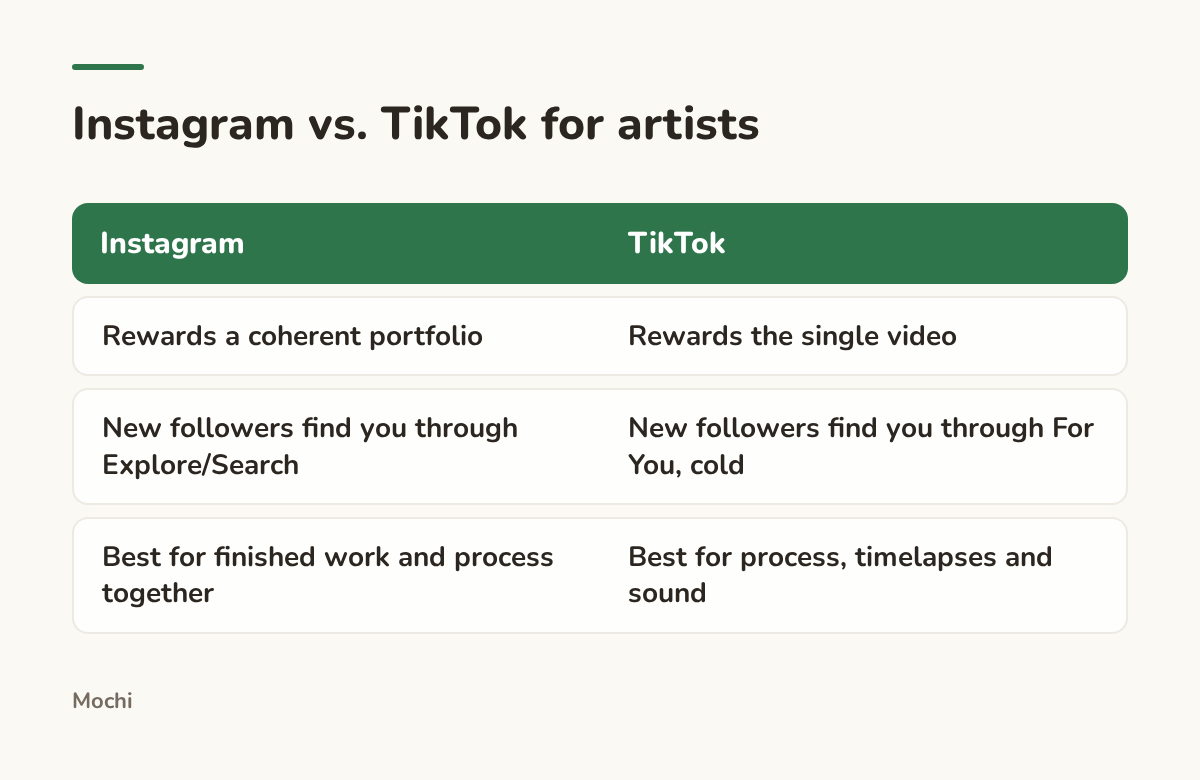
Different systems, so plan for both instead of copying one onto the other.
If You're a Musician, Read This Part Twice
Musicians get a tool neither visual artists nor most other creators have: TikTok for Artists, the platform's own dashboard built for musicians specifically, with listener demographics, release analytics and pre-release tools. If you make music and you've been treating TikTok like a generic content app, that dashboard is the first thing to go set up, not the tenth.
Instagram for Artists
Instagram runs an entire hub built for people making work, not managing a brand account: Instagram for Creators collects native tools and resources aimed at exactly your situation. Start there before you start guessing.
Pick the Account Type That Matches What You Actually Do
Instagram's own explanation of professional accounts lays out the real difference between Creator and Business accounts: contact buttons, category labels, and how each handles things like product tags. A painter selling originals through DMs and a ceramicist running a storefront with product tags need different settings, not the same default. Check which one you're actually on. A lot of artists never chose, they just got whatever the app defaulted to.
Build a Feed That Reads Like a Body of Work
Picture an illustrator whose grid alternates finished pieces with the messy middle: a palette, a reference board, a half-inked page. A stranger landing on that profile for the first time gets the whole story in nine tiles, here is what I make, here is how I make it, without reading a single caption. That alternation is the actual craft decision. A grid of only finished pieces looks like a catalog. A grid of only process looks unfinished. The mix is what reads as an artist actually working.
Show the Process, Not Just the Result
A finished piece tells a viewer what you made. A process clip tells them who you are, and that's the harder sell to resist scrolling past. Take a muralist who posts the thirty seconds before the final reveal: ladder going up, base coat drying, the one mistake she painted over. The reveal lands harder because the viewer sat through the struggle with her, not just the result. If your Reels only ever show the finished piece, you're giving up the part of the work that actually earns attention.
Use Sound Without Losing the Post
Artists reach for music to carry a silent process clip, and that's exactly where posts get muted or pulled. Instagram's guidance on using music in Reels and Stories explains what's actually licensed through the Sound Collection versus what will get flagged. Check that before you build a whole series around a song you don't have rights to use.
Get Found By People Who Aren't Already Following You
Search and Explore don't read your post the way your followers do. Per Instagram's own ranking explainer, Search leans on text, captions, alt text, profile names, more than it leans on hashtags these days. Write captions that actually describe the piece in plain words (medium, subject, the show it's from) instead of a hashtag block at the bottom. A caption that says "oil on canvas, 24x36, part of my coastline series" does more for discovery than ten generic hashtags ever will.
TikTok for Artists
Visual Artists: the Process Is the Content
A ceramicist throwing a bowl on the wheel is already more watchable than most content ever gets to be: motion, transformation, a clear beginning and end. The lesson travels to painters, printmakers, woodworkers, anyone whose process has visible stages. You don't need a script. You need the camera running while you work and a cut that trims the boring middle.
Pick Sounds That Fit, Don't Chase Every Trend
A trending sound can carry a video to people who've never seen your work, but only if the sound actually fits the footage. Picture a printmaker who tries a trending comedic sound over a serious, meditative carving process: the mismatch reads as a swing that missed, and it usually underperforms a video with no sound trend at all. Pick trends that match your actual pace, not every trend that's currently hot.
A Posting Rhythm for TikTok Specifically
TikTok tolerates more frequent, lower-polish posting than Instagram does, which is good news for an artist with limited hours: a rough studio clip shot on a phone can outperform a heavily edited one if it holds attention. That doesn't mean post constantly. It means the bar for a TikTok post is attention, not polish, so don't spend your limited studio time editing when you could be posting two rougher clips instead of one polished one.
Your Content Pillars Are What Holds Both Platforms Together
A pillar is just a repeatable bucket: process, finished work, and the business side (commissions open, a show date, a print restock). Take a painter who settles on exactly those three. Process posts carry the personality. Finished-piece posts carry the portfolio. Business posts carry the actual income. Without all three, something breaks: all process and nobody knows your work is for sale, all finished pieces and nobody sees the person behind them, all business and the feed turns into ads nobody asked for.
Writing those pillars down, in your own words, with examples of what does and doesn't belong in each, is the part most artists skip because it feels like homework instead of making. Picture an illustrator who finally writes hers out in one sentence each, process, finished work, the shop update, because a pillar you can't describe that simply isn't a pillar yet, it's a vibe.
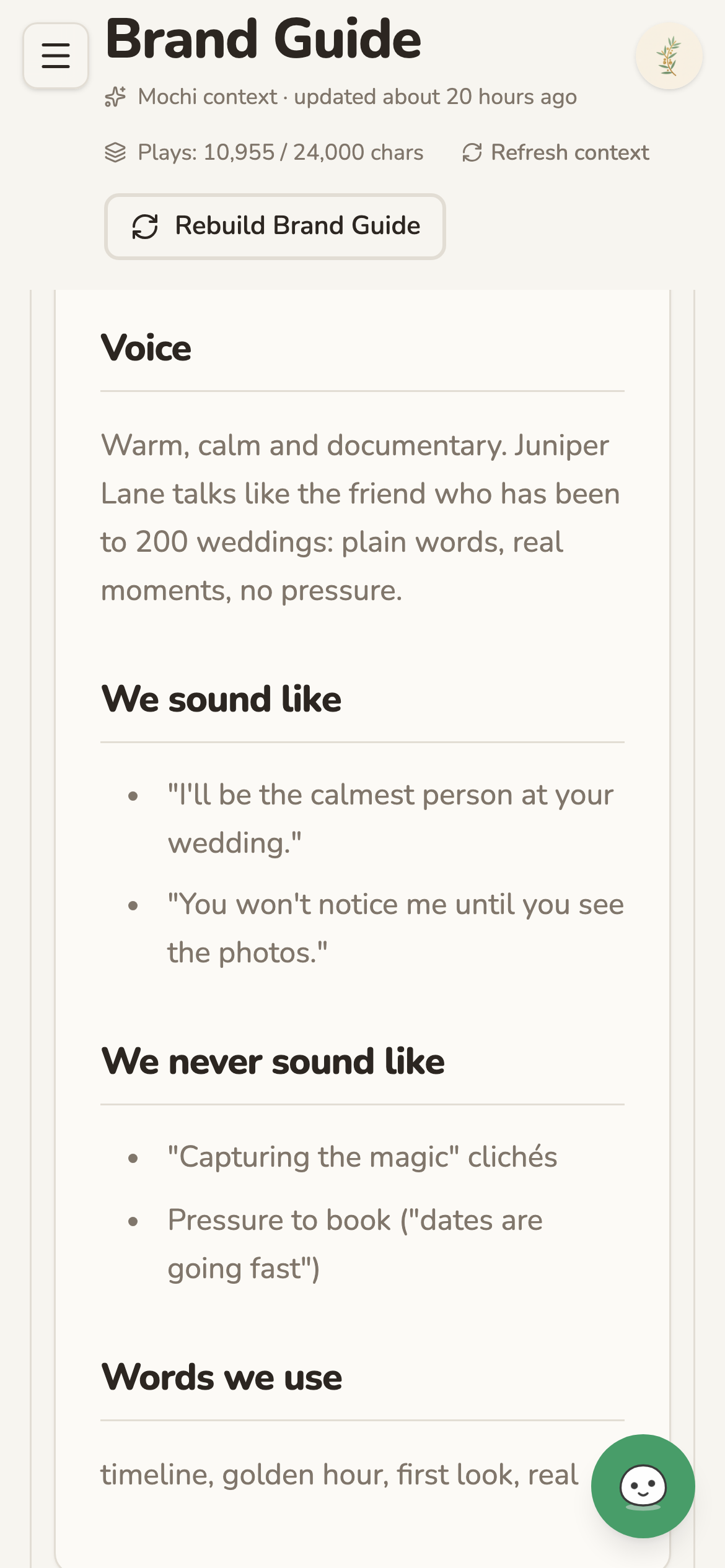
The brand's voice is written down, with examples of how it does and does not sound.
Writing it down once means every caption after that has a check to run against, instead of starting from a blank page each time. The screen above is Mochi doing exactly that: building a first draft of the voice section from a scan of an artist's existing work. If you want to see how, the product tour walks through it start to finish.
A Posting Rhythm You Can Actually Keep
Step 1: Pick a cadence that follows your studio practice instead of a schedule imposed on top of it. A sculptor who finishes pieces every few weeks shouldn't post daily just because a guide said so, she should post process weekly and save the finished reveal for when there's actually a reveal.
Step 2: Batch the raw footage during the work itself, not after. Shoot the process clips while you're already standing there with your hands on the piece. Trying to recreate "process footage" after the fact usually means staging something fake, and it reads as fake.
Step 3: Write the rhythm down somewhere you'll actually see it again, because the plan you forget is the plan you quietly abandon by week three.
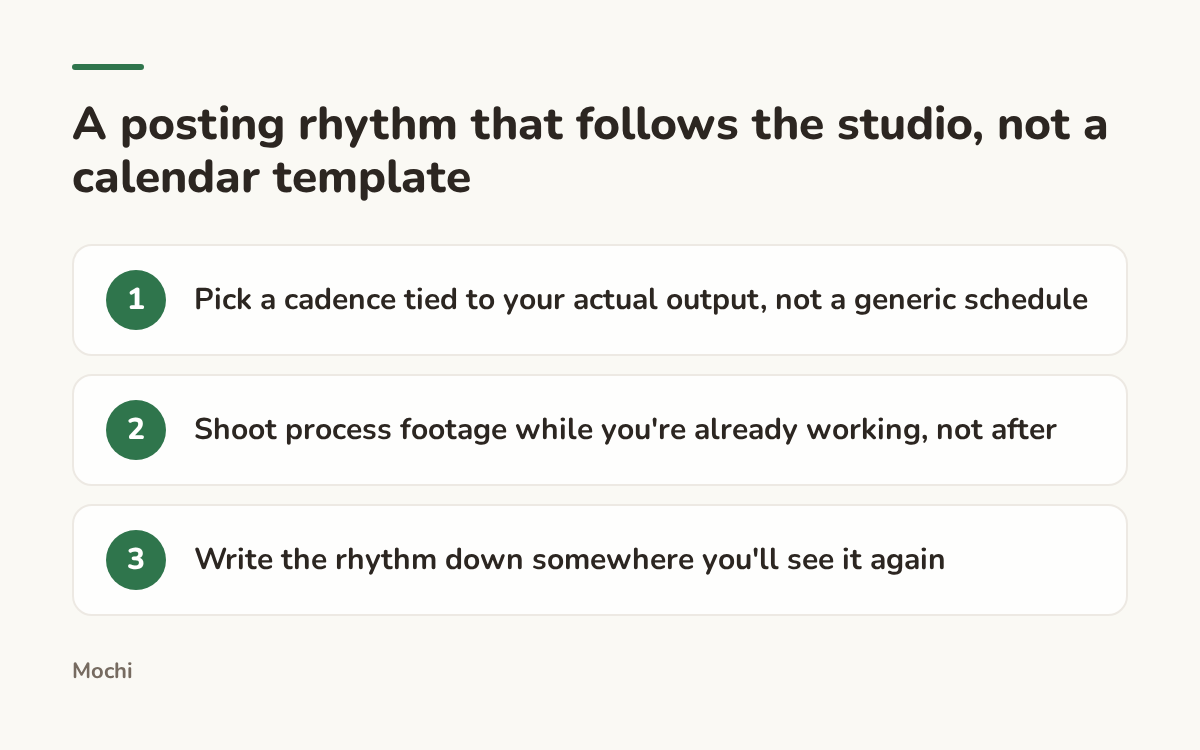
The schedule should follow the work, not the other way around.
Hooks That Earn the First Few Seconds
A hook is a bet that the next three seconds are worth someone's time. Most artists bury the bet under a greeting.
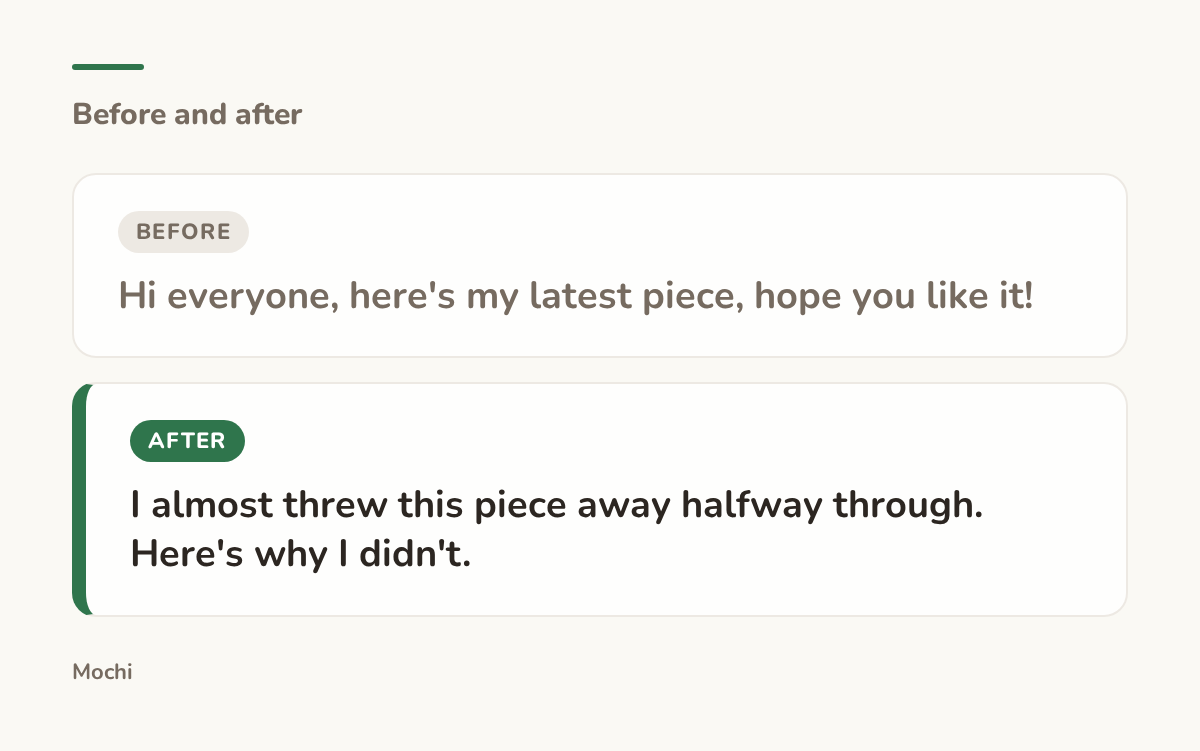
Before: Hi everyone, here's my latest piece, hope you like it! After: I almost threw this piece away halfway through. Here's why I didn't.
The first line asks for nothing and promises nothing. The second names a real stake, a piece that nearly got scrapped, and the viewer stays to find out what changed.
A caption's opening line does the same job a thumbnail does: it decides whether anyone sees the rest, not just the first version that comes to mind.
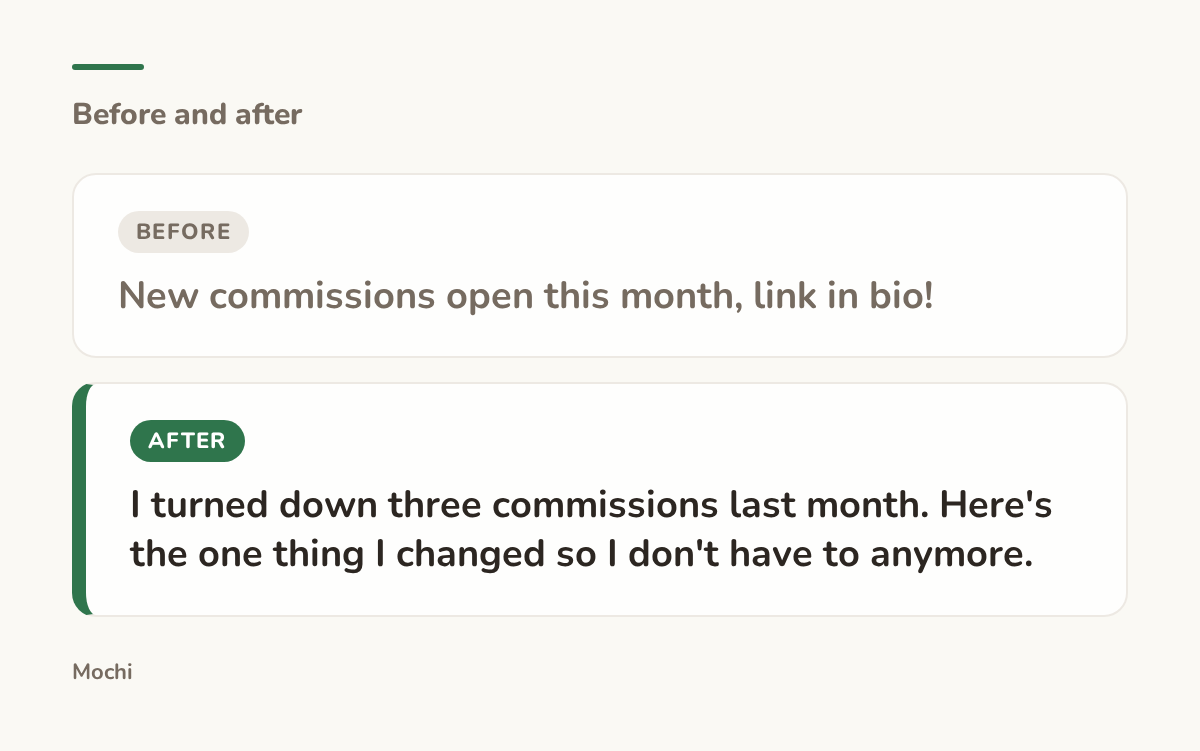
Before: New commissions open this month, link in bio! After: I turned down three commissions last month. Here's the one thing I changed so I don't have to anymore.
The first version is an announcement nobody asked for. The second turns a business update into a story with an actual reason to read on.
Process clips need the same rewrite, not just captions on finished work.
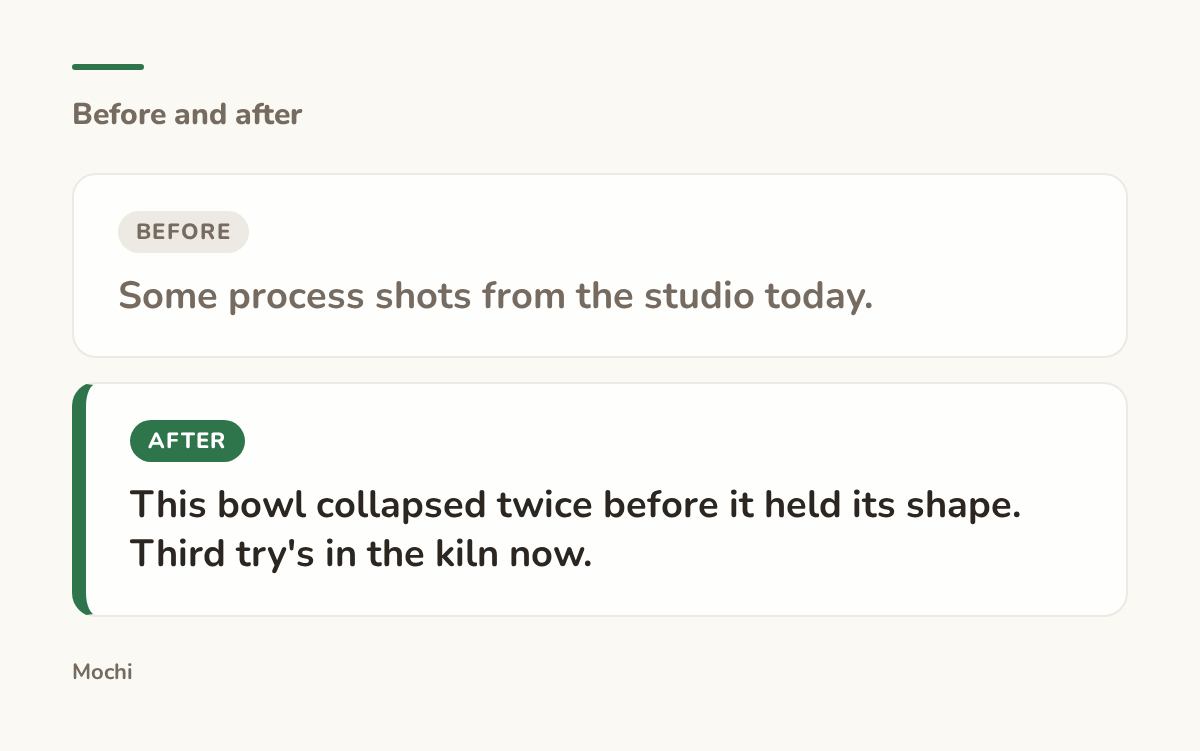
Before: Some process shots from the studio today. After: This bowl collapsed twice before it held its shape. Third try's in the kiln now.
The first line describes the video instead of selling it. The second gives the viewer a reason to care whether the third attempt survives, which is the entire video.
What to Actually Track
Likes are the easiest number to see and the least useful one for an artist. Saves and shares matter more, because they mean someone wanted to find the piece again or thought a specific person needed to see it, which is closer to the instinct that leads to a sale or a commission inquiry than a like ever is. On TikTok, watch time and rewatches tell you whether the process itself held attention, which is the thing you can actually act on next time you film.
Beyond the platform numbers, the real signal is what happens off-platform: DMs asking about a piece, a jump in print orders after a process video, someone mentioning they found you through a specific post. Those are harder to track in a spreadsheet, but they're the ones that actually pay rent. What did your last process clip actually tell a stranger about the work, or about you?
More for Artists
What changed this week for artists: this week in your niche.
Part of a series
The Creator's Playbook
Evergreen craft for working creators: brand, content planning, and publishing, written by the team that builds Mochi.