 Mochi Labs
Instagram Hashtags for Artists: Which Ones to Use and How Many
A plain guide to Instagram hashtags for artists: which kinds to mix, three full sets you can copy tonight, and how to check a tag before you use it.
· We keep this page up to date, so bookmark it and come back.
Scroll any art hashtag on Instagram right now and you'll find millions of posts sitting under the same five tags. #art. #artist. #painting. #artwork. Somewhere in that flood is your best piece, posted an hour ago and already buried under four hundred more.
Hashtags for artists aren't dead, but the lazy version of them is. The ones that still work are chosen the way you'd choose a show to submit to: specific, a little competitive, matched to the actual work. This piece is part of our guide to Instagram for artists, and it walks through which tags to mix, how many to use, and three full sets you can copy tonight.
Why Hashtags Still Earn Their Keep for Artists
Instagram has said plainly, more than once, that hashtags carry less weight for reach than they used to. Keyword search inside captions and alt text now does more of the discovery work than it used to.
A hashtag is a room. #art is a stadium where no one is listening. #watercolorbotanical is a workshop where everyone in it makes what you make.
So why bother at all? Because a hashtag still puts your post on a page a stranger might actually browse. Tag a landscape painting #pleinairpainting and it can surface on that tag's own page next to other plein air work, not just in your followers' feeds. A breakdown written for arts organizations makes the point from Instagram's own guidance: relevance beats volume, and that matters more for a painter or ceramicist than for a general lifestyle account, because "art" competes against every art account on earth while "watercolorbotanical" competes against a few thousand.
Four Kinds of Tags Worth Mixing
Most artists default to one flavor of tag, usually broad medium tags, over and over on every post. A set that actually earns a look mixes four kinds, each doing a different job.
Community tags
These are the ones your peers already use to find each other: #watercolorartistsoninstagram, #ceramicistsofinstagram, #illustratorsoninstagram. The community built them, which is also why they're worth checking before you use one, more on that below.
Medium and technique tags
Specific to what you actually did: #inkwash, #wheelthrownpottery, #gouachepainting, #digitalpainting. These separate you from "artist" in general and put you with people searching for your actual technique.
Niche style or subject tags
This is where a lot of reach hides. A tag like #botanicalillustration or #petportraitartist describes a subject, not just a medium, and it's often far less crowded than the medium tag alone.
Local and event tags
If you sell at markets, shows or open studios, a local tag (#austinartist, #brooklynmakers) or an event tag (#artwalk2026) puts your work in front of people who might actually buy it in person, not just like it from another time zone.
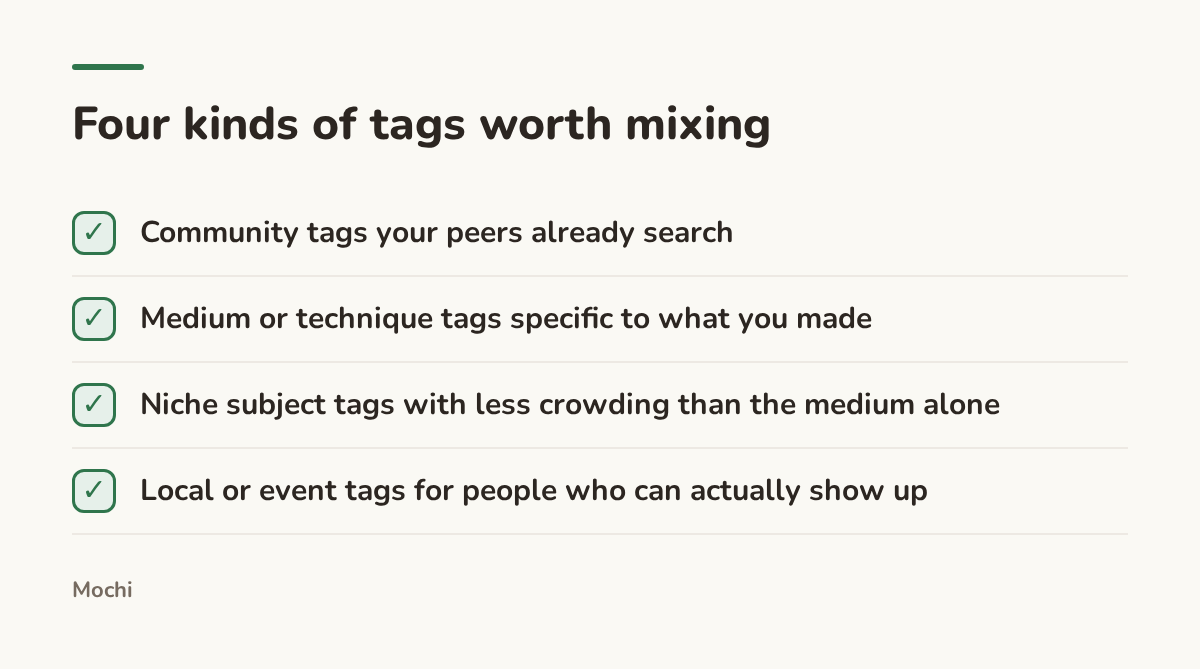
One post, four different rooms to stand in.
Build It Like This: Three Sets You Can Copy
A hashtag set is just a sentence about who you want to find the post. Here are three, pulled from three different kinds of practice, that you can adapt tonight.
A watercolor landscape painter Before: #art #artist #painting #artwork #instaart After: #watercolorpainting #watercolorartistsoninstagram #pleinairpainting #landscapepainting #botanicalart #art_spotlight Why it works: the first set drops the post into a pool with millions of identical posts. The second puts it next to painters who specifically search "plein air" and "botanical," a much smaller and much more relevant room.
A ceramicist Before: #ceramics #pottery #handmade #art #clay After: #wheelthrownpottery #ceramicistsofinstagram #functionalceramics #studiopottery #claybodies #potterystudio Why it works: "handmade" and "clay" are broad enough to cover jewelry, soap and furniture. "Wheelthrownpottery" and "functionalceramics" only cover work like this one.
A digital illustrator who does pet portraits Before: #illustration #digitalart #artist #drawing #art After: #petportraitartist #digitalpetportrait #illustratorsoninstagram #customportrait #petillustration #dogmomgifts Why it works: the second set speaks to the person most likely to commission one, someone searching for a gift for a specific kind of pet owner, not someone scrolling "digitalart" in general.
Keep the Set Alive
A tag that worked last year can go quiet, and a tag that didn't exist eighteen months ago can become the busiest room in your niche. Checking which tags in your corner of the art world are heating up or cooling off is its own small research job, and it's worth automating rather than remembering to do every month.
This is one place a tool like Mochi earns its keep. A scheduled research routine can watch the art community for you and hand back a document that flags which tags and formats are accelerating and which are fading, with the sources attached and a few posts suggested off the back of it.
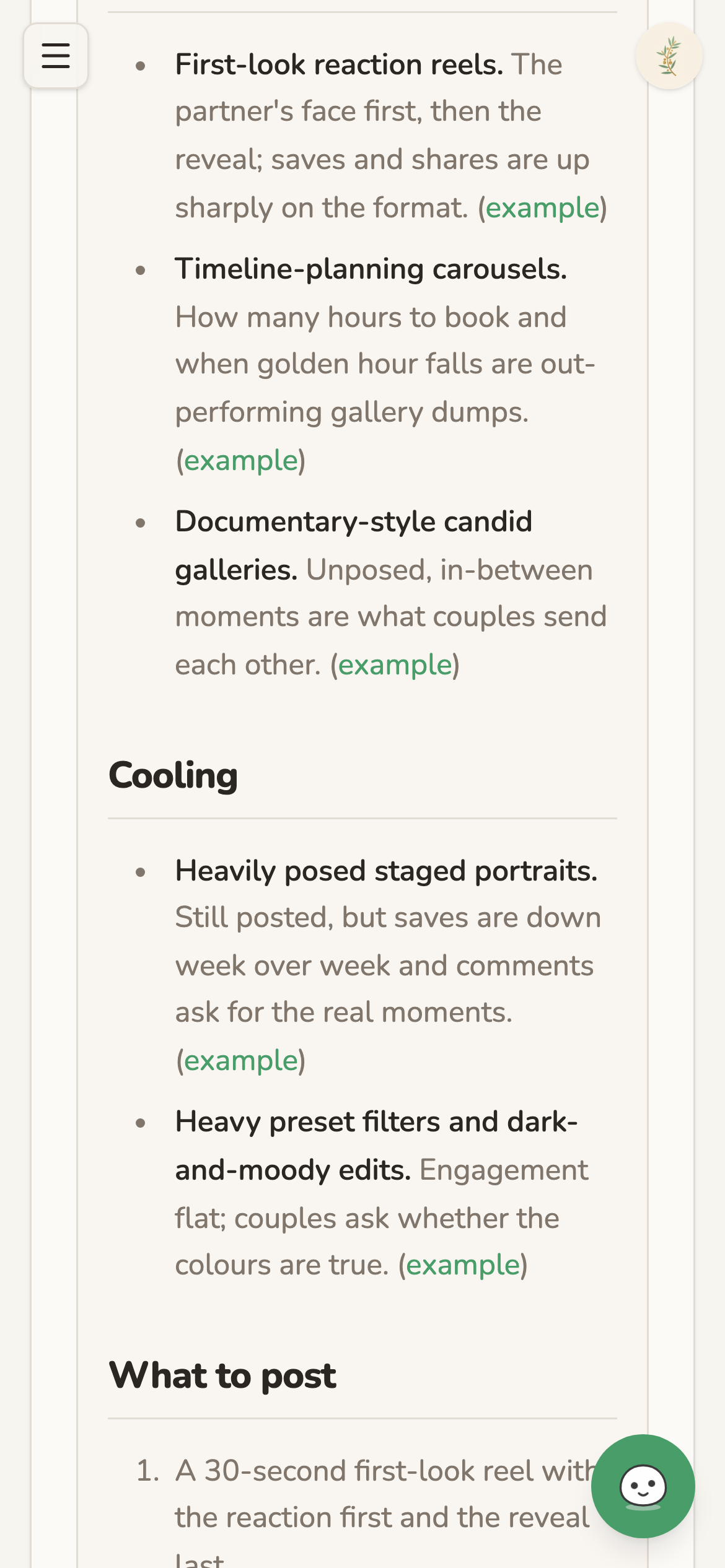
A research run sorts the tags and formats gaining ground from the ones going quiet.
Where to Check Before You Post
Before you commit to a tag, look at its actual page. Instagram's own explainer on hashtag pages describes how a post becomes eligible to show up there in the first place: your account has to be public, and the post has to actually relate to what Instagram reads from your image, caption and alt text, not just repeat the word.
You can check any tag yourself before using it. Instagram explains how to browse a hashtag or location page directly: search the tag, open its page, and look at what's actually posted there this week, not what you assume is there. If #watercolorartistsoninstagram is full of thirty-second time-lapse reels and your post is a still photo of a finished piece, it might sit oddly on that page even if the words match.
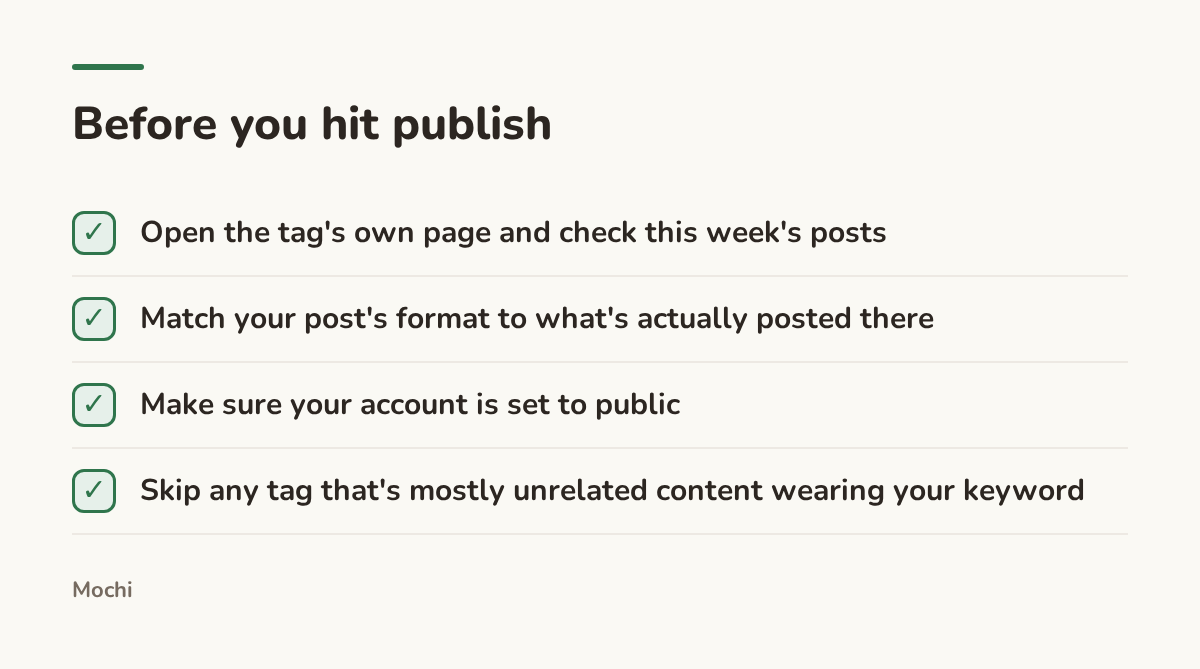
Thirty seconds on the tag page beats guessing.
Mistakes That Quietly Cost You Reach
A few habits undercut even a good set.
Thirty tags crammed in after the caption like a wall of confetti is the most common one. Instagram doesn't reward volume, and a long tag wall buried at the bottom reads as decorative rather than deliberate. A study of #foodfestivals posts found that the number of hashtags alone didn't move engagement, which is part of why five to nine specific tags do more work than twenty generic ones.
Repeating the exact same set on every post is another. If every post carries #art #artist #painting, Instagram and your followers both stop reading it as information, because it stopped describing anything about that specific post.
The tag with a hundred million posts under it isn't generous. It's just loud.
The third is reaching for a tag because it's huge rather than because it's yours to use. #photography has hundreds of millions of posts; a painting dropped into it is one drop in an ocean meant for an entirely different audience.
What Changes on TikTok
Hashtags work differently once the same piece becomes a process reel on TikTok. TikTok's search leans harder on spoken words, on-screen text and captions than Instagram's does, so a tag like #artprocess or #paintingtiktok reads more as a community signal than a search term: it tells the app and other artists what kind of video this is, a time-lapse, a speed paint, a studio tour.
Where Instagram rewards a tight, specific set, TikTok tolerates a shorter one, usually two or three tags that name what the video is (#oilpainting, #artistsoftiktok) plus whatever sound or format you're using, if any. The caption itself, read aloud in the first few seconds, carries more of the weight a hashtag used to carry.
Wrapping Up
None of this needs to be complicated. Pick tags the way you'd pick a room to stand in: specific enough that the people in it actually make or collect what you make, mixed across community, medium, subject and place, and checked against the tag's own page before you commit to it. Refresh the set every few months instead of running the same six words into the ground.
What's on the tag page you're about to post into, and would you actually want to stand in that room?
Part of a series
The Creator's Playbook
Evergreen craft for working creators: brand, content planning, and publishing, written by the team that builds Mochi.